Thursday, December 29, 2005

Goddesses, Gender & Archaeology

The Myth of Matriarchal Prehistory: Why an Invented Past Won't Give Women a Future, by Cynthia Eller is a fascinating read, one that highlights some of the many divisions among feminists.

I've always considered myself a feminist (at least for the last thirty years or so), but I never considered spirituality a part of that. On the contrary, my feminist interests tend toward science, and in graduate school in anthropology I helped put together a course called "A Gendered Past" that examined feminism and its application to prehistory.

In the last decade, the divisions between feminist archaeologists and what Eller calls "feminist matriarchalists" seem to have deepened, despite some valiant attempts at conciliation and tolerance on both sides. Check out Belili Production's webpage on What's the Debate? Marija Gimbutas - Legacy and Controversy for some recent discussions, and to explore some of the differing beliefs concerning women in prehistory.

Natalie Angier gave an even-handed review of Eller's book in the New York Times after its initial publication, but not all responses were so measured.

Lawrence Osborne's False Goddess, a review article in Salon, seems to revel in destroying the "lushly hysterical account of the rise of wicked, war-loving patriarchy", while simultaneously deriding anthropological and archaeological work on gender as "woolly" and "long on hot air, but rather short on empirical detail". While I can't deny the "hot air" in the sometimes undecipherable and torturous theoretical literature on gender and archaeology, I think recent work* shows that Osborne's statement that "Shards of pottery, meanwhile, are not especially eloquent about "gender relations" is downright shortsighted.

Amazon's reviews reveal some of the less coherent but impassioned responses to Eller's book:

"...she isn't worth whatever money she scrapes up from the misogynistic phallus worshipping patriarchal society she has obviously came to know and love. 'Glaring ignorance' should be listed on her credentials."

"However I guess since a male dominated Patriartical society has done a good job at distorting and destroying ancient Goddess evidence people have a hard time believing what is clearly in front of their eyes. The sadder part is that it is written by a woman, but I guess that when you are afraid of your own herstory and women's empowerment it is easy to support writtings that add to one's egotistical and false assumptions. All I can say is that if you are a TRUE Goddess woman you would be better to spend your time reading books like The Great Cosmic Mother which speaks of women's cultures and destruction by Patriarchy. The only real illusion here is the false notion that Patriarchy has always ruled. How very sad for everyone."

Now, being told that I have been "blinded by the patriarchy" or "brainwashed by the establishment" is just as annoying coming from a goddess worshipper as it was when Linda Hirshman said it about stay-at-home mothers. In both cases, I feel like I'm arguing with a religious fundamentalist whose devotion to dogma is stronger than any evidence that I could ever produce. And how on earth can I prove I haven't been totally blinded by the patriarchy? I can't prove that any more than I can prove that I'm free of original sin, and of course we are all undeniably influenced by our culture and history.

At any rate, I found The Myth of Matriarchal Prehistory an absorbing examination of feminism's spiritual roots and its use of myth, and a very interesting discussion of the implications of belief in this particular myth (or theory, if you prefer). As one of those "feminist archaeologists", I thought Eller handled the archaeological evidence (and the often abstruse archaeological literature) very well, with logic and balance and a nice assembly of illustrations.
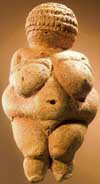
*see for example, Gilpin & Whitley's Reader in Gender Archaeology; Nelson & Rosen-Ayalon's In Pursuit of Gender; Joyce's Gender and Power in Prehispanic Mesoamerica, or numerous other recent works. Just google "gender archaeology (or archeology)" and "gender prehistory". Unfortunately, you need an academic translator for some of these books; someone should write a book like Charles Mann's 1491 on this topic. Maybe I can do it when my daughter starts kindergarten.

Interesting Question...


...from my nine year old son: "If we had a time machine and could go back in time and get a saber-toothed tiger for our house, would you be allergic to that like a regular cat?"

Friday, December 23, 2005

Santa in 1902


From the American Memory archives at the Library of Congress: a somewhat gaunt Santa Claus collecting for a Chicago charity.

Wednesday, December 21, 2005

Suntree Farms


There's a certain Slant of light,
Winter Afternoons --
That oppresses, like the Heft
Of Cathedral Tunes --
- Emily Dickinson, No. 258

5th Carnival of Feminists

is up at ScribblingWoman. As usual, I am particularly impressed by the multicultural posts - these are things I just don't read in the more mainstream media. Not I that I ever find more than a few superficial articles on feminism in newspapers or magazines, for the most part. But check it out, really.

A few of my favorites from what I've read so far: The Price of Motherhood is a thoughtful discussion on the Slate article on Amalia Miller's well-designed economic research; and Consider the Hijab: Blogging Against Racism.

Sunday, December 18, 2005

Monkeyluv

Monkeyluv: And Other Essays on Our Lives as Animals, by Robert M. Sapolsky was a fantastic, educational, funny, well-written book. I absolutely loved it. When it isn't brand-new and it comes down in price, I will buy my own copy to keep (this one was from the library).

Sapolsky is a neurobiologist at Stanford who studies stress hormones and their effect on health. He does field work with baboons in east Africa (detailed more in A Primate's Memoir, which I blogged about here).

In this collection of essays, originally written for magazines like Natural History, Discover, and Men's Health, he writes about our genes and how they interact with our environment. He explains things like why people who think nature always trumps nuture are wrong (or don't know how genes work), depression and PTSD and how a susceptibility for these disorders can be inherited (but not always developed), sexual attraction, dreams, cross-cultural religious patterns, Munchausen's by proxy, and more.

Since the essays were originally written for popular magazines, they are short and very readable. At the end of every essay, he's added a nice "further reading" section that tells you about the research about this issue, more technical works you may want to read, and interesting asides.

This is the kind of popular science we need to see a LOT more. It doesn't oversimplify the issues, but it doesn't bore the reader.

I could go on and gush about every single essay, but I'll stop here and just tell you to read the book if you're at all interested in your biology and your environment and health. Or recent scientific studies on any of these issues.

On "The Stay-At-Home Mystique"

After thinking about it a bit, I don't think there's much I can add to Naomi's critique of Rebecca Traister's Salon article, "The Stay-At-Home Mystique".

Like Naomi, I'm annoyed by both the author and the woman interviewed. It would have been nice if the editor from Total 180! magazine had answered Traister with some insight into the financial and cultural pressures that induce some women to stay home, rather than implying that if mothers didn't, all kinds of modern weirdness would ensue: kids joining gangs and participating in sexual activities in elementary school.

And Traister could have thought of some more interesting questions rather than just stirring the "Mommy Wars" pot with The Feminine Mystique. And still, nobody mentions Peskowitz's definitive work on this very topic. I really don't get it.

One part that did stick in my mind (and my craw) was the magazine editor's vague notion of a prehistoric matriarchy, as exemplified by Marion Zimmer Bradley's fantasy classic The Mists of Avalon. And although this was obviously a fumble in the dark for a relevant reference, more recent feminist writings, including one by The-Goddess in the last Carnival of Feminists shows that this idea is far from lost in the mists of the past. And that will be a subject for a future post.

Saturday, December 17, 2005

Matters of Style and Presentation

I have to admit that part of the reason that I don't like the Darla Shine media group's magazine, Total 180! (the subject of Rebecca Traister's Salon article, which I still haven't written about) is because the whole cutesy "Happy Housewives 50's anti-intellectual chic" sets my teeth on edge. I much prefer Brain, Child magazine's slightly edgy literary presentation, which I think is aimed at the same audience of "mothers who think".

I wonder if the same subset of women that love Happy Housewives would like HRT's new Kiss My Axe cd. After listening to a sample of their lyrics & music (at the cd link above), I'm definitely sold on HRT. Unfortunately, I can't listen to it while driving my kids around in the minivan, as they would certainly learn some new vocabulary we're trying to keep them from picking up. I'm hearing "Jingle Bells, Batman Smells" enough as it is.

Wednesday, December 07, 2005

Read the 4th Carnival of Feminists...


...and not just because there's a post by me (in the "Women's Work" section), but because it is really interesting. It's got controversy, it's got Birkenstocks, ancient goddesses, a look at chick flicks, lawyers, guns and money and feminist Mormon housewives, and more.

4th Carnival of Feminists

Tuesday, December 06, 2005

Book Index Works

Sorry about the lack of a working link for the book index. It works again now. I wish Blogger had an easy way to post selected links to your own blog archives in the sidebar. I like those "reading now" book cover pictures some people put in their sidebars. Except I would have to change the damn thing every other day, as I'm pretty much always reading a couple different books. And I would probably only want to put the intellectual looking ones in the sidebar.

Next up, because I can't stay away from the topic: a look at Rebecca Traister's Salon article, The Stay-at-Home Mystique. Yes, you have to watch an advertisement in order to read the article, but it's worth it to read all the responses to it. And the excerpts and responses on Pandagon and 11D.

Argh. Why isn't anyone citing Miriam Peskowitz's book? The Truth Behind the Mommy Wars covers these questions with interesting research, logic, and compassion. But all anyone can talk about is Happy Housewives and Desperate Housewives.

Monday, December 05, 2005

The Three-Martini Playdate

subtitled A Practical Guide to Happy Parenting, by Christie Mellor, is a very funny book that you probably have to be a parent to appreciate. As a commenter pointed out when I trashed Confessions of a Slacker Mom, this book captures a certain bracing tongue-in-cheek attitude perfectly, without the condescension and holier-than-thou feeling that drips from the Slacker Mom. Yes, Mellor goes a bit over the top sometimes. It's like those Saturday Night Live skits that are so funny, then just veer into poor taste. But overall, the whole thing is still damn funny and worth watching (or reading, in this case). Besides, it's short, only 143 pages. It would be a good choice to balance out the over earnestness of the Sears' Baby Book as a baby shower gift.

Here's an illustrative excerpt from "The Family at Table" chapter:

We have all seen those glossy photo spreads in gourmet food magazines of the joyful yet sophisticated Italian family sitting down to a long table, alfresco, joined by aunts, uncles, and happy wide-eyed youngsters. The children are seemingly enchanted by their watered-down glass of wine, their plates heaped with blood sausage and fava beans. We are led to believe that the adorable Italian children do not pick the garlic and onions out of their food, nor do they bolt from the table after the five minutes it takes them to suck back nine noodles and a baby carrot, leavng you with gaping holes in the well-thought-out alfresco seating arrangement.

If you like this, you'll probably like the rest of the book. The retro pencil illustrations by the author are wonderful, and perfect for the book.

Final Feminism & Choices Post

OK, this is the last post I'll urge you to read. But the comments are so thought-provoking! See Litmus Test Feminism at Half Changed World.

Sunday, December 04, 2005

Mothers & More again

It occurs to me that I should post a link for the local chapter of Mothers & More, in case anyone in Washtenaw County or the surrounding area is interested. A once a week toddler playgroup saved my sanity back in 1998 when I was home with my son and most of my friends were childless.

From the national organization's Advocacy and Action page:

Founded as both a support and advocacy organization, Mothers & More has been on the forefront of a "mothers' movement" since the '80s, advocating for business and government policies that recognize and support the critical social and economic work all mothers perform as primary caregivers.


Mothers & More has two primary goals for its advocacy programs:

* To raise consciousness, in mothers and others, about existing social, economic and cultural conditions that have an impact on mothers.
* To secure economic and social equality for all mothers.

Through our comprehensive programs and our nationwide network of members and chapters, we strive to raise awareness about the fact that society presents significant barriers to mothers' ability to succeed as women, citizens, parents or participants in the workforce. We also provide the means to empower mothers, providing the education, knowledge and tools they need to effect social change on behalf of themselves and all mothers. By working through both the public and private sectors, we aim to transform society in three areas:

* We seek broad acceptance that the work of caring for others is valuable and essential to our families, communities and society as a whole.

* We believe that all mothers, fathers and others who care for their families, whether or not they work for pay, merit access to basic public and private protections from economic risk.

* We need to reshape our workplaces so that mothers, fathers and others who need to care for their families have more and better options for combining achievement on the job with a successful home life.

Mothers & More represents mothers who are at home full-time, mothers who work for pay full-time, and everything in between. We understand that, due to choice or circumstance, not all mothers make identical decisions. Some leave paid employment entirely and spend a number of months or years at home full-time. Others pursue volunteer work or continue working for pay but opt for flexible work options including part-time, flex-time, flex-place, job sharing, and home-based businesses. For over fifteen years, Mothers & More has been uniting women from all walks of life, supporting them through the rewards and challenges of motherhood.

As a non-profit organization serving 7,500 mothers in the U.S. and beyond, Mothers & More is poised to play a leading role in creating a society whose practices and policies successfully balance the needs and interests of those who work for pay, those who care for their families, and those who do both.

Over-Educated Stay-at-Home Moms Made Feminism Fail

This could be an alternative title for Linda Hirshman's Homeward Bound article published in the December issue of The American Prospect magazine. Since being picked up by AlterNet and retitled America's Stay-at-Home Feminists*, this article has been a source of great debate amongst bloggers - especially those that are also feminists and mothers.

There are so many critiques and comments out there (many of them written much more cogently and persuasively than Hirshman's article) that a couple of helpful bloggers have compiled collections of links to aid readers who want to explore the different types of responses. Ann Bartow on Sivacracy.net has one of the most interesting ones, at Linda Hirshman Makes Me Feel Like a Freak (with a follow-up entitled Wolf Dressed in Feminist Clothing). 11D offers a delightful commentary called Invisible Worlds, followed by an entry simply titled Links, taking you to several other well-known blogger's musings, and then some interesting Thoughts on Crazy Week. MUBAR wrote a couple of very insightful columns for both her blog and the Literary Mama Blog: The "Elite" Talk Back and The "Elite" Talk Back: Linda Hirshman and Miriam Peskowitz Respond.

Linda Hirshman's comments and e-mails to several blogs are interesting in their own right, and just as inflammatory and patronizing as her original article:

I think -- and can defend the opinion -- that perpetuating hierarchy with women on the bottom by psychological, ideological, economic or any other means is immoral whether it occurs in the family or in the pages of the New York Times. So I don't blog on about my roofer or my morning sickness or whatever qualifies as sincere feminism in the weird space the internet creates," from LiteraryMama's comments.

"I will say this: I have answered almost none of the hysterical internet commentators on my article, because I am not interested in engaging in dialogue with people whose thinking cannot sharpen or challenge my own," as cited by Ann Bartow.

Speaking of hierarchy: Hirshman knows the truth about feminism and its failure, and her many detractors are fuzzy thinking, hysterical women that busy themselves with the trivial in some kind of alternate (and weird) universe.

Since I am a stay-at-home mother with a couple of degrees in anthropology, I almost fit into Hirshman's "cultural elite". I did work for about ten years in my chosen career. I certainly never became affluent, but as Hirshman notes, this is common in the Liberal Arts & Sciences, which thus ought to be shunned by real feminists. My own "opt-out" from my dissertation and the pursuit of an academic job was certainly influenced by childcare costs and the lack of its availability for a child with some special needs; it was also largely why I joined Mothers & More - a national support group for mothers that was called FEMALE: Formerly Employed Mothers At the Leading Edge back when I joined in 1998.

However, in contrast to the New York Times brides that Hirshman interviewed for her article, I have met very few other mothers that are "not committed to a life of work"; most of us would like to resume paid (and preferably meaningful) employment as our children age. If we can find it. Many of us would currently jump at the chance for part-time employment, or work with hours that are more flexible and more family friendly....but this is another another topic, and one that has been well covered by authors like Miriam Peskowitz and Judith Stadtman Tucker. Obviously, since Mothers & More is all about support for women that chose to "sequence", or interrupt their careers, my sample of friends and acquaintances is pretty self-selecting. But I think that the very fact that this organization exists calls Hirshman's assumptions that most stay-at-home mothers are happy with the status quo (or simply deluding themselves when they call themselves "feminists") into question.

Hirshman claims that in addition to failing society, mothers who leave their jobs for childcare are hurting themselves individually:

A good life for humans includes the classical standard of using one's capacities for speech and reason in a prudent way, the liberal requirement of having enough autonomy to direct one's own life, and the utilitarian test of doing more good than harm in the world.

Although Hirshman firmly places mothers without paid employment on the bottom of her ideological and intellectual hierarchy**, the flood of eloquent responses to her article makes it clear that these women have not lost their ability to reason and speak. They may not have as much autonomy (especially when it comes to available jobs, financial security, and social status) as they desire, but I find it difficult to believe that they are doing more harm than good by caring for their own children full-time. But unlike Hirshman, I don't think that "private lives have hardly budged" in the last generation, nor do I see evidence that "marriage is essentially unchanged" in the last fifty years. I do think that a lot more women would be willing to identify themselves as feminists if they saw the pursuit of increased autonomy for caregivers - however many hours they get paid for their work - as part and parcel of the feminist ideology.

*note the 270 response comments in the week since it was posted

**see an interesting discussion on whether stay-at-home parents can think at Half Changed World's Do Only Rich Families Have At-Home Parents?, More Thoughts about Income and SAHP's, and especially What It Takes.

Sunday, November 20, 2005

Spook: Book Review

Spook: Science Tackles the Afterlife, by Mary Roach, is a fast moving, very funny book, though you probably wouldn't expect a book on what happens to our souls (or whatever makes up a person's personality) after death to be so engaging. Unless of course you've already read her previous bestseller - Stiff: The Curious Lives of Human Cadavers - in which case you already know about Roach's ability to ferret out bizarre and strangely fascinating stories.

Each chapter of Spook reads well as a free standing essay. Her topics range from an account of a reincarnation investigation in India, a history of the discovery of sperm and "ensoulment", ectoplasm and how a talented medium can produce it from various bodily orifices, descriptions of historical & modern devices to measure various spiritual phenomena, to studies on near death experiences. I think my favorite chapters are the one on how EMFs (electromagnetic fields) affect human perception and can either produce hallucinations of ghostly presences, or (if you are a believer) make humans more sensitive to psychic emanations, and the chapter about infrasound, pipe organs, and ghosts, complete with a link* for you to test your reaction to an 18 Hertz tiger roar.

Spook is filled with digressions and asides**, some of which are far from the original topic, but are enormously entertaining. She is honest (and sometimes a bit snide) about her reactions to the various studies and the people she meets, and while that may turn some readers off, it made it more personal and readable for me. The only thing I really missed, which I realize I've now complained about in many of the books I've reviewed, was an index. It took me forever to track down the story about Tesla, Edison, and the electrocution of Topsy the elephant in 1903.

As one of Roach's interviewees notes, between the genuinely true and outright faking lies a wide middle ground of unconscious delusion. Roach includes many engrossing stories that are clearly in the latter two categories, and perhaps...maybe...a few that may belong in the true, or least presently unexplainable, group.

*Click on the speaker icon in the 5th paragraph down. For the best effect, turn your computer speaker WAY up. Be prepared to jump, even if you know it's coming.

**For more interesting tangents, see the recent interview with Roach at Powell's Books.

Thursday, November 17, 2005

First Snowfall, Tomato Watches, and Birthdays

We had our first real snowfall today, where the air was filled with big blowing flakes for a couple of hours. There wasn't enough to shovel or even to sweep, but the edges of the streets and sidewalks and the leaves that blew back into our yard after being raked to the curb last weekend all have a little white on them.

Just a few nights ago we had a "tomato watch" and a thunderstorm. That's what my daughter calls tornados - tomatoes - which makes it hard to stop laughing and collect flashlights and clear a safe space in the basement.

My kids will turn 9 and 4 in the next two week period on either side of Thanksgiving, so I'm going to be making many cupcakes for school treats (chocolate, with "lots of sprinkles - the long kind, not the little ball-like ones") and doing more traditional mom work and less reading and blogging than I'd like.

But I would like to highlight The Mom Salon, which bills itself as a place "where women find the smartest mom blogs". It is just getting started, and has a few rough edges, but it could be a great way find other mom bloggers both geographically and according to their interest in topics like academia, adoption, cooking, feminism, infertility, knitting, politics, and work.

And finally, the 3rd Carnival of Feminists is up, showcasing reasons to thank a feminist, giving many insights into women's lives in other cultures (including that of the US in the 1970's), looking at female computer geeks, "the fear, the guilt, the worries, the organization, and the sheer hard work that goes into child-rearing", and many other perceptive and surprising looks at how our gender affects our lives.

Wednesday, November 09, 2005

Goodnight Nobody: A Novel

Jennifer Weiner's new book is a bit different from her previous novels. Good in Bed, in particular, is often pigeonholed as chick lit, especially by those who decry novels with male-female relationships that end happily ever after. Goodnight Nobody is more of a mystery, despite the subtitle that declares it "A Novel". But it's a lot more substantial than a "mystery with Mommy as sleuth and social commentator". And I don't mean to disparage Ayelet Waldman's "Mommy Track" mysteries, which I find breezy, insightful, and funny.

But Goodnight Nobody is sharper satire, like something like you would expect of Jodi Picoult's characters if they were living in Judith Warner's Perfect Madness (or perhaps on Desperate Housewives, but I haven't managed to catch an episode of that yet). The stay-at-home moms at the center of Weiner's story have left New York City and their careers to live in safe, upscale Connecticut McMansions, where concern for appearances, social status, and the cult of "The Good Mother" seem to predominate.

Initially, I thought the book was interesting but a bit trite and overdrawn, like David Brook's Bobos. It's fun to recognize your neighbors (or note that your neighbors couldn't be more different) in the first chapter, but how much more can you really say about latte drinking, Pilates practicing, SUV driving, Bugaboo stroller using moms? Some social trend stereotyping is better suited for newspaper columns than full length books. I'm guessing that goes for Maureen Dowd's latest - Are Men Necessary? When Sexes Collide - too.

As with Weiner's other books, the characters get more complicated and occasionally surprising as the book continues. Weiner reveals a fine understanding of women's friendships, how family relationships can change when offspring enter the picture, the alienation and ambiguity many stay-at-home mothers feel about their circumstances, and how easy it is to prejudge people. Insights into feminism, politics, and conflicts between generations are deftly drawn into the picture.

In the middle of the book, the storyline jumps back and forth between (the main character) Kate's past and present. The backstory describes her relationship with the intriguing (unavailable, then unwilling to commit, shower-attachment-fantasy-hot, blues-lovin') guy next door, and then how she met her (now) perpetually absent husband and came to have three kids under four years old. The time jumps were distracting, but not enough to derail my need to find out how the story ended and what happened to these people. The violence and death that is usually downplayed in "cozy" murder mysteries had a real impact here, and Weiner didn't tie everything up in a nice little bow in the traditional mystery book conclusion. Perhaps that makes this more of a novel and less of a mystery. She did deliver a snarky surprise plot punch at the end, while leaving the characters' future relationships unclear - providing ample room for sequels.

Thursday, November 03, 2005

2nd Carnival of Feminists...


is up at Personal Political. How appropriate! And it's utterly fascinating, with links from all over the world to many thought provoking, intelligent discussions. How can anyone think that feminism is through?

Tuesday, November 01, 2005

More on Christian Pumpkins

Sometimes you can carry an analogy only so far before it becomes ludicrous:

Christians are like Jack O' Lanterns:

God picks you from the pumpkin patch and brings you into his home. He washes off all the dirt on the outside that you got from being around all the other pumpkins. He cuts off the top and takes out all the yucky stuff on the inside. He removes the seeds of sinfulness and carves you a new smiling face. He puts his light inside of you to shine for all to see.You can either stay outside and rot on the vine or have Jesus come inside and become something new and bright!

Is This a Trick or a Treat?


My son got an interesting little booklet in his pumpkin bucket while out trick or treating last night. It's a colorful story about Peter, who plants a pumpkin seed, takes care of it, and then...

Peter held the pumpkin tight,
Sliced the top off with a knife.

Peter reached into the goop,
Pulled out slimy pumpkin soup.

Peter carved a smiling face,
Set a candle right in place.

Peter's pumpkin shone with light,
Chased away the gloomy night.

You are like a pumpkin, too!
Jesus picks you, washes you;

Takes away the slime of sin,
Lets his light of love shine in.

There's a sticker from a local church in the front, and a letter to parents and teachers in the back, urging them to "turn the most familiar symbol of the holiday - the jack-o'-lantern - into a symbol of faith!"

I'm not offended by this offering, but I do find it strange. I know that there are fundamentalist Christians out there who think that Halloween and its trimmings are satanic and ought to be shunned. Apparently (and happily), our neighbors aren't so extreme, but Shine, Smiling Pumpkin's attempt to appropiate a Halloween symbol is a bit irritating and quite unintentially funny, especially when Jesus pops up on the last page of the book to wash the pumpkin-like "slime of sin" from Peter. The company's "Faith Pops" and "Scripture Smarties" are just bizarre. I think I'll stick with a Snickers sans scripture.