Monday, October 17, 2005

A Midwife's Tale

A Midwife's Tale: The Life of Martha Ballard, Based on Her Diary, 1785-1812, by Laurel Thatcher Ulrich, is a much richer and more enlightening book than I anticipated. I guess that's why it won a Pulizter Prize for history and its author received a MacArthur grant.

Ulrich uses Ballard's terse entries (like this one for today's date in 1799) as a starting point for her clearly written examinations of social class, women's work (especially gardening, textile production, and nursing), medicine, debt, taxes, marriage, sex (including premarital sex), the complicated web of community social relationships, and crime.

October 17, 1799: Clear, windy and Cold. mr Ballard and Cyrus up to our house. mr Brown Came for Hepsy and Shee Sett out for his home at 2h pm. I have been washing and Scouring yarn, but feel very unfitt for Such Service.

Ulrich has also created Martha Ballard's Diary Online, with photographic reproductions of the complete diary (try your hand at transcription!), as well as an easy text search feature.

I finished reading this at the laundromat (where I have to take my queen-sized comforter and quilt at least a couple of times a year), and remembered seeing a remark about "sauce" which seemed to refer to vegetables, as I wrote about in Garden Sass (aka Garden Sauce). When I got home I was able to find it in the online diary in seconds:

August 19, 1804: at home. Lemuel here for Sauce. had Beens, Squash, Cucumbers & apples. he brot a Leller from Bror Elijah of 7th inst. I wrote answr.

So the "sauce" that Ballard is referring to here are the beans, summer squash, cucumbers & apples from the garden.

Some of Ballard's most eye-opening entries (and Ulrich's most fascinating historical descriptions) concerned the epidemics that devastated their community. Strep throat, now a winter discomfort easily diagnosed & remedied, commonly turned into scarlet fever, and many died of the "Putrid Malignant Sore Throat" and its complications. Children also died from burns suffered when they fell into the fireplace, diptheria, and diarrhea, and both children and adults commonly "pukt worms":

May 21, 1802: Clear. I have been very unwell. we Cookt the head and harslit of the Veal. Jona, his wife [&] siStr, wm & Sally Dind with us. Dagt Ballard had an ill turn at Evng, Pukt up 6 larg worms.

Now that I think about it, Ballard's matter-of-fact notes are rather blog-like in style. Reading Ulrich's lucid interpretation, however, provides powerful insight into just how alike and how different life was two hundred years ago in Maine.

Thursday, October 13, 2005

Reading to a Dog

Arborweb's entry for this interesting program gave me a moment's pause:

"Therapaws Paws to Read" : Ann Arbor District Library. All kids in grades K-5 (accompanied by a parent or guardian) are invited to read one-on-one for 10 minutes to a dog that's been trained by Intermountain Therapy to help improve kids' reading skills by behaving as if it is interested in being read to. Appointments required. AADL youth department story room, 343 S. Fifth Ave. at William, & Northeast Branch, Plymouth Mall. Free. Preregistration required. 327-8301. (emphasis added by me).

Well, maybe these dogs actually like listening to books. Maybe they're not just faking it.

This would be a good place to take kids that are not entirely comfortable around dogs. Well-trained animals that calmly sit and hang on your every word - that would help your self-confidence as well as your reading skills.

I think it would be nice to have this in schools, too. My son takes some of his "pressure release" breaks from class by going over and feeding the class guinea pig. Perhaps not coincidentally, I think this this is the best teacher he's had in the last three years.

Here's an interesting article on animals in the classroom.


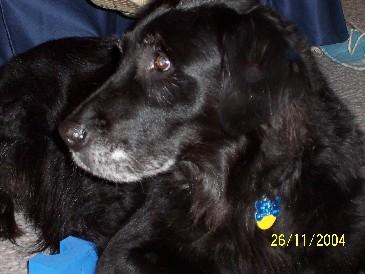
Our dog (shown here) listens very intently when you say squirrel, cat, or treat, but tends to fall asleep during extended conversation or reading.

Amaranth

I'm not sure whether this is Amaranthus cruentus or A. hypochondriacus, since I no longer have the seed packet from two years ago. It re-seeded itself, and it grows well in the really poor soil on the south side of my house. It gets so big that it collapses in the fall, so next year I think I'm going to grow it along the chain link fence, where I can inconspicuously tie it up.

Killerplants.com
has nice introduction to amaranth called "Why Were Amaranths Forbidden?"

I found a link to some interesting amaranth grain recipes - sadly, the only thing I've actually made from harvested & "popped" grain is a kind of rice-krispie treat-like confection.

Saturday, October 08, 2005

Front of the Class

Front of the Class: How Tourette Syndrome Made Me the Teacher I Never Had, by Brad Cohen with Lisa Wysocky

This author is young - only 32. He was in school in the 70's and 80's, for goodness sake! And it seriously sucked for him. Before he was diagnosed with Tourette's Syndrome, people told his mom he was posessed, he got beat up, he was teased and endlessly mocked by other kids, teachers humiliated him, and some of his family members shunned him. Even after his diagnosis with a neurological disorder, and some teacher & peer education at his middle school, the stories he tells about some of his teachers....well, they were just horrible to read.

Instead of being crushed by this, Cohen decided that he was going to be a teacher, and a better one than he'd ever had. He had an awful time getting hired, despite excellent credentials & recommendations, because so many principals were freaked out by his tics (barking, wooping, neck jerking). And of course tics are much worse when you're nervous, so the stories about job interviews were totally nightmarish.

Anyway, Cohen did get hired, and by all accounts was (and continues to be) a wonderful, passionate and skilled teacher. His students flourished (and easily ignored most of his tics, which subside when he is engaged in his classes anyway), his fellow teachers & administrators voted him "Teacher of the Year" for the district, and he went on to get the award for both the county and then the whole state of GA.

Sometimes the writing is a little over the top in the inspirational & motivational mode - I think Cohen could have used a better editor. The basic story is fascinating and often very moving, however. One very sad thing - when Cohen was at his "Teacher of the Year" awards, all of the award winners were supposed to thank a teacher that inspired them. Cohen honestly couldn't. It was bad teachers that motivated him. The only positive help he had outside family & friends was from a middle school & high school principal and a local Jewish youth group.

A couple of other books on Tourette's and/or OCD that I've read in the last few years, that helped me understand different aspects of what my son deals with: Passing for Normal: A Memoir of Compulsion, by Amy Wilensky (funny, more literary than Cohen's book), and Devil in the Details: Scenes from an Obsessive Girlhood, by Jennifer Traig.

Sunday, October 02, 2005

Children and Geese...

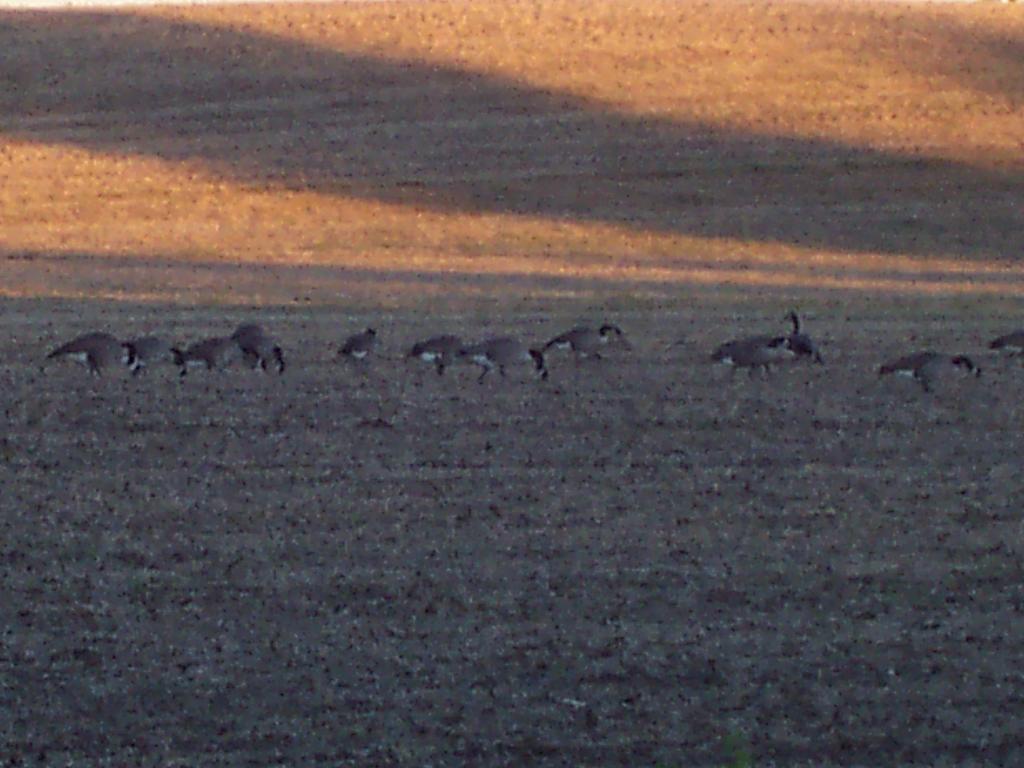
...sound very much alike from a distance. We live about two blocks from my son's school, and I can often hear the screeches of kids on the playground when the wind is right. The other day I thought, geez, now it sounds like they're right out behind our house...must be the neighbor kids. Nope, geese. I didn't know they ate soybeans.

Friday, September 30, 2005

Banned Books for Kids; or Captain Underpants to the Rescue!

One of the most insidious ways to ban a book is to appeal to parents.

"It will damage your child if she reads this non-age-appropriate material."

Sounds reasonable, right? Except for that tricky part: defining what's appropriate. Check out the "Top Ten Most Challenged Books of 2004" on the American Library Association's Banned Book Week website:

The Chocolate War by Robert Cormier, for sexual content, offensive language, religious viewpoint, being unsuited to age group and violence

Fallen Angels by Walter Dean Myers, for racism, offensive language and violence

Arming America: The Origins of a National Gun Culture by Michael A. Bellesiles, for inaccuracy and political viewpoint

Captain Underpants series by Dav Pilkey, for offensive language and modeling bad behavior

The Perks of Being a Wallflower by Stephen Chbosky, for homosexuality, sexual content and offensive language

What My Mother Doesn't Know by Sonya Sones, for sexual content and offensive language

In the Night Kitchen
by Maurice Sendak, for nudity and offensive language

King & King by Linda de Haan and Stern Nijland, for homosexuality

I Know Why the Caged Bird Sings by Maya Angelou, for racism, homosexuality, sexual content, offensive language and unsuited to age group

Of Mice and Men by John Steinbeck, for racism, offensive language and violence

Now I haven't read all of these books, and I'm not planning on reading The Chocolate War to my three year old daughter or handing it over to my eight year old son. But we own a complete set of Captain Underpants (not to mention its hilarious spin-off, Super Diaper Baby), and I am convinced that these books, along with a collection of Calvin & Hobbes cartoon books, are responsible for turning my "I'd rather play my GameBoy" kid into one who regularly devours 300+ page books. George and Harold (the real heroes in Captain Underpants) are good kids. Yes, they get into trouble, but who wouldn't with a teacher like Ms. Anthrope? And the offensive language is of the "It's snot funny" variety, which most boys that age certainly already use.

Attempting to ban this book from a school library is just wrong. Don't let your kids read it if you don't like it, but don't you dare deny it to other kids who might learn that 1) Even kids that are not academically gifted can be heroes; 2) Kids that draw cartoons instead of doing their math problems are not bad kids; and 3) Reading can be fun. And really funny.

Judy Blume (frequently challenged for her kid's books, including Are You There, God? It's Me, Margaret) sums it up better than I could on her personal website:

I believe that censorship grows out of fear, and because fear is contagious, some parents are easily swayed. Book banning satisfies their need to feel in control of their children's lives. This fear is often disguised as moral outrage. They want to believe that if their children don't read about it, their children won't know about it. And if they don't know about it, it won't happen.

Today, it's not only language and sexuality (the usual reasons given for banning my books) that will land a book on the censors' hit list. It's Satanism, New Age-ism and a hundred other isms, some of which would make you laugh if the implications weren't so serious. Books that make kids laugh often come under suspicion; so do books that encourage kids to think, or question authority; books that don't hit the reader over the head with moral lessons are considered dangerous.

Censors don't want children exposed to ideas different from their own. If every individual with an agenda had his/her way, the shelves in the school library would be close to empty. I wish the censors could read the letters kids write.

Dear Judy,
I don't know where I stand in the world. I don't know who I am. That's why I read, to find myself.
Elizabeth, age 13


But it's not just the books under fire now that worry me. It is the books that will never be written. The books that will never be read. And all due to the fear of censorship. As always, young readers will be the real losers.


Thursday, September 29, 2005

The Bookseller of Kabul: Book Review

I'm glad I joined a book club last year (thanks to Patty K. & Kim M. for their determination to recruit me). I read a lot on my own, but this book club has pushed me to read several selections that I almost certainly wouldn't have chosen on my own, but that I'm very happy to have read.

Last year, this included The Known World, by Edmund P. Jones (the story of a slave-owning Black freedman and his family); and Under the Banner of Heaven: A Story of Violent Faith, by Jon Krakauer (the story of a Mormon family, and how two horrific murders were related to historical and modern revelations, polygamy, and patriarchy).

This month's selection - The Bookseller of Kabul, by Asne Seierstad - was not at all what I expected.

Perhaps this is because in the past year I've read a couple books that are set in the Middle East that were much more literary in style: Crescent, by Diana Abu-Jaber (though most of Crescent is actually set in Los Angeles, many passages take place in Iraq), and Reading Lolita in Tehran: A Memoir in Books (obviously set in Iran), by Azar Nafisi. I thought both were very good books, in very different ways. The authors are both extremely skilled with language and symbolism and all those literary things I vaguely remember from school.

Asne Seierstad is journalist, however, not a professor of English or literature (like Abu-Jaber and Nafisi), and it was surprisingly refreshing to read a straightforward account of her three month stay with the family of a bookseller in Afghanistan's capital.

The Bookseller of Kabul reminded me of an unusually well-written ethnography - an anthropologist's description of a particular culture. Seierstad immersed herself in this family's life: she ate with them, slept on a pallet beside the other unmarried women, wore a burka, went to the market, and helped prepare for a wedding with the women. Because of her status as a Westerner (not a regular "woman"), she was also able to accompany the men to work at the bookstore, on family visits, on business trips, and a religious pilgrimage. The different family members are intimately portrayed; the stories are fascinating, shocking, and sometimes unbearably sad. Seierstad's simple and matter of fact prose perfectly suits the setting and the stories.

The only thing I found truly lacking was a good map of Afghanistan and Pakistan, so I could look at the cities and places described. Luckily, National Geographic's map site filled most of the gaps, showing both cultural and geographic features. It would have been wonderful to also see actual photographs of the people involved - but I can see that would not have done much to keep them anonymous.

Apart from understanding a bit more about what it would be like to live in Kabul, to live in an extanded family, to be a man vs. a woman in Afghanistan, a few things that will stick in my mind from this book are some of the Taliban's rules for proper behavior. I never knew that washing clothes in the river, fighting pigeons, flying kites, playing drums, and virtually all music and dance was outlawed during their regime. And the images of the bookseller's books burning in the street in front of his store - several times over the years - is an appropriate one to think about this week, which is Banned Books Week here in the US.

Wednesday, September 28, 2005

Autumn, Fall of the Leaf, and Harvest


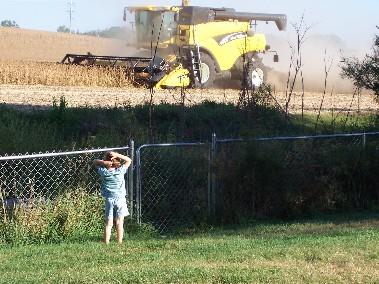
Last week the farmers behind us harvested their soybeans with a very futuristic looking combine. It looked a lot like a Dyson vacuum - but not the one I covet, which is purple and supposed to be especially good at sucking up dog hair.

My son wanted to know why there were two different words for this season. Why both fall and autumn? Which one is it really? Do they mean the same thing? I told him we'd have to google the answer when we got home.

It turns out that this time of year is mainly fall in North America and autumn in Great Britain. This makes sense to me - I bet if I ask most of my neighbors what the names of the four seasons are, they will answer "spring, summer, winter, and fall". They'll probably even list them in that order, though I don't know why it should be so. Possibly it makes sense to start the cycle with spring, but why put winter before fall? Maybe it just sounds better to end on a single syllable. "Winter, spring, summer, and fall" also sounds ok, like you're starting at the beginning of the new year. At any rate, autumn doesn't come into it at all.

In Language and Place, Peter Trudgill explains that

the word autumn is normal in most of southern England, but in parts of the Southwest and in Lincolnshire the traditional dialect word is fall. This reflects the introduction into England in late mediaeval times of the originally French word autumn. This eventually replaced the Anglo-Saxon word fall in Standard English in England and in some of the dialects, but not in others. It is obvious that at one time the use of autumn must have been much less widespread than it is today, since fall was the form which was carried by settlers to North America.

Autumn is definitely a more literary word than fall, although "fall of the leaf", as the season was originally known in England, is rather poetic. Roger Ascham was responsible its first recorded use in 1545, in his book on archery entitled Toxophilus. He explained that it is important to take account of the weather and season when shooting an arrow:

For diversitie of tyme causeth diversitie of wether,
as in the whole yeare,
Sprynge tyme, Somer, Faule of the leafe, and Winter

Peter Trudgill's article goes on explain that "in much of the north of England and Scotland another word, backend, is used" instead of either autumn or fall. After my son finished rolling around the floor after hearing "backend" ("It's the butt of the year!"), we also learned that neither autumn nor fall were used much before 1500 AD. In medieval times, they just called it harvest.

Tuesday, September 27, 2005

On Bathrooms

The other night I was in the bathroom, and my 8 year old son came abruptly to the door. "Are you on the toilet? Are you going to be done soon? I need to go now."

When I told him that I was going to be a while and that he could go upstairs, he sighed loudly enough to be heard through the door, and then pounded up the stairs. A while later, after we were both out of our respective bathrooms, I commented on how it was a good thing that we had two bathrooms (well, actually 1 1/2, but it's the number of toilets that are important). I told him that when his dad was growing up, he had a brother and a sister, and their whole house only had one bathroom, and everyone had to wait if someone else was using the bathroom.

"Yeah, and their one bathroom was even outside," my son replied. I had to explain that Daddy wasn't that old, and I didn't think that anyone still used outhouses in suburban Chicago in the 1960's and 1970's.

Thursday, September 22, 2005

Cutting the Mustard or the Cheese?

My husband informs me that I'm confusing "cut the cheese" with "cut the mustard", and that only the first phrase refers to farting. I must defer to his expertise in flatulence. I guess that I was thinking about mustard gas when I confused the two.

I e-mailed Michael Quinion and sent him the link my blog review of his book, and he very kindly e-mailed me back and thanked me for the information on Blue's Clues and how Blue and Steve skidoo through pictures to all sorts of educational places. He also corrected my spelling of etymythology, which I immediately went and fixed.

I am having loads of fun browsing his World Wide Words, and am planning on using all kinds of obscure but colorful phrases in my writing. Like makebate: A person who creates contention or strife. But enough bafflegab, the three year old's naptime is over and it's time to pick up my son at school.

Wednesday, September 21, 2005

No Child Left Behind

A very cool bumper sticker:


...with information on how to get yours here.

Ballyhoo, Buckaroo, and Spuds

Sometimes I pick out books based almost entirely on the title (like Christopher Moore's many wonderful books, including The Lust Lizard of Melancholy Cove). Especially if they're free from the library. This was one of those books, and it didn't disappoint.

The complete title is actually Ballyhoo, Buckaroo, and Spuds: Ingenious Tales of Words and Their Origins, by Michael Quinion. In case you are in any doubt of his qualifications, the cover sports the word SMITHSONIAN in big red letters above the title, and "Contributor, Oxford English Dictionary" below his name.

It was a relaxing yet erudite read, perfect for browsing or people with small children and correspondingly short attention spans. Apparently, the internet has spawned quite a few messages on word origins that are best explained as folk etymology or etymological myth, also known as etymythology: "a group of illustrations of the imaginative ways in which people can work very hard to make sense of the unknown" (p.2-3).

Quinion has taken some fun words and phrases, starting with Akimbo and ending with Zzxjoanw, and written short but occasionally ever-so-politely imperious essays on the fictious stories, the obscure and fascinating histories, and the scholarly research that the wonks (yes, that's one of the words reviewed) at the American Dialect Society, the OED and other organizations have undertaken.

Several interesting websites are included in a "Webliography", including Quinion's own World Wide Words, which is definitely the bee's knees. My only disappointments, which I may have to write to him about: there is no mention of farting in "cut the mustard", nor any description of Blue's Clues under "Twenty-Three Skidoo". Possibly Mr. Quinion isn't around anklebiters enough to have absorbed these modern usages.

Weeds

I am fascinated by weeds: the weeds in my yard, the concept of weeds, the origins and history of different weeds (part & parcel of my former academic interests in the origins of agriculture), and eating weeds, for which I recommend James Duke's Handbook of Edible Weeds. From the library, because I saw when I made that link that even used copies are selling for over $80.

In my yard: goosefoot (aka lambsquarters or Chenopodium album), pigweed (Amaranthus retroflexus), purslane, carpetweed, plaintain, dandelion, goatsbeard, jewelweed, Canadian thistle, black nightshade, goldenrod, ragweed, stinging nettle, horsetail, Japanese knotweed, wood sorrel (aka 'sweet clover'), white clover, shepherd's purse, prostrate spurge (one of the few I actively dislike), creeping charlie (or creeping jenny or ground ivy), crabgrass, Queen Anne's lace, pokeweed, knotgrass, daisy fleabane, and I'm sure many more. I think all of these except jewelweed and purslane are introduced (invasive) species. This isn't too surprising considering these weeds are adapted to my lawn, garden areas, and the disturbed edge of a soybean field/sump pump drainage ditch/creek behind the yard.

I know there were native chenopods and amaranths; I have some lovely Mexican amaranth (pigweed) volunteers. But the really agressive ones here are the European varieties.

A flowering weed;
Hearing its name,
I looked anew at it.
~Teiji


Monday, September 19, 2005

Peromyscus leucopus

...also known as the deer mouse, caught in our garage. Minutes after this picture was taken, this little guy (or girl) leaped to the edge of the five gallon plastic bucket, making my husband shriek in surprise, and scampered behind some of the junk we may need someday and so keep stored along the garage walls.


I think it's pretty cute, but I don't like him eating the granola bars right out of my car and pooping on the seats.

Thursday, September 08, 2005

Where Did That Come From?

My three year old daughter informed me yesterday that "When I have a big butt and eat peanut butter, then I'll be a mommy."

She just said this out of the blue, too. I did not ask her if she thought I had a "big butt".

Wednesday, September 07, 2005

Eyewitness to History via Blogs

I find something totally compelling about reading firsthand accounts. Back before I had internet options for used books and interlibrary loans, my husband & I joined the "History Book Club", and one of our selections was an uneven but occasionally riveting anthology called Eyewitness to History.

This past week, reading blog accounts by people in New Orleans, like the internet guys holed up on the 12th floor of an office building, and a couple of paramedics in the group that tried to hire a bus out of town have added a sometimes shocking, unfiltered side to my usual diet of CNN, MSNBC, and NPR. The photographs are amazing, too...and now that photo censorship is going into effect in New Orleans, I'm especially grateful to have Internet access.

Still Trying to Think of Ways to Help...


...that don't put you deeper into debt.

Give blood.

And imagine sitting in a shelter. Wouldn't it be nice to have a trashy book to read to take your mind off of things for a little bit? Wouldn't it be great if you had a bedtime story to read to your daughter? Not "My Pet Goat", though.

There are a couple of places collecting used books for people - Borders and Waldenbooks in Houston are accepting donations in their stores, or you can send them to:

OPERATION BOOKS FOR REFUGEES FROM KATRINA
Borders Books
3025 Kirby
Houston, TX 77098

And a Nora Roberts fan group is collecting all kinds of books here:

Books for Comfort Drive
c/o Turn the Page Bookstore Cafe
18 N MAIN ST
Boonsboro, MD 21713

Do this after you make that cash donation to the charity of your choice, obviously.

Give Something Now


I know most of you have already donated to the Red Cross or another organization (see a huge list here, if you want some alternatives).

But if you have clean and gently used socks, underwear, children's clothing and towels, they desperately need them at shelters in Baton Rouge, along with new toothbrushes, toothpaste, diapers, baby formula, soap and "feminine hygiene products":

Katrina Disaster Relief
Salvation Army
7361 Airline Highway
Baton Rouge, LA 70805

and yes, the US Post Office is delivering mail there. So go on, pack up some towels and socks. You need to clean your closets out and simplify your life anyway.

Wednesday, August 24, 2005

Lake Huron's Shore

My son got to see some zebra mussels (something he's wanted since reading
The Day the Great Lakes Drained Away
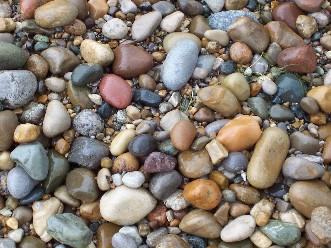
, which the AADL just bought on my suggestion!) when we went to visit relatives up on the east coast of the Thumb. My husband found a petoskey stone (thought they were only supposed to be on the other side of the state?) and the lake was absolutely breathtaking.


So many shades of blue, green, grey, and brown, in both the lake and the sky. It's fun to be able to see the weather across such a distance.

Thursday, August 18, 2005

The Official Interview Game

from Heels at Mundane Superhero:

1. What childhood book influenced you the most and why?


I think Frances Hodgson Burnett's "The Secret Garden" had a huge influence - I read it at a very young age, and it is probably responsible for my love of "Pride & Prejudice" (both books and movies) and literature in general. Also, this was the start of reading romances (both gothic & otherwise), combined with gardening and nature-loving and an examination urban/rural differences and social class. What more could you want, really?

2. You may change one historically significant event in one way only. What will you change, and why?

The election results in November 2004, for obvious reasons. And I thought the Reagan years were endless. Ha.

3. Who was your favorite teacher and have you adopted any of the traits you admired in that person as your own?

I think my high school rhetoric teacher, Mr. Adrian, was my favorite. I've adopted some of his writing styles, and certainly many of his editing techniques. Cut that deadwood! Read Strunk & White.

4. Who's on your top 10 list?

Top 10 for what? I'm just going to list ten 'public' personas I'd like to hear or see more of in general. :-) Unsurprisingly, many of them are authors.

Christopher Moore
Natalie Angier
Mary Catherine Bateson
Liam Neeson
Colin Firth
Anthony Bourdain (it would be good if he could cook for me)
Miriam Peskowitz
Michael Moore
Lois McMaster Bujold
Marcia Ball

5. Dead People Dinner Party: you may invite 5 other people. Who and why?

Margaret Mead
Gregory Bateson
Stephen Jay Gould
Thomas Jefferson
J.R.R. Tolkien

They're all academic/author types who also were interested in popular culture & eduation. I think they'd all get along well (although maybe Mead & Bateson wouldn't, as ex-spouses) and would have some fascinating stories and conversations.

Want to play? The Official Interview Game Rules:
1. If you want to participate, leave a comment below asking to be interviewed.
2. I will respond by asking you five questions - each person's will be different.
3. You will update your journal/blog with the answers to the questions.
4. You will include this explanation and an offer to interview others in the same post.
5. When others comment asking to be interviewed, you will ask them five questions.

Free Books!

I love this idea (and thanks to Excrutiating Minutiae for suggesting it) - a book swap service called Frugal Reader. You list the books you don't want anymore (like the ones that still haven't sold on half.com, because there's a billion of the same title already for sale at 75 cents plus shipping & handling), and if someone else wants it, they request it. You send it via media mail to them ($1.42 for most paperbacks), and then you get a credit for a free book to request for yourself. When you sign up, if you list five books you get two free credits for yourself.

It's the online version of the paperback swap rack at my local library, except the selection is bigger and no one gets to take and never give. Obviously, Frugal Reader will work best if lots and lots of people sign up. I think most of the books available are pretty mainstream, but that is exactly the kind of books that libraries often don't like to buy. Please don't mock me for reading and enjoying Nora Roberts and Amanda Quick.

Tuesday, August 16, 2005

Simplify Your Childrearing

Trees Make the Best Mobiles: Simple Ways to Raise Your Child in a Complex World, by Jessica Teich and Brandel France De Bravo

I like the basic premise of this parenting book a lot: you don't need a lot of complicated stuff to raise happy kids (basically the same idea behind "Confessions of a Slacker Mom", which I gleefully maligned here). What kids really need, this book repeatedly informs us, is you; your attention, your consistency, and plenty of opportunities for free play, reading, etc. There are short 2-3 page essays on all kinds of different topics, like "Octopus Mom: Setting Priorities and Simplifying Your Llife", "Mind Over Manners: Etiquette", and "It's My Party and I'll Cry if I Want To: Temper Tantrums".

Most of the suggestions are rather liberal, and pretty much in line with basic Attachment Parenting ideas. The preface clearly states that "Our book advises you to do less, listen more, speak directly to your newborn, involve your infant in her own care, and treat this mewling creature with the same respect you treat your partner, and yourself."

For a new parent, this might be a good common-sense introduction, and the lessons are all easily absorbed from the short, well-written essays. There is no index, though, and the chapter titles are sometimes ambiguous, so a frantic mother can't look up "tantrums" and then turn to see if her daughter's behavior is normal and if she is responding in a kind, gentle, yet appropriate disciplinary manner.

Some of the authors' pronouncements did strike me as a bit over the top and decidedly humorless. For instance:

Think of every activity as a chance to slow down down, to fill the moment with your concentration and care. Even changing a diaper can become - dare we say it? - pleasureable. It's a moment to connect with your child...Don't use toys or a mobile to distract your newborn. Your eye contact is more compelling than any rattle. Think of diapering as an activity you engage in together, and tell him so..."

Pfft. Tell that to the mom changing her five hundredth diaper of the month, the blowout that shot up her son's back and soaked through all his clothes. Personally, I found distraction with toys a wonderful technique for making diaper changes enjoyable, at least when my son didn't stick the toy straight into his poop.

But perhaps my kids just aren't the quiet, understanding type, happier lying on their back looking at the beauty of the natural world than being stuck in an evil mechanical swing or bouncy seat. I do know that my kids would react very badly to some of the authors' suggestions for dealing with tantrums. I'd say if you don't have a "spirited child", then the techniques described here have a much better chance of working well for you.

Furthermore, I'm not sure that I'm a true believer in Teich and De Bravo's assertion that "The natural grace and decency of children will often carry the day, if we trust them to behave appropriately", especially after observing the 1st-4th grade kids on the playground at my son's school. I'm guessing Teich & De Bravo are not big "Lord of the Flies" fans. Me, I do have a glass half empty mentality, but those that tend to consistently (and somewhat uncritically) see the sunny side of things might find this book just what they need to simply parent.

Monday, August 15, 2005

Googlebombing

I've never tried this, but I'd like to add my blog to all of those attempting to make a point on "Intelligent Design" by linking it to the National Center for Science Education.

Skeptico looks like interesting reading. It is such a beautiful day, however, that we're going out to play now. We have to go to a park or playground because ChemLawn was spraying something awful smelling all over our next door neighbor's backyard, and I don't want to breathe the undoubtedly toxic pesticides wafting over our backyard now. Unfortunately, I don't think they'd respond well to some literature from the National Coalition for Pesticide-Free Lawns. In fact, I'm fairly sure they think we should be applying more chemicals to our lawn to cut down the crabgrass & other weeds, instead of waiting until next spring to use corn gluten.

Friday, August 12, 2005

Sprol in LaSalle Co., IL

It's kind of shock to see your bucolic hometown just a few miles from one of Sprol's featured shots on "our bleakest landscapes of overconsumption and decay". Ah well, at least they didn't mention Radium City or those pesky EPA Superfund sites.

Wednesday, August 10, 2005

Garden Sass (aka Garden Sauce)

Yspi~dixit has some of the most interesting tidbits and intelligent commentary on her blog, and her question about "garden sauce" sent me googling and dog-piling and blingo-ing across the net, reading all kinds of fascinating excerpts - everything from an 1824 letter from Ann Arbor settler Ezra Maynard to a Betty Crocker cookbook published in 1956. I would have written about this sooner, but I had to take the kids to the playground, Target, a birthday party at Chuck E. Cheese, and feed them, take the van to the dealer for a recall, and do all that everyday stuff that I don't feel like blogging about right now.

First, the quote from the letter that set me off, which is also the earliest web reference I found to "garden sauce" (note all bold emphasis in the following quotes is mine):

Owing to the great emigration into this place, provisions are high and we shall have to pinch a little perhaps till we can raise them ourselves, shall immediately plant some potatoes, garden sauce, and sow some turnips; and calculate to put in some wheat, and plow as much as possible for spring crops...from letter by Ezra Maynard, June 4, 1824.


In 1852, Brigham Young preached the following:

Here are their gardens groaning with abundance of the products of the earth — with potatoes, beets, and cabbage. Here are milk and butter and fine flour in great quantities. Here are the tomatoes and garden vegetables of every description. Now, you say, I have got home, to my brethren’s door, and they have got plenty. What would you wish these brethren to do to you? Ask that same question to your neighbours, and get them to answer it. I can tell you what you would they should do to you. You would wish them to say, Come, brother or sister, into my garden, and help yourselves to some garden sauce; walk in here, and take and eat, and make yourselves glad.


From a letter from a Civil War soldier in the South in 1863:

Very few Southerners ever eat any beans. We have also plenty of garden sauce, cucumbers, beets, etc. and in the streets can get huckleberries, blackberries, apples, pears, peaches, etc.


I found the intriguing title "The Balloon and the Garden-Sauce" on a poem published in 1889 by Irving Browne, but although The Green Bag (an Entertaining Journal of Law!?) is still being published, I haven't searched out the 19th c. issues in any library archives. From these quotes, though, it appears obvious that garden sauce was a term for what we would today call produce: vegetables, grown in a garden, in contrast to grain, grown in fields.

I did not find an explanation of the origins of the term "garden sauce", but did uncover the the following citation from Betty Crocker’s Picture Cook Book, ca. 1956:

In the early days of our own country, vegetables were "garden sauce" or just "sass" to go with meat. Beets and carrots sometimes were referred to as "long sauce", while onions and potatoes were "short sauce". A vendor who sold vegetables from door to door was a "sauce man".


Ah ha! Garden sauce at some point in the early 1900's became "garden sass". A column on “Sauces to Impart Richness”, by Catherine Mackenzie in the June 30, 1935 edition of the New York Times (p.SM12) also describes how:

"...the return of the gardening season serves to recall that vegetables were long known colloquially as "garden sass," and a vegetable garden as a "sauce garden". The Oxford dictionary defines one use of the word “sauce”: “Chiefly US, vegetables or fruit, fresh or preserved, taken as part of a meal or as a relish”.


When you search the web for "garden sass", more interesting citations turn up, including at least three books with the title "Garden Sass" published since 1950; one subtitled “A Catalog of Arkansas Folkways”, another “A Collection of Recipes by the Growing Season”, and the final one “The Story of Vegetables”. It is also clear that sauce is something that accompanies meat, and that at least in the early 20th century, garden sass was not as valuable as meat, or of much account in general. This become more obvious in the following quotes:

He was a little and dried-up man of something like 80 years. Mounted like a manikin on the back of a big white horse, he bore before him a bunch of green corn-fodder, and turned in at the gate to a piece of low ground thick with walnut-trees, between the rows of which the soil was studded closely with that peculiar greenery which delights the peasant soul, and which, when finally realized upon, does not amount to any value whatever; pumpkins and peppers and onions, some spindling stalks of corn for roasting-ears, and all that miscellany which comes under the comprehensive head of "garden-sass," and which, so far as all modern experience goes, it is cheaper to buy than to raise...from Old Californian Days, by James Steele, 1889:164-165


Thirty dollars for tools and seeds, ninety-seven dollars' worth of labor, and four times that amount of worry and vexation of spirit, results in some forty dollars' worth of "garden sass," which is promptly referred to the interior department of the neighbors' cows...from "The Cow", in The Iconoclast, by William Cowper Brann, 1898


At this moment Case pere and mere emerged from the kitchen loaded with provender. "Here`s enough an` more`n enough, I reckon," said Jeb Case. "We got eggs, butter, bread, bacon, milk, an` a mite o` garden sass."

"But we ain`t goin` to charge you nothin` fer the garden sass," interjected Mrs. Case...from The Oakdale Affair, by Edgar Rice Burroughs, 1937, ch. 7.


Today "garden sass" is a quaint phrase, a mention of the Good Old Days found only in historic documents. It also appears to be something you might name a blog or an art exhibit, as in Love Apples and Other Garden Sass, a interdisciplinary show in Brooklyn, where "All the artists in the show individually contribute their ongoing correction of personnel mythologies and unraveling stories, like a garden sass casserole."

No Mushrooms, Please

My three year old daughter today insisted that she have one of the granola bars "with NO mushrooms". I was confused by this until her older brother rolled his eyes and said "She means marshmallows" (yes, I bought S'mores flavored granola bars).

My eight year old son can be so mature and then revert back to preschooler behavior ten minutes later. Last night as we finished the out loud reading of "Charlie and the Chocolate Factory", he stopped me at the beginning of the last chapter. "Wait a minute....wait...I want to savor the moment," he said. He jumped on the bed (like someone crashing through a roof) when the glass elevator crashes into the Bucket house. Hope I'm not giving out any spoilers here. We will probably be going to see the movie this weekend, now that we've read the book.

Tuesday, August 09, 2005

Visitors


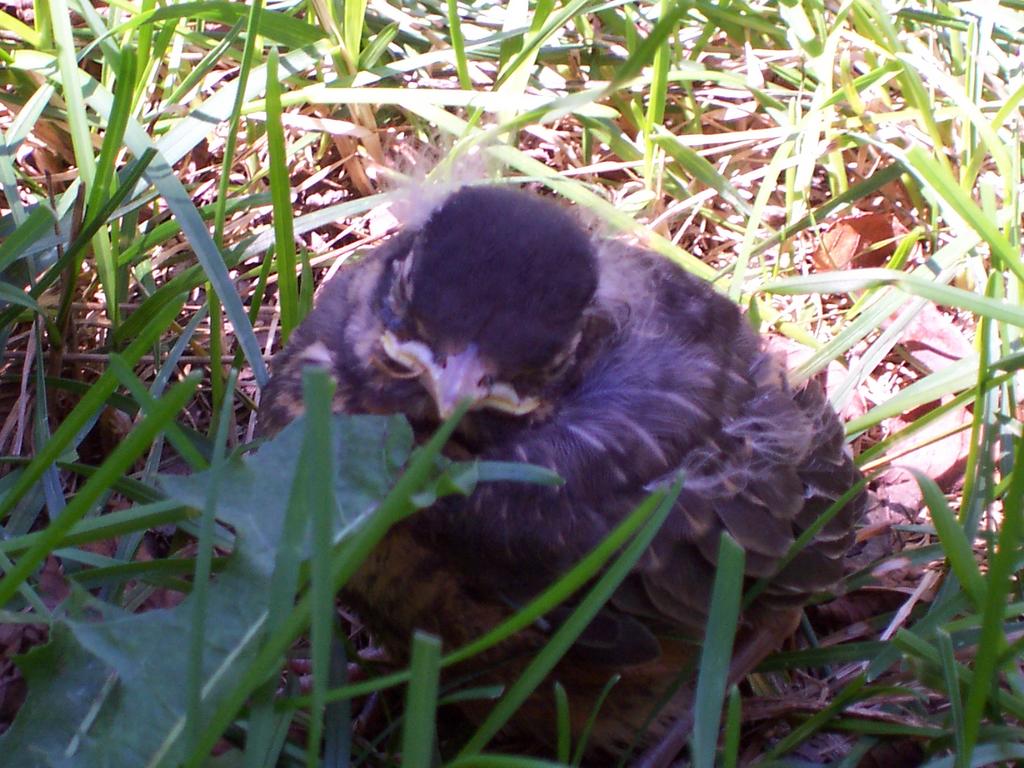
Here's one of the recent visitors to our backyard - a fledging robin. It hopped around a bit while my children begged to keep it as pet. I pointed out the mother (or father?) robin fluttering on the eaves overhead, and argued that we should leave it alone. My 8 year old son found a worm for it, and both kids were delighted when it opened its mouth and swallowed the worm that I dangled it over its head.

The night before last I was awake long after everyone else, and heard coyotes yipping in the distance. When we lived on the north side of Ann Arbor, we started seeing them in the scrubby field by Arrowwood, but this year is the first we've heard them down here in Saline. I wonder if their population is increasing, or if these animals have been displaced by all of the new development along Maple, Textile, Michigan Ave., Platt, and South State.

An internet tidbit on urban coyotes with a great picture here.

Last night's visitor was either a chirping skunk, or a skunk and some unknown noisy chirruping screecher. My husband thinks it was a raccoon. The skunk smell was overwhelming, but luckily gone by the time we got up. It was a good reminder to check the backyard for skunks before letting our dog out at night. I don't want to have to drive to the all-night grocery to buy hydrogen peroxide and baking soda and spend half the night washing the dog again.

Monday, August 08, 2005

Ecological Invasions

Out of Eden: An Odyssey of Ecological Invasion, by Alan Burdick is fascinating non-fiction, but it was sometimes slow going for me, because the author goes into great depth on some species and the mechanisms of their ecological invasions. He also describes current methodological and philosophical debates among ecologists, which is is good, because he's not over-simplifying things, but it let's face it: reading about plankton identification techniques, the ways to test the climbing abilities of brown tree snakes, and our inability to know the history of marine invertebrate ecology may not be everyone's cup of tea.

Burdick focuses on three main areas: Guam and the brown tree snake (originally from Australia); Hawaii and it's native birds & fruitflies and intoduced pigs, earthworms, wasps, and trees; and San Francisco Bay and the green crabs and hundreds of other marine plants & animals that are irrevocably changing our oceans and shores.

I learned a ton of mind boggling things - for example, the Hawaiian Islands are part of an ongoing geological process, and its birds (the ones not already extinct), different on each island, are descended from birds that were blown from islands that have already sunk back into the ocean.

There are more bizarre varieties of marine invertebrates that I could have imagined. Many are larval forms of jellyfish, sponges, and things not clearly plant or animal, visible only under a microscrope. Every shoreline and different part of the ocean has native species with its own interactions, but ballast water (thousands of gallons pumped in & out to balance ships) has transported hundreds of these species to entirely new places, with unknown consequences. Voila! Zebra mussels in the Great Lakes and the Mississippi watershed.

There are nice biographical bits on several seminal ecologists (with a few good jokes concerning their larval states), the history of "alien" research, what these scientists actually spend their time doing, and their hopes for the future.

What this book doesn't do is try to cover all of the different kinds of invasive species that may be changing your local environs today - so don't expect an overview of garlic mustard, the emerald ash borer, the mosquito that carries the West Nile virus, or carp (all relatively recent anthropogenic introductions to Michigan).

This would be a good place to include a link to the Invasive Species Weblog.

Friday, August 05, 2005

Summer Wind

It is a sultry day; the sun has drunk
The dew that lay upon the morning grass;
There is no rustling in the lofty elm
That canopies my dwelling, and its shade
Scarce cools me. All is silent, save the faint
And interrupted murmur of the bee,
Settling on the sick flowers, and then again
Instantly on the wing.
-William Cullen Bryant, 1824

My son pulled the book that contains this poem from in a bookcase in our family room. I think he was intrigued by its peeling leather cover. It's from the 1901 edition of the Handy Dictionary of Poetical Quotations, which was owned by my great grandmother's sister, Helen, who wrote her name and date in the front in 1907, when she was 12 years old. I had a good time browsing the entries for different topics last night (heavy on Shakespeare), and wondering if Helen or my great grandmother Louise marked the entries for Death and Tomorrow.

Flying Spaghetti Monster...


...the perfect antidote to Intelligent Design, which I discovered via Pharyngula. Lots of interesting discussion on teaching science, politics, and more there.

Here's the beginning of the "Open Letter to Kansas School Board", which started the FSM phenomenon:

I am writing you with much concern after having read of your hearing to decide whether the alternative theory of Intelligent Design should be taught along with the theory of Evolution. I think we can all agree that it is important for students to hear multiple viewpoints so they can choose for themselves the theory that makes the most sense to them. I am concerned, however, that students will only hear one theory of Intelligent Design.

Let us remember that there are multiple theories of Intelligent Design. I and many others around the world are of the strong belief that the universe was created by a Flying Spaghetti Monster. It was He who created all that we see and all that we feel. We feel strongly that the overwhelming scientific evidence pointing towards evolutionary processes is nothing but a coincidence, put in place by Him.


More on FSM & his (its?) church at Uncyclopedia here.

Can you imagine if this actually goes to court in Kansas? The plaintiffs will have to wear full pirate regalia, of course. The better to "bask in his noodlyness and stare agape at his meatitude".

I hope no one thinks I'm mocking Christians with this post. I only mean to mock those that want to include religious-based pseudo-science in public schools. Clearly, scientists need to do a better job of educating and popularizing not just the results of their work, but their methods. Science is qualitatively different from any other other way of looking at the world, and people who think that "Intelligent Design" is just another way of doing science have missed a few crucial points in their education.

Wednesday, August 03, 2005

Bad Moms

Just wanted to post a wonderful quote from Nadine, a friend I've never met from my "pregnant and giving birth in Nov 1996" e-mail list which is now almost ten years old (our kids are all 8 1/2):

"Instead of "bad mom", can we say "my parenting style is not currently in concordance with the needs of this particular child"?


I need to check out that Mommy Guilt book, which was co-authored by a fellow M&M member.

Tuesday, August 02, 2005

Excuuuuuuse Me

It's funny when my 3 year old daughter says this after she burps. Because it sounds pretty much like "Sue me," like she's an obnoxious teenager saying, "So sue me if I burp. Whatevah."

Meanwhile, my 8 year old son wants to move to the "west coast of California" because there are wild hermit crabs there. He just wants to lie on the beach and let them crawl all over him. Ewwww. He hasn't been able to catch a cicada yet this year, although we're hearing them up in the (nearly) dead elm tree.

Friday, July 29, 2005

A Couple of Books on Our Parents' Parenting

Today I'm going to cut & paste a couple of book reviews that I did on Sybermoms.com, because you can't discuss books there unless you're willing to pony up $15/yr. for an account upgrade on their self-proclaimed "bitchy, opinionated" parenting board (which I think is worth it). Just don't judge that site by whatever idiocy you read on the Main Event. That stuff changes like the weather. French Impressions: The Adventures of An American Family, by John S. Littell was a delightful, relaxing read that reminded me of Shirley Jackson's Life Among the Savages. It's the memoirs of the author's mother, which he added to and edited, of life in France in 1950 with a student husband and two young sons - a four year old and a constantly crying (from midnight-5am every night!) and very spirited 15 month old.

Part of the book's appeal is in how different things were back then - four year olds could go down the street a couple blocks to play with their friends without their parents worrying about it. I'm not sure the world is so much more dangerous (in some places, anyway) than it was in 1950, but most parents today wouldn't dream of letting their preschoolers roam like John Littell did.

The story about him peeing off the side of the Eiffel Tower was pretty darn funny, as were many, many other vignettes in the book. And now I want to go eat crusty French baguettes filled with dark chocolate.


Confessions of a Slacker Mom, by Muffy Mead-Ferro is a book that was featured along with Judith Warner's Perfect Madness in a February issue of Newsweek devoted to the stresses of motherhood.

I wanted to like this book, despite having read a damning review by a fellow Sybermom, but it sucked even more than she said it did. Can any nitwit out there get a book of smarmy, self-righteous essays published? I'm seriously missing the boat, if so.

It's the blanket statements that got to me, especially combined with Mead-Ferro's vapid writing. And like Naomi, I actually agree with many of the "slacker mom" ideals, like natural consequences and plenty of unstructured playtime. I agree that the huge amounts of toys that many parents buy are excessive. But here's a representative passage for you to ponder for yourselves:

But I don't feel sorry about the fact that I don't do my share of buying, assembling, picking up, sorting, or fixing toys.

I'm not simply trying to avoid a mess in my kids' rooms, though. I'm also thinking about the mess I don't want in their heads. I'm pretty sure if my children were continually supplied with every latest toy, that they would quickly develop a dependence on always having something new. Where the only good toy is a new toy.

I can only imagine the consequences if they never grow out of that. Actually, I don't think I have to imagine them. I think I've seen them for myself.

I know more than one gal with the expensive habit of always having to have new clothes. I'm distantly related to someone who thinks his new car is no good after a year. And I also know of an unhappy person who intermittently feels he needs a new spouse. Perhaps, just perhaps, this all started when they were little and had an endless incoming stream of new toys.


Can you say facile over-simplification? If I'd bought this book I'd compost it. Now I'm just going to write scathing reviews and urge everyone to read French Impressions or Life Among the Savages if they want to read about the "Good Old Days". They're both more interesting, colorful, and complex, and you can probably do without a heavy helping of sanctimony. Get yourself a loaf of pain au chocolat, take the afternoon off, and be a real slacker with your kids instead.

Wednesday, July 27, 2005

A Field Guide to Sprawl

This book by Dolores Hayden, with aerial photographs by Jim Wark, is just what I needed to understand what's going on around me in southeastern Michigan. Actually, this kind of development is happening pretty much everywhere in the US. But her handbook gives you the terminology to understand it, with short, witty explanations and amazing photographic illustrations.

I'd heard of McMansions, and seen them increase a hundredfold around Ann Arbor, but Hayden's book describes the origins of the term (aka "tract mansions") and portrays its relatives, the "starter castle" and the "sitcom suburb". But my favorite entry in Hayden's book is called "Putting parsley round the pig" and describes tarting up an eyesore. All those huge subdivision signs I've seen, with their monolithic pillars or stonework, fancy lettering, ridiculous names, gates, and elaborate landscaping: Putting parsley round the pig. How apt and poetic.

Some of the entrances to these neighborhoods that leapfrog out from Ann Arbor to my house in Saline sport gazebos, guardhouses, waterfalls, or bizarre arrangements of hostas, daylilies, Japanese maples, ornamental grasses, petunias and impatiens, along with smaller signs advertising the price range (and implied exclusivity) of their houses. In a related vein, Hayden talks about "Privatopia", "where residents are legally bound to obey the covenants, conditions, and restrictions (CC&Rs) of a homeowner association" (p. 84). This is something that Louv talked about so eloquently in "Last Child in the Woods" (see previous thread).

Wow. You give up a lot of your freedom to live in these "safe" neighborhoods. CC&Rs can specify appropriate paint/brick/siding colors (and curtain treatments visible outside!), types and colors of plants that may be used in your yard, and all kinds of tenant behavior. Welcome to Stepfordville, please leave your tomato plants, clotheslines, and folk art at your previous residence. And don't even think about putting up a basketball hoop or letting your kids draw with chalk on the sidewalk.

Other notable entries include LULUs - Locally Unwanted Land Uses - often the target of NIMBY (Not In My Back Yard) campaigns; and TOADs (Temporary, Obsolete, Abandoned or Derelict) sites. Tani, you'll be interested to know that their scary photograph of a TOAD is from downtown Youngstown.

Monday, July 25, 2005

Serve It Forth

Too few of us, perhaps, feel that the breaking of bread, the sharing of salt, the common dipping into one bowl, mean more than satisfaction of a need. We make such primal things as casual as tunes heard over a radio, forgetting the mystery and strength in both. From "Meals for Me" in Serve it Forth, by M.F.K. Fisher, p.43; 1937

A couple of years ago, we had a guest speaker at a Mothers & More meeting whom I think was a nutritionist. She gave a presentation on “Women’s Healthy Lifestyles”, which reminded us that we all need to eat more fruits and vegetables and exercise more. Not much of a newsflash there, but it’s always good to remember when you’re about to have doughnuts and coffee for breakfast, then sit your kids in front of the tv and yourself in front of the computer.

The other thing I remember about this now nameless woman’s talk was her insistence that it is bad to eat your children’s leftovers for your own meal, especially if you are a stay-at-home mother. I think the idea was that eating leftover kid food showed you didn’t care about food for yourself. You deserve a real meal, one like M.F.K. Fisher would eat, prepared with wholesome ingredients that can be savored and appreciated, even if eaten alone or with offspring that are only interested in blowing bubbles in their milk.

I pondered this while I ate the other half of my three year old’s lunch banana. I didn’t want to just dump it in the compost container with the coffee grounds and strawberry tops, after all. No need to waste perfectly good food. This was a refrain that I often heard as a child, as my father made a sandwich out of the last piece of fuzzy green bread in the plastic bag, meticulously shaved white spots off cheese, and ate almost liquid bananas. He also discouraged us from having "eyes bigger than your stomach” and taking too big a portion, which was any amount that would leave leftovers on our plates.

I often eat my kid’s leftover food, as a quick supplement to whatever else I’m eating. The rest of today’s lunch was a (dinner leftover) pork chop with peanut sauce, iced coffee, and some pretzels. I’m not sure if M.F.K. Fisher would have approved, but it was a strangely satisfying combination.

A lot of dieticians out there on the Internet would definitely not approve. Apparently, cleaning up your children’s leftovers is one of those unthinking habits that add extra flab to mothers’ thighs, making it impossible for us to shed those post pregnancy pounds. I suppose this is true if you eat a big meal and then feel compelled to clean all of your kid’s plates afterwards -- or if you finish their yogurt & hot dogs before you have your adult meal later in the evening. My kid’s leftovers are heavy on the fruits and vegetables, though, and I don’t feel the need to eat every scrap they leave behind. We do have a dog, and a composter with a thriving population of invertebrates; both are more than ready to devour food remains. Occasionally, I finish pieces of cake from which only the frosting has been consumed, but I think that dealing with a birthday party for ten or so two-to-four year olds probably cancels out the extra calories.

In a lot of traditional cultures, the elders eat first and the children eat afterwards (sometimes it is the women & children). This can be a sign of respect for the aged, which is laudable and arguably lacking in our culture, but it can also be hard on the kids. One of the things I remember most from Dancing Skeletons, Katherine A. Dettwyler’s amazing book on children & nutrition in West Africa, was how shocked her informants were when she picked her meat out of her bowl of stew and made sure her daughter got enough first. A lot of the children she saw were malnourished, because the elders got most of the meat, leaving the starchy stew leftovers for the kids. Extended breastfeeding helped counteract this deficit a bit, but when another child came along, weaning meant hard times ahead.

As Jesus said to the Syrophoenician woman, “Let the children first be filled: for it is not meet to take the children's bread, and to cast it unto the dogs.” But after she answered that “yet the dogs under the table eat of the children's crumbs” (Mark 7:26-29), a demon was cast out of her daughter. So let that be a lesson to you, however you interpret it.

Baby Team Spirit

OK, I know there are a lot of university alumni parents out there who are nostalgic about their days on campus, and they would be happy if their children went to the same college they did. But this is just fuh-reaky: Baby Wolverine video.

On the other hand, I found this link through a very cool parenting blog I'd never seen before: PlayIsTheWork.

Friday, July 22, 2005

Some Suggestions for a Wonderful Anniversary

Like if it's (unbelievably) your 19th anniversary.

Surprise your spouse by taking the day off work, allowing you to take the family to the local Botanical Gardens. Spend the morning walking through gardens and woods and reassuring your children that you are not lost and you will be back at the safety of the car soon. Eat some wild raspberries, successfully avoid lots of stinging nettles, see frogs and minnows and a muskrat swimming.

Then let your spouse spend the late afternoon shopping and reading without children. Now reveal that you have arranged for a babysitter, and the two of you get to go out to dinner at a nice local restaurant, without needing to clean up spilled chocolate Silk soymilk or attempting to convince your three year daughter that tears are really a bit extreme when a macaroni noodle has dropped out of the bowl.

At your relaxing dinner, give your spouse some exotic bronze earrings and chocolate and a photo album. Exclaim at her thoughtfulness in giving you an electronic dohickey. Finally, walk around town, go to a coffee shop, and then find a trumpet vine growing on a wall right next to your car, and surreptitiously cut a shoot to start a clone in your own backyard.

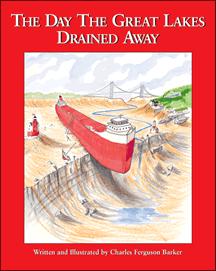
The Day the Great Lakes Drained Away


by Charles Ferguson Barker is a wonderful new kid's book that anyone who lives in the area should enjoy. It gets a little preachy, but maybe it'll help your kids remember to turn the water off while they brush their teeth. The illustrations of all the fascinating stuff under the lakes near Chicago, Detroit, etc. are wonderful, as are most of the rhymes using city names.

My favorite definition of rich: able to buy any hardcover book I want without agonizing about it. I wish I could have just bought this one when my son grabbed it at Nicola's, but instead I requested the AADL and SDL libraries buy it.

Friday, July 15, 2005

Free: Two Potty Chairs (One Never Used)

The unused one is this truly obnoxious offering from Fisher-Price, which plays a royal flourish like the one that used to be on some margarine commercial "Dat dat duhh...fit for a king." My husband bought it after my daughter swore she would use the potty chair if she could pick out a new one. So she picked this one, with an infrared sensor that plays the freaky song when something passes through the light beam. It also plays when you hit the chair with your foot in the middle of the night when you check on your sleeping child.

Anyway, it almost goes without saying that my dd never used this thing, except for the fun of putting toys in it and having dolls and stuffed animals "pee". I didn't hate it quite so much after I removed the battery, but I am a bit tired of seeing it sitting in our living room (where it was moved after tripping on it one final time).

My daughter did just start using the big toilet in the last month, after months of telling me she would do it "when I'm 8. Or maybe 12."

But I don't want to be one of those mommy bloggers who bores everyone with the fact that they're done with diapers forever, hallalujah, well except for one for poop and when confronted with a strange scary "foreign" toilet.....although I did really enjoy Raising WEG's post on that today.

Speaking of urinating on strange toilets, though, I am definitely going to buy myself a FUD. It would have been wonderful all those years I worked as an archaeologist in the field, and it will still be good for scary truck stops, park portajons, and the occasional camping trip. If I can convince my husband to go camping, but that's another post.

Thursday, July 14, 2005

Last Child in the Woods;

subtitled Saving Our Children from Nature-Deficit Disorder is the title of a new book by Richard Louv. It has been getting a lot of press, most notably reviews on NPR and Salon.com, and rightly so. It's an important, interesting, and well-researched book. But the interaction of kids & nature is also a topic that I've written about and researched from a different perspective, so I can't help but look at Louv's book critically, picking at a few irritating spots as well as acknowledging the ideas that made me smack my head and say "Why didn't I think of that?".

Louv's premise is that "the current generation of young Americans" (which he describes as part of the "Third Frontier" in a rather confusing bit of historical analysis) is characterized by "at least five trends" (on pg. 19):

-a severance of the public and private mind from our food's origins
-a disappearing line between machines, humans, and other animals
-an increased intellectual understanding of our relationship with other animals
-the invasion of our cities by wild animals
-the rise of a new kind of suburban form


These are not totally new ideas, but Louv seems to be the first writer to get this information out in a widely reviewed book that is both engaging and not overly academic. Although Last Child in the Woods does have some rather poetic parts, some of the chapters are a bit repetitive and forced, and may disengage less tolerant readers.

The different trends above vary widely in how well they are explored and explained, and I wish Louv had researched the rich literature on these topics in anthropology, ethnobiology, and environmental history a bit more deeply. Instead, sociology, education, developmental studies, environmentalism, and psychology provide interesting (if not always convincing) fodder for his argument that children today are increasingly incarcerated in artificial environments, with unforeseen and undesirable results.

Now this is an assumption that I believe to be true, so it's just the evidence provided that I'm debating. The parallels between ADHD and "Nature-Deficit Disorder" (which Louv also characterizes as "cultural autism") are weak, and the argument that limited access to natural environments causes ADHD or other disorders is even weaker. The idea that nature can cure or mitigate psychological disorders is an old one that is coming into vogue again, but Louv doesn't really marshal enough data for the reader to decide if this is ecopsychobabble or the shaky but scientifically grounded beginnings of an exciting new area of research.

Where Louv really excels is in his absorbing interviews with the researchers, naturalists, and activists attempting to bring kids and dirt, rocks, plants, and animals of all kinds closer together. And in his occasionally autobiographical stories of his own children and the canyons and beaches of his southern California home range. His examination of the effects of litigation and the covenants and rules enforced by neighborhood associations and subdivisions on children's outdoor play is fascinating, as are the descriptions of green urbanism and his suggestions for changing the way we and our children live. I'm sorry there wasn't an index, but Louv's endnotes and his "Suggested Reading" are wonderful resources.

Wednesday, July 13, 2005

Just a Picture....

....to test the new upload photo capabilities of Blogger. Our house is at the far right on the west edge of the wheat field. This photo was taken a few years ago, and the farm is now in soybeans, which is prettier than corn but not as amber wavy as the wheat was. I'm just glad it ain't WalMart, which wants to build a few miles away on the already overburdened corner of Michigan Ave. (US-12) and South State.


Check out the local grassroots billboard on US-23.

Tuesday, July 12, 2005

Win Some, Lose Some

A couple of things that brought me down today: my son found some sandpaper in the garage last night and took a couple of experimental swipes on the glossy front of our brand new minivan. Of course the 1990 Accord with rust flaking from every side was not tested in this manner.

Our elm tree appears to be dying. The entire canopy is wilting and brown leaves are drifting onto the deck like it's autumn in July.

But the swamp milkweed that I grew from seed last year is flourishing alongside the deck, and attracting monarch butterflies just like it is supposed to do. We also have a bumper crop of volunteer amaranth and sunflower, which is nice as we really neglected gardening this year. Hurray for perennials and self-seeding annuals! I think that next time I make lasagna I will subsitute chenopodium (goosefoot) for spinach in it, as we also have a good "crop" of that.

Example

Friday, June 24, 2005

Hypothetical Question

Would it be bad to sneak an ice cream Drumstick for dinner if I give my children a more nutritious meal earlier in the evening?

A couple of factors to figure in: I had hummus & pita bread & carrots for lunch, and it's over 90*F here now. I broke down and turned the AC on, but it's still over 80*F in the house.

More Books

I read a lot, but I only tell you about the not-so-trashy ones here. The trashy ones, I occasionally talk about on Smart Bitches Who Love Trashy Novels.

My latest favorite book is The Lake, the River & the Other Lake, by Steve Amick. And thanks to ypsi~dixit for telling me about this wonderful new book from a local author.

Example

It really captures Michigan, tourism, summer people (Fudgies), boating, teenage life, social class, immigrant cherry pickers, the evils of jet skis, and so much more. It's the pefect summer read....light but not as completely mindless as Eleven on Top (which I gulped down as a frothy antidote after finishing Under the Banner of Heaven for my book club). I hope Amick's next book has more about Ann Arbor. Regardless, I'm looking forward to reading more of his work, and I'm going to buy some copies of his book for friends & relatives.

Thursday, June 23, 2005

The Housewife Theory of History

by Rebecca Solwit, in the latest Orion magazine is an article that Mothers & More readers and Miriam Peskowitz (of Playground Revolution) especially might appreciate.

Saturday, June 18, 2005

And a Joke from my Son...

...at 8, he is really getting into puns and sound-alike types of jokes.

I dragged him to a playground full of 2-3 year olds last week for his younger sister's playgroup. Suddenly he stopped running around the equipment, came over to me, and said

"Why did the toddler cross the playground?"

"Uhh, I don't know. Why?"

"To get to the other SLIDE. Get it? Slide!"

We brought a tiny brown grasshopper and the first lightening bug I've seen this year home from the school playground, which I convinced him to release in the backyard. The caterpillar he found in our yard is still in its rubbermaid container on our kitchen table. I think it's a bagworm, yuck.

Monday, June 13, 2005

More Cute Things Said by a Three Year Old

It's an interesting time in language acquisition. A few days ago my daughter said she gets cold after drinking apple juice, "It gives me juice bumps."

Today she said she was going to take a "mouse nap". The other day I told her what a catnap was - as shown by her ten minute nap in the car. Today she decided she was going to take an even shorter nap, thus the mouse nap.

It was in fact such a short nap that I apparently missed it while checking an e-mail.

Tuesday, June 07, 2005

Fighting the Forces of Chaos, Death & Destruction

Example

We just got a pretty expensive estimate for the second round of treatment for American elm that shades the whole back of our house, our deck, and the family room from the hot summer sun for over half the day. Unfortunately, two years ago (a year after we moved in), we realized the big tree had a few branches with some leaves turning yellow and dropping in the middle of summer. Googling revealed that this and brown stripes under the bark (indicating fungus clogged pores) on the smaller twigs are symptoms of Dutch elm disease.

I had erroneously assumed that our big elm meant that the tree was somehow resistant to the tree plague that swept through the midwest in the 40's and 50's, and that were just lucky we didn't have an ash tree in our yard. Whole neighborhoods around us are losing their shade trees (ash was a popular choice for city planners) to the emerald ash borer. Cities are struggling to pay for removing all the ashes on the street right of ways, and many can't pay for new saplings (in different species) to replace the mature ash trees.

Well, Dutch elm disease is still making periodic sweeps through Michigan, and taking some big trees with it. Now I realize what was going on when I saw those creepy black tubes poking out of tree trunks on a couple of college campuses - the trees were getting injected with fungicide to either prevent or attempt to control the fungus carried by the elm beetles. So we're doing that, and aggressive trimming (which has to be done by people who climb with chain saws), and extra watering and fertilizing the tree. It's a lot to spend, but it would actually be more to remove the big dead tree and buy an awning that would cover just a small part of the deck and the sliding glass doors that could easily turn our family room into an oven in July and August. Or even on a sweltering June day like today.

We're also spending money on various medicines & herbs to help our old dog's liver, which has some sort of degenerative disease. Zoe is 12 1/2, which is elderly for a lab/retriever mix, but she's otherwise happy and healthy, so she's getting four different pills daily, on the recommendation of our vet: a prescription, Vitamin E, milk thistle extract, and SAM-e. She likes the new regime, and now refuses to eat her dogfood until after she is given a cheese, peanut butter, or bread wrapped pill.

Friday, June 03, 2005

Unexpected Statements

Sentence #329 that I never dreamed I would say to one of my children: "No, you cannot keep a maggot as a pet."

I just donned disposable gloves to pitch a dead starling out of our yard. It looked pretty dead, with its gaping beak and dull eyes, but when I picked it up to pitch it over the fence and the creek and into the domain of the coyotes, I saw that its back was a big hole squirming with tiny maggots. If I had taken forensic anthropology, I could have told my kids how long the little bird was dead, but instead I sent it flying (along with a shower of maggots) while emphatically telling my son the above line.

Resources & Reading Guide for "The Truth Behind the Mommy Wars"

I am just so impressed with this book and this author, Miriam Peskowitz. I just ran across a reading guide for her book, and there is a wonderful list of online resources at her blog at Playground Revolution.

I'm thrilled to see that her book is moving up in Amazon's ratings, now at 12,046 (a week ago languishing at 96,088); still dismayed that Perfect Madness rates a huge 1162 (dropping from last week's 767). But what can I expect from a population that elected George W. Bush?

Right now I'm reading Laurie Notaro's We Thought You Would Be Prettier: True Tales of the Dorkiest Girl Alive, which is probably the funniest thing I've read since David Sedaris's Dress Your Family in Corduroy and Denim. Which I initially had an impossible time finding on Amazon because I couldn't spell corduroy. I couldn't find Peskowitz's book for a long time, either, because I kept searching for The Truth About the Mommy Wars.

Thursday, June 02, 2005

A Primate's Memoir - Read It Now

Example

If you are at all interested in Africa, brain chemistry, travel writing, primates & social relationships (especially baboons), or anthropology, you should read A Primate's Memoir right now. It's an autobiographical story of a primatologist/neuroscientist studying baboons in Kenya, but it is also a coming of age story, a travelogue, and an introduction to primate behavior. Most of all, it's funny and well-written. Amazingly well-written for an academic. In fact, imagine David Sedaris darting baboons with tranquilizer darts, hitching rides on trucks through the Sudan, doing magic tricks for the Kipsigi with dry ice, and you get an idea of the writing.

Here's an interesting interview with the author, Robert Sapolsky, and more about his book. I'm going to add the rest of his stuff to my huge stack of "to read" books right away. I may even buy a hardcover copy to keep after I return my library copy of A Primate's Memoir.