Unlike a lot of mommy bloggers, I'm not really comfortable sharing too much about my husband or children here.
But...some things beg to be told. Today when I picked my 4 year old daughter up at preschool, she proudly showed me the big cardboard bee with cellophane wings that she'd made. All of the bees were stuck on a big paper sandwich on the door.
"Look!" she said. "It's on a peanut butter and jellyfish sandwich!"
Her older brother talks about jellyfish and horseshoe crabs and Triops like an invertebrate biologist, and we just saw jellyfish at the Toledo Zoo last weekend. Both kids view pbj's with disdain, and we've stopped offering them, so I can see how jelly automatically became jellyfish. Still, the idea of a bunch of slimy jellyfish smooshed into peanut butter on bread, trailing dripping stinging tentacles, is one that had me smiling all the way out of the school.
Friday, March 10, 2006


Thursday, March 09, 2006
On My Nightstand....

...or the computer desk, on the top of the bookcase by the door, the kitchen table, and the windowsill in the bathroom are books I'm reading or have just finished reading or thinking about reading or need for some other reason.
I stole this idea whole hog from Mental Multivitamin, who explains her monthly (more or less) "On My Nightstand" posts like this:
I will discuss only what is on my nightstand, under my pillow, in my knapsack, on my desk, under the car seat, etc. right now, today. As before, then, it's not the month in review, just a snapshot of one day's worth of books in various angles of repose -- being read, waiting to be read, being evaluated, being rejected. And again, I'll turn to page seventeen of each of the books, locate the fifth complete sentence on that page, and include it (or its reasonable approximation) with the title, author, and brief note on how it ended up on the stack.
I love peeking at what other people are reading, and thought I'd reciprocate and see what insights pop up from the fifth sentence of the seventeenth pages of:
Huck's Raft: A History of American Childhood, by Steven Mintz:
Children suffered burns from candles or open hearths, fell into rivers and wells, ingested poisons, broke bones, swallowed pins, and stuffed nutshells up their noses.
This book was mentioned on a Mothers & More e-mail loop that I'm on - I saw this review, read some articles on the history of private life by Steven Mintz, and was hooked. I must have my own copy of this book. Go read it, it's amazing.
________________
From Ordinary Wolves, by Seth Kantner:
He was all that, and had black hair - things that I thought should come to him with smiles.
I ran across this by accident on my library's online catalogue. Now I can't even remember what I went looking for. Just finished it, loved it, another one I must buy.
________________
From The Mommy Myth: The Idealization of Motherhood and How It Has Undermined Women, by Susan J. Douglas and Meredith W. Michaels:
The following summer, under the headline "PREGNANT AT LAST!" we had the pleasure of reading about the sperm motility rate of Celine Dion's husband, information that some of us, at least, could have lived without.
I'm supposed to lead a discussion of this book after we watch a video of the author at an upcoming meeting of my local Mothers & More group. Guess I'd better re-read it. I recommend it, but not without a few reservations. I should do a blog review. Maybe after the meeting.
________________
From Middlesex, by Jeffrey Eugenides:
For the first minute, the spoon didn't move at all.
Everyone keeps telling me to read this, and I have a copy that I got for 75 cents. I'm going to read it soon. Really.
________________
From Garbage Land: On The Secret Trail of Trash, by Elizabeth Royte:
I tried to write on both sides, then recycled the larger pieces.
I pulled this off the new release shelf at my library. Looks interesting.
________________
From 1491: New Revelations of the Americas Before Columbus, by Charles C. Mann:
Deloria is the author of many books, including Red Earth, White Lies, a critique of mainstream archaeology.
I read most of this last fall, and just need to finish the last few chapters. Since Mann popularizes a lot of the ideas and work that I studied or did myself as an archaeologist, I read it very critically (checking all the endnotes), and I'm pretty impressed with how well he presents the material. I'm a little dismayed at how many reviewers are just blown away by this book, though. Obviously archaeologists themselves are doing a piss poor job of making their work accessible to the public.
________________
From Dark Road Home, by Karen Harper:
As the tape went on to the next dance, the four young people frowned as they concentrated on the more complicated Tush Push steps.
I enjoy a lot of popular books, like mysteries and romances, for relaxing reading, and got this one for free (minus postage) on Paperbackswap. I've never read anything by Harper, but this mystery set in the Amish country in Ohio looks promising. The writing isn't terribly impressive, but after reading Ordinary Wolves, my standards are much higher than usual.
10th Carnival of Feminists...
...posted at indianwriting. There's an incredible selection of posts, with a geographic spread you won't find elsewhere: India, Great Britain, Finland, Rwanda. And I've only read a handful of the posts - but am looking forward to the rest tonight.
Ladies and Housewives
Well, I hope whomever googled "ladies were meant to be housewives" from Austin, TX found what they were looking for here.
I suggest you go read about the mommy wars at Miriam Peskowitz's site. Or you could check out the new letter on "Mommy Wars" Incited by Irresponsible Media" by Kim Gandy, the president of NOW.
See? Most feminists do care about sah moms. And they're doing a lot more to actually help them than the people who tell housewives to just appreciate what they've got, or those that tell them they've made a bad choice, you patriarchal tools, and now you're stuck in your not "particularly interesting or fulfilling for a complicated person, for a complicated, educated person"* rut. Damn extremists.
*quote from Linda Hirshman's Good Morning America segment. I'm not going to link, you'll have to find it yourself on ABC's American Family section.
I suggest you go read about the mommy wars at Miriam Peskowitz's site. Or you could check out the new letter on "Mommy Wars" Incited by Irresponsible Media" by Kim Gandy, the president of NOW.
Here's a compelling topic for a future feature: How can our society better support mothers and caregivers so that they can choose to work either outside or inside the home—whether it's full-time or part-time—without additional guilt, financial strife or other barriers? How can workplaces, educational institutions, the public service sector and our government make caregiving a more respected and less stressful endeavor? Paid family leave, recognition of the work of caregivers by providing disability and unemployment insurance, Social Security credits, group health insurance, respite care services, public transportation and early childhood education in every community come to mind, but there are many others.
It is also crucial to talk about men's role and responsibility in parenting. Women need to know that they don't have to do it all. For example, men who choose to stay at home with their children are often ridiculed or overlooked, rather than supported.
See? Most feminists do care about sah moms. And they're doing a lot more to actually help them than the people who tell housewives to just appreciate what they've got, or those that tell them they've made a bad choice, you patriarchal tools, and now you're stuck in your not "particularly interesting or fulfilling for a complicated person, for a complicated, educated person"* rut. Damn extremists.
*quote from Linda Hirshman's Good Morning America segment. I'm not going to link, you'll have to find it yourself on ABC's American Family section.
Wednesday, March 08, 2006
Ordinary Wolves: Book Review
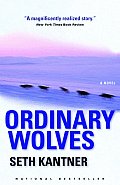 Ordinary Wolves, by Seth Kantner, is quite simply the best piece of fiction I've read for a long time. It combines many of the things that I like in a book: a coming of age story, insights across a cultural chasm of very different values and perceptions, elegant descriptions of landscape and animals and how people use them, a personal quest for meaning, and a historical perspective. And the writing! It's graphic, it's beautiful, it seems to be very accurate (though I've never been to Alaska, more knowledgeable reviewers attest to this), and sometimes it's brutal.
Ordinary Wolves is the story of Cutuk, who grows up with his brother, sister, and father in a sod igloo far in the north of Alaska. Cutuk is white, and longs to look like the Iñupiat (Eskimo) villagers in the nearby village, with their beautiful nylon jackets, skill at basketball, and dark frostbitten marks. Kantner writes inflinchingly about how it feels to be an outsider, about being someone who looks different from the other kids, who gets pounded on sometimes. I can't help wondering how much of this is autobiographical, as I'm sure many readers do, since Kantner's biography says he grew up in Kotzebue, Alaska. At any rate, it's a good look at everyday prejudice and racism.
Since it is hard to describe this book without sounding trite (and the lack of hand-me-down cliches was something I really enjoyed in it), let me just provide a few passages to encourage you to read it for yourself:
On the seasons changing:
Melting-out frogs rattled the ponds and awakening mosquitoes hummed at our ears. Sweet spring was dead and the hot boring summer here, an eternity trapped along the river under clouds of mosquitoes like a writhing skin, black and stinging. Me, painting rancid yellow seal oil on the dogs' faces and Figment's testicles, trying in vain to keep the mosquitoes from taking away their skin. Tall green grass and leafy trees. Fishing for dog food. Cutting fish, drying fish, cooking fish. Weeks and weeks of eating fish. The grebe could laugh in his read throat; he loved fish and had long forgotten if he'd ever watched a sister fly away. (p. 93...Figment is a sled dog whose balls were frozen the previous winter).
On life in a one room house:
In the kitchen we heard tiny frantic hopping. The mouse that had been doing nightly turd dances on our bread had plopped into a mason jar. We grinned, thankful for the interruption. We peered down opposite sides into the glass at the furry face. (p. 128-9. Since we've had some problems with deer mice in our basement pantry this winter, I particularly loved the descriptive "nightly turd dances on our bread").
On city life and some cultural differences:
I sat and finished the pizza. Pizza Hut. I'd seen it advertised on the Wolfgloves' TV. Eating made me happy and I thought of Janet. When Janet fed me tiktaaliq livers she said she was proud of me. Abe hadn't taught pride. Pride had to do with country music, sports, joining the military and getting dead for some devious president. Pride was cousin to bragging, and required a support group. Nothing we needed or had. Nothing for something.
Iris would have something to say, something like "Absence makes the heart swallow your marbles." (p. 157: tiktaaliq = mudshark, according to the glossary in the front of the book, which you need to consult frequently).
Iris's mixed metaphors add a nice bit of relief to an occasionally dark story, which mixes culture shock, drinking Lysol, violence, and suicide with its accounts of the behavior of wolves, porcupines, Natives, Outsiders, big game hunting dentists, "Unwasters" and "Everything Wanters" and "Native Worshippers".
Note Amazon's "statistically improbable phrases" (which I'm becoming curiously addicted to) for this book: bearskin couch, baby porcupine, cannibal pot, snow hook, caribou trails, caribou hairs, tat time, pilot crackers, ice pans, gut pile, tat one, barrel stove, dead wolves, caribou skin, ski plane, mouse turds, dog yard, caribou hide, fish racks, wolf tracks.
When reading about this book (hoping for more by Kantner), I found his photography website, which adds a nice photo finish to the book: Kapvik Photography.
I checked Ordinary Wolves out of the library, but I'm going to give it my highest praise, which is buying it (in hardcover, no less) as a gift for a family member. Now I just need to decide who the lucky recipient will be. I might even have to buy a couple copies and keep one for myself.
Tuesday, March 07, 2006
And once more for good measure....
....mommy wars. Read the link:
The media, from Dr. Phil to the New York Times Magazine, is adamant that there is no love lost between working parents and those who stay home with their children. But what if that's just spin? In reality, as Miriam Peskowitz powerfully discloses, parents don't want to fight one another at all; they simply want more options and less judgment. Moreover, the very sides in this debate don't exist: one third of all mothers work part-time, falling in the vast abyss between full-time career mother and at-home mom.
Googling "Mommy Wars"
Well, I have four different blog posts started, but haven't had time to finish any of them. Instead, I've been working at the grade school book fair, making wheat-free muffins for preschool, and vacuuming my curtains. Even feminazis sometimes like to do a bit of spring cleaning. Especially when their preschooler's playgroup is scheduled at their house in a couple days.
I did want to point everyone towards Rebeldad's post on "The Mommy Wars Solution". Because what I got when I googled "mommy wars"? Almost as disappointing as "Good Morning America's" take on it. Though I did enjoy reading some of the posts in the Mormon Mommy Wars blog (at least until I read the descriptive five year old puking in the bathtub story).
So - if you want to learn something about the mommy wars, read The Truth Behind the Mommy Wars, by Miriam Peskowitz. She has a nice reading group guide and some excerpts here. She uses research and logic! Really. Amazing.
How many blog posts does it take to googlebomb something, anyway? I'll do another for good measure.
I did want to point everyone towards Rebeldad's post on "The Mommy Wars Solution". Because what I got when I googled "mommy wars"? Almost as disappointing as "Good Morning America's" take on it. Though I did enjoy reading some of the posts in the Mormon Mommy Wars blog (at least until I read the descriptive five year old puking in the bathtub story).
So - if you want to learn something about the mommy wars, read The Truth Behind the Mommy Wars, by Miriam Peskowitz. She has a nice reading group guide and some excerpts here. She uses research and logic! Really. Amazing.
How many blog posts does it take to googlebomb something, anyway? I'll do another for good measure.
Sunday, February 26, 2006
Drinking the Rain: Book Review
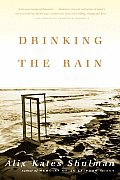 One of the things I love about used book sales is the chance of finding something wonderful for a dollar or two. Books that would otherwise remain hidden on library shelves or buried behind the newer offerings at bookstores can be picked out of a stack of chick lit* as easily as picking a fossil out of a gravel driveway. And that's how I found Drinking the Rain, a memoir by Alix Kates Shulman.
Once again (and only after having read the book), I found that Amazon's "statistically improbable phrases" provided some good insight into content: strawberry goosefoot, dock seeds, sea rocket, lobster buoys. How could I not enjoy a book about a feminist author who spends the summer in a shack on a "nubble" of land on an island off the coast of Maine and teaches herself to forage for food? And why the heck is the word nubble not amongst the statistically improbable? I guess it wasn't paired with any other word regularly enough.
But there is a lot more to like about this short book. The language is clean and powerful and sensuous, and the story is engaging. It expands from an examination of solitude, fear, laziness and the pleasures of getting to know a place intimately, to a wider look at philosophy, New Age beliefs, activism, environmentalism and ecology, family, and female friendships.
Take Shulman's musings about her privy, for example:
Except on the rare still summer day, the single hole, freshened by ocean breezes, collects few foul smells, no flies....Whereas in the city, despite the most lavish bourgeois bathrooms, using the toilet is considered at best indecorous, using this privy is one of the day's most satisfying interludes....From this perfect bird blind of a privy, built on a platform with a protective roof and open front facing the sea, I can watch the swallows feeding their young in the rafters, or follow a marsh hawk glide in low easy loops around the nubble as it hunts field mice. From this pew I have marked the progress of the seasons in the flower-crammed brush: fiddleheads and berry blossoms in early spring, wild roses, nightshade, and touch-me-nots in summer, goldenrod and pale purple asters now, in fall. (p. 72).
You can't get much more down to earth than enjoying (and describing) your outhouse. And people who enjoy reading about food will like Shulman's passionate descriptions of collecting, cooking, and tasting all sorts of new foods - not just the wild greens and shellfish of her island. Her description of the farmer's market in Budapest, with its wild game, piles of multicolored and frilled mushrooms, desserts and terrines and tripe and goose livers - well, it's better than salivating over the food porn in magazines like Bon Appetit.
Shulman's approach to philosophy was similarly refreshing. At one point, she describes how she picked up an abandoned college textbook containing James Baldwin's "Notes of a Native Son" while waiting for her serviceberry pie to bake. This led her to consider her life in terms of "acceptance and resistance, contemplation and struggle....How can one live without rancor in a world steeped in suffering and injustice - or live without contentment in a world bathed in birdsong at sundown?" (p. 60).
I thought this passage was worth pointing out, since this issue comes up repeatedly while discussing motherhood (see for example this blog post from last year's Mothers & More Mother's Day campaign and the comments). "Can't you just enjoy being a mother?...Your children are little for such a short time," many women say. Or as Darla Shine might say, "Just stop whining". "Why dwell on the problems? Enjoy what you have."
Shulman eloquently points out how both philosophies can be encompassed in one world view, and in an individual:
...my acceptance and love of this life making passivity impossible. The more I love it the more I care about its fate, our fate, want to protect the suffering seas, the weeds, the air, the spawn, and each neglected old woman. But equally for me, the second is the cause of the first. For, from my first embrace of our soul-stirring movement at the dawn of my adulthood, fighting injustice was my main path into the world, my connection with each living soul, the way I came to write, to know myself, and to love the world." (p. 240-241).
And then Shulman ends her book, somewhat as she began, "in medias res, somewhere in the middle" - contemplating her outhouse and the world.
I'll be giving this serendipitous find a permanent place on my bookshelves. I'm just not sure whether to shelve it next to James Duke's Handbook of Edible Weeds or Zen and the Art of Motorcycle Maintenance.
*Not that I mind dipping into the pink stuff, but chick lit is pretty common and easy to find, unlike books like this one.
Saturday, February 25, 2006
See "Mamas in Blogland"....
...for some fascinating reading on "maternal narrative, momoirs, and the rise of the blog", "blogging mom cliques" and much more over at The Mothers Movement Online. How come no one at Good Morning America solicited someone from that site for their show on "The Mommy Wars"? Could it be that sound bites and conflict are more entertaining than a real look at the social issues that undermine mothers and families as a whole in our society?
Also, read Are We Having Fun Yet? on MMO for a more in-depth look at parenting and depression (like much of the mainstream media, I did a cursory blurb on a study that is considerably more complicated than it seemed). Since this kind of facile misinterpretation of scientific studies is one of my pet peeves, and I was just complaining about sound bites a minute ago, I thought I had really better post the link.
Also, read Are We Having Fun Yet? on MMO for a more in-depth look at parenting and depression (like much of the mainstream media, I did a cursory blurb on a study that is considerably more complicated than it seemed). Since this kind of facile misinterpretation of scientific studies is one of my pet peeves, and I was just complaining about sound bites a minute ago, I thought I had really better post the link.
Thursday, February 23, 2006
9th Carnival of Feminists...
...coming to you from Wales at Mind The Gap!
Thought-provoking posts on violence, prostitution, motherhood, marriage, politics, religion, with a special focus on the female body and body image.
Monday, February 20, 2006
Ada Blackjack: A Book Review
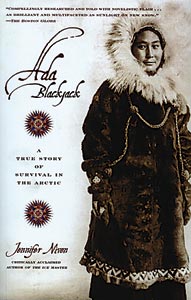 Ada Blackjack: A True Story of Survival in the Arctic, by Jennifer Niven is the second really excellent historical book set in the 1920's that I've read this winter. Like Kevin Boyle (though perhaps without his historian's perspective), Niven has researched the scraps of documentary evidence and written a totally gripping story. It's all too easy to imagine being on that bleak island above the Arctic Circle north of Siberia. Niven's story - or rather her telling of Ada's story - sucks you in and makes what happened even more shocking and appalling.
Basically, an ill-fitted arctic exploration was put together by entertainer/explorer Vilhjalmur Stefansson in the early 1920's. He persuaded four young men (Allan Crawford, Fred Mauer, E. Lorne Knight & Milton Galle) to go claim this desolate island for Canada and write about it for science, for glory, to show that men could conquer the Arctic. Two of them had some experience in the Arctic; Mauer had in fact almost died several years earlier when marooned on Wrangel Island.
A series of accidents happened on the way to Wrangel Island - the umiak (skin boat that was a must for seal & walrus hunting) blew off the ship taking them there, the Eskimo families they hired all backed out at the last minute (except for the main character, Ada, who was too desperate to earn money sewing winter clothes for the explorers so she could help her sick toddler), and the relief boat that was supposed to come the following summer couldn't make it because of the weather.
It got progressively worse. Finally, seeing that they were running out of food and they wouldn't be able to hunt enough on the island to survive the second winter, three of men took the remaining dogs & sled and set off for help. Ada was left with Knight, who was too ill from scurvy to handle the trip.
Ada ended up teaching herself to hunt and trap to keep herself and Lorne Knight alive. Unfortunately, Knight's scurvy progressed, and he died in the middle of the second summer there. Ada spent a couple of months by herself, terrified of the polar bears, reading Knight's bible, and thinking of her son in Nome. Harrowing doesn't begin to describe it.
I didn't really expect a happy ending, since the three men that went for help were never heard from again, but the aftermath - the reporters hounding Ada, the finger pointing and blame, the racism, the attempts of the four families to come to terms with the loss of their sons, and Ada's continued hardships - were all fascinating, as were the different backgrounds and personalities of the five people on the island from 1921-1923.
The pictures and the diaries that the men and Ada kept were haunting. There were so many "ifs" - "if only they'd had an umiak", "if only Knight had recognized the symptoms of scurvy earlier", "if only they'd stored more meat earlier in the year", "if only the weather hadn't been so bad"....
Anyway, this book is highly recommended if you like history, the Arctic, or stories of endurance. For some more background on Ada & the expedition, check out this Alaska LitSite on The Heroine of Wrangel Island.
Friday, February 17, 2006
Way to Go, Ypsi: Bus Service Cuts Proposed
Ever use the AATA? Know anyone who does? If you give a damn about public transportation between Ann Arbor and Ypsilanti (and you should if you live in this area), go to ypsi~dixit and sign a petition. There's also a good post explaining the importance of these bus routes on MapRoom Systems.
Wednesday, February 15, 2006
Now Which Day of the Year Would This Be?
Because I really, really love this idea (shamelessly stolen from BookLust):
I think that late February or March would be perfect for this. The weather usually sucks in the midwest then, which makes me more likely to read than to do many other things, like go out in the yard and pick up thawing dog poop.
Actually, there should be a new holiday, where we celebrate books and reading, and we buy each other and ourselves nothing but books and book paraphernalia! Instead of hearts and flowers filling our heads, the whole day should be focused on everything biblio. We could call it Bibliotine's Day! Send yourself or your loved one a bibliotine!
I think that late February or March would be perfect for this. The weather usually sucks in the midwest then, which makes me more likely to read than to do many other things, like go out in the yard and pick up thawing dog poop.
Monday, February 13, 2006
Goodbye A Common Reader, I'll Miss You
 Sometime in January, I decided I needed something rural and relaxing to read...so I clicked on the link for the online catalog of
A Common Reader, with their wonderfully descriptive offerings in strange but satisfying categories like "Domestic Pleasures" and "Rural Retreats". I was annoyed when all I got was a blank page saying "Season's Greetings" but figured it was a temporary problem.
When I realized the link still wasn't working almost a month later, I did some googling and found this sad Wikipedia entry:
A Common Reader is an American mail-order book catalogue established in 1986 by James Mustich, Jr. It is notable among general-interest book catalogues for its eclecticism, with large sections of each issue given over to obscure literary classics. The catalogue also has a reputation among its readers for the quality of its writing. The blurbs that accompany each book entry are often highly erudite and evocative, and many of these are penned by Mustich himself.
A Common Reader appears several times a year.
As of January 27, 2006, the organization appears to be out of business - there is no answer at their 800 number, and their web site yields only an empty page.
They have gone into bankruptcy - there is to be an auction of their stock and equipment on February 22, 2006 in Pleasantville, NY.
I wish I'd saved all the back issues of their catalog. It was better reading than a lot of books. It never occurred to me that they might suddenly disappear. Due to my fairly limited budget for buying new books, I used the catalogs primarily as a starting point for searching used bookstores or requests from inter-library loan. I'm afraid I'm part of the reason that the company isn't here anymore.
Just a few of the authors they introduced me to include: Gervaise Phinn, Rose Macauly, Patrick O'Brian, Charles Elliot, Stephen Leacock, Elisabeth Luard, Mark Kurlansky, Louise Dickinson Rich, Betty MacDonald, and Lillian Beckwith. Many of these authors were popular a generation or two ago or are well known in the UK but not in the US. They're still well worth reading, but I wouldn't have ever picked them up if I hadn't read those evocative blurbs in A Common Reader, and my life would be immeasurably smaller. So thanks for what you did, A Common Reader folks, wherever you are. I'll miss you.
Sunday, February 12, 2006
Birthdays
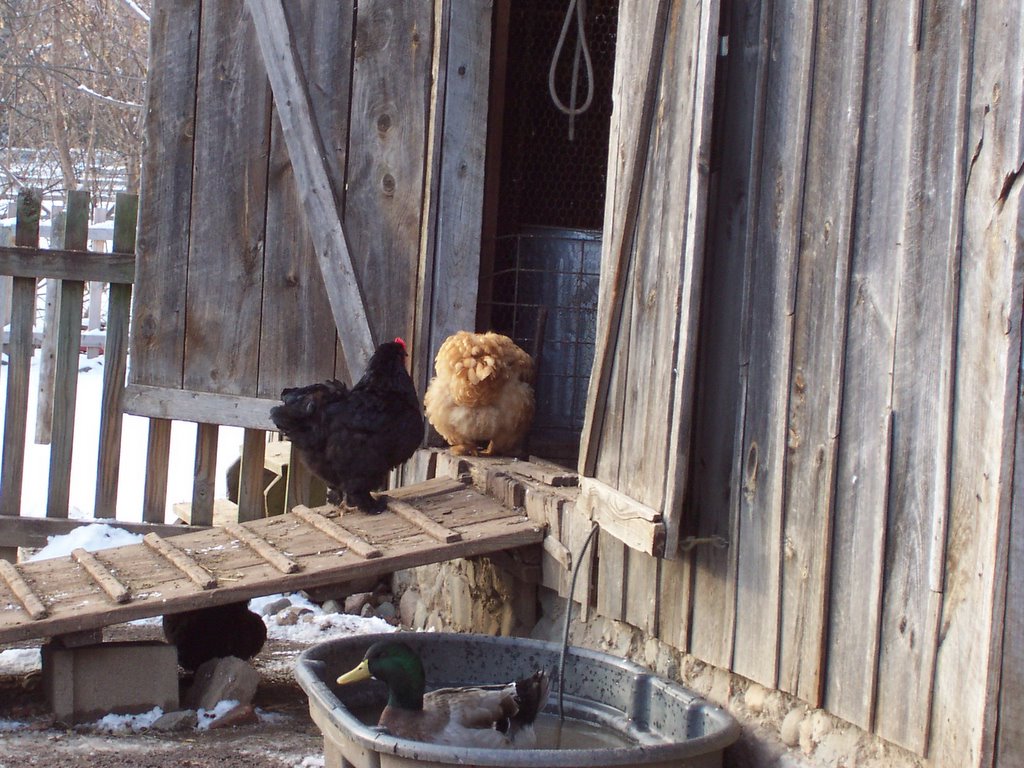
Happy 197th birthday to Abraham Lincoln and Charles Darwin. With 43 years behind me (as of this morning), I'm still a spring chicken. Whatever that means.
Saturday, February 11, 2006
The More Things Change....

...the more they stay the same.
I myself have never been able to find out precisely what feminism is: I only know that people call me a feminist whenever I express sentiments that differentiate me from a door mat or a prostitute.
- Rebecca West, in 'Mr. Chesterton in Hysterics: A Study in Prejudice', first published in The Clarion, November 14, 1913
1913? Did you see that date? Is this not still true almost a hundred years later?
If you had any doubts about about it after my post on Hypocrites and Feminazis, check out a couple of hysterically funny posts called Chucking Oprah and Only Women Are Allowed to Read this Post about an article published in O: The Oprah Magazine* just last summer. Hmmm, hysterically funny is rather good here, given the origins of the word hysterical.
How can anyone say feminists lack a wicked good sense of humor? Given all of the recent CRAP (Committee for Retrograde Antifeminist Propaganda)** I've read, I'm going to go re-read 'The New Momism' and 'Revolt against the MRS' in The Mommy Myth, by Susan Douglas and Meredith Michaels. When I read it in 2004 I thought it was perhaps a little overstated and over the top; now it looks downright prescient.
*perhaps this is why it is listed as one of "Darla's Favorite Resources" in Happy Housewives, by Darla Shine
**see pages 30-33 of The Mommy Myth: The Idealization of Motherhood and How It Has Undermined Women
Wednesday, February 08, 2006
8th Carnival of Feminists
Now playing at Gendergeek. Read all about academia & sexism, vacuums & housework expectations and the domestic glass ceiling, chick lit book covers, Commander in Chief, obesity, spike heels, Linux, fanfiction, sex positiveness and porn, and some farewells to famous women. And much more that I haven't had a chance to read yet.
Tuesday, February 07, 2006
Parenting is Stressful
And if you don't believe it, check out this Science Blog story:
Their conclusions?
It would be interesting to see if this pattern of depression holds true cross-culturally.
A study by Florida State University professor Robin Simon and Vanderbilt University's Ranae Evenson found that parents have significantly higher levels of depression than adults who do not have children. Even more surprising, the symptoms of depression do not go away when the kids grow up and move out of the house.
Their conclusions?
"It's how we do parenting in this society," Simon said. "We do it in a very isolated way and the onus is on us as individuals to get it right. Our successes are our own, but so are our failures. It's emotionally draining."
The value of a study like this is that it presents a realistic view of the difficulties associated with parenthood and encourages parents to seek greater social support, Simon said.
"Parents should know they are not alone; other people are feeling this way, too," she said. "This is a really difficult role, but we romanticize it in American culture. Parenthood is not the way it is in TV commercials."
It would be interesting to see if this pattern of depression holds true cross-culturally.
Monday, February 06, 2006
Hypocrites and Feminazis
"“So if you want to be a happy housewife, stop gossiping about your girls, open yourself up to new friendships, be nice, make new girlfriends, keep them in your life, and please don'’t be a bitch....I wish we could all stop the whining, the complaining, the cliques, the bitterness. I wish we could be great girlfriends. I wish we could all realize how lucky each one of us is and that we all have much to bring to the table. We'’re all the same. We'’re moms. We want the best for our children. We all want a safe, clean world for them to grow up in."” (Darla Shine, p. 32, Happy Housewives).
Compare this to the new homepage on www.darlashine.com:
Become a Member!
You need to be a SAHM
If you are one, you know what that means
Click Darla's apron to login or register
Is this exclusionary? YOU BETCHA!
This site is for Happy Housewives
All Feminazi's Stay Out!
Betty Friedan would have had something pithy and succinct to say about this. Maybe something about those that don't know their history are doomed to repeat it? And are all feminists automatically feminazis, or do I have to do something special and um....exclusionary to become one?
In case you want to read some of my earlier posts on gender roles and feminism: Matters of Style and Presentation, On "The Stay-At-Home Mystique", Happy Housewives and the Cult of Domesticity in the 21st Century, Petticoat Philosophy and Government and Mothers and Fathers in America are the most relevant ones. Take a peek at the comments, some of them are quite enlightening.
Wednesday, February 01, 2006
Google Searches, Malinowski, and Argonauts
I've read a couple interesting posts lately on what bizarre strings of words people searched to get to your blog. There are some funny mom-oriented ones at Real Talk about Motherhood (matronly breasts? crisco then and now?), and some really strange ones at Bootstrap Analysis ("Walt Whitman and the Pointer Sisters"? "What are the sharpest parts of a cat"? "farting treetop sounds"???).
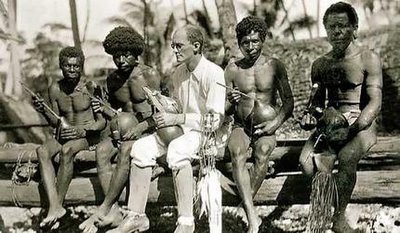
I've had a couple pretty strange ones myself (notably "petticoated bad boy husband", I just knew mentioning petticoats would bring a hit from one of those....um, interesting people with alternative fetishes), but I consistently get hits from people (anthropology students?) looking for information on Argonauts of the Western Pacific or Bronislaw Malinowski. The quote that named this blog came from this 1922 "classic monograph" of cultural and economic anthropology. No, I'm not going to do a book review of Argonauts, and I don't have that much desire to re-read the whole book again, though I did like the introduction and a few parts of the other endless chapters on the kula, canoes, yams, pigs, and conch shells. Obviously I liked the word "imponderabilia" enough to remember it for fifteen years after reading Argonauts, and I love the whole idea of participant observation. After all,
Obviously my blog isn't particularly systematic, but then again I'm not getting funded by Wenner-Gren or the NSF. This blog is more like Malinowski's personal diary, which was written between 1914 and 1918, packed away in boxes after his death in 1942, and finally published in 1968: A Diary in the Strict Sense of the Term. Since I actually wrote a short book review on this for Sybermoms.com after reading it last year, I thought I'd cut & paste a bit and put it here in my blog so that all those poor Malinowski google searchers get something for their efforts.
First, however, note that Amazon's "statistically improbable phrases" describe Malinowski's diary pretty well: lecherous thoughts, retrospective diary, walked around the village, felt rotten, gorged myself, resident magistrate, wrote diary. Lecherous thoughts! Just what every new anthropology student wants to know about how one of the "old white men" of anthropology really felt. Wow, it occurs 13 times in Malinowski's Diary. How interesting.
Anyway, here's my short review: It reads like a blog, and is surprisingly modern in most parts. Either Malinowski was a hypochrondriac, or he really suffered in the tropics....maybe both. He talks about injecting himself with arsenic fairly often.
He had lewd thoughts about many of the women (both native & colonial) he met during his fieldwork, but except for some "pawing" his lust remained unconsummated. He had some very snarky things to say about various people he encountered (one guy gave him "mental congestion"), and he went on endlessly about his true love, E.R.M., and his pure feelings for her, and how he really needed to make a clean break with N.
There are lots of descriptions of tropical sunsets, and of the famous anthropologist occasionally taking a shit in the mangroves and rowing his dinghy around the lagoon. Besides going on and on about his health, his depression about how much he was accomplishing, and his use of trashy novels to escape all of this, he also complains about his informants and how sick to death of all them he is....which is a pretty interesting contrast with the professional work (especially Argonauts of the Western Pacific).
One of the things Malinowski is best known for is being the first anthropologist to actually live in native villages, learn the language, and engage in everyday activities - now known as participant observation. It is rather fascinating to see how he actually felt about it at the time, and the old-style prose adds to your reading enjoyment. I think they should update the diary with lots of pictures of all the relevant people. Malinowski didn't go on to marry E.R.M. after all! I wonder if she dumped him or he found someone else.
I've had a couple pretty strange ones myself (notably "petticoated bad boy husband", I just knew mentioning petticoats would bring a hit from one of those....um, interesting people with alternative fetishes), but I consistently get hits from people (anthropology students?) looking for information on Argonauts of the Western Pacific or Bronislaw Malinowski. The quote that named this blog came from this 1922 "classic monograph" of cultural and economic anthropology. No, I'm not going to do a book review of Argonauts, and I don't have that much desire to re-read the whole book again, though I did like the introduction and a few parts of the other endless chapters on the kula, canoes, yams, pigs, and conch shells. Obviously I liked the word "imponderabilia" enough to remember it for fifteen years after reading Argonauts, and I love the whole idea of participant observation. After all,
"certain subtle peculiarities, which make an impression as long as they are novel, cease to be noticed as soon as they become familiar. Others again can only be perceived with a better knowledge of the local conditions. An ethnographic diary, carried on systematically throughout the course of one's work in a district would be the ideal instrument for this sort of study. (p. 21, Argonauts).
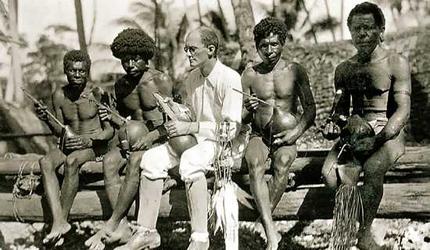
Obviously my blog isn't particularly systematic, but then again I'm not getting funded by Wenner-Gren or the NSF. This blog is more like Malinowski's personal diary, which was written between 1914 and 1918, packed away in boxes after his death in 1942, and finally published in 1968: A Diary in the Strict Sense of the Term. Since I actually wrote a short book review on this for Sybermoms.com after reading it last year, I thought I'd cut & paste a bit and put it here in my blog so that all those poor Malinowski google searchers get something for their efforts.
First, however, note that Amazon's "statistically improbable phrases" describe Malinowski's diary pretty well: lecherous thoughts, retrospective diary, walked around the village, felt rotten, gorged myself, resident magistrate, wrote diary. Lecherous thoughts! Just what every new anthropology student wants to know about how one of the "old white men" of anthropology really felt. Wow, it occurs 13 times in Malinowski's Diary. How interesting.
Anyway, here's my short review: It reads like a blog, and is surprisingly modern in most parts. Either Malinowski was a hypochrondriac, or he really suffered in the tropics....maybe both. He talks about injecting himself with arsenic fairly often.
He had lewd thoughts about many of the women (both native & colonial) he met during his fieldwork, but except for some "pawing" his lust remained unconsummated. He had some very snarky things to say about various people he encountered (one guy gave him "mental congestion"), and he went on endlessly about his true love, E.R.M., and his pure feelings for her, and how he really needed to make a clean break with N.
There are lots of descriptions of tropical sunsets, and of the famous anthropologist occasionally taking a shit in the mangroves and rowing his dinghy around the lagoon. Besides going on and on about his health, his depression about how much he was accomplishing, and his use of trashy novels to escape all of this, he also complains about his informants and how sick to death of all them he is....which is a pretty interesting contrast with the professional work (especially Argonauts of the Western Pacific).
One of the things Malinowski is best known for is being the first anthropologist to actually live in native villages, learn the language, and engage in everyday activities - now known as participant observation. It is rather fascinating to see how he actually felt about it at the time, and the old-style prose adds to your reading enjoyment. I think they should update the diary with lots of pictures of all the relevant people. Malinowski didn't go on to marry E.R.M. after all! I wonder if she dumped him or he found someone else.
Subscribe to:
Posts (Atom)


