Thursday, January 25, 2007

Cranberries, Ice and Book Lists

Some shots from last week's ice storms. You're looking at a highbush cranberry (Viburnum trilobum), which is attempting to block the entire dining room window despite vigorous pruning.


If you've read here a while, you know that I'm a fan of all kinds of lists of books (see, for example, Lists of 100 Books). One of my favorite book blogs - 50 Books - just had a pretty entertaining post on some alternative book lists: The Big List of Lists. You have to read the comments there, because people keep coming up with ever better ways to categorize their books. My favorite lists so far (and the first book I would include on that particular list) are:

- Best Book Titles of All Time
(Island of the Sequined Love Nun or The Lust Lizard of Melancholy Cove ? It's so hard to pick between Christopher Moore's books)

- Books That I Expected to Be Dirtier
(Lady Chatterly's Lover)

- Books I Bought More than Once Because I Forgot I Already Owned It
(Where the Girls Are: Growing Up Female with the Mass Media)

- Books I Adored as a Child But My Son Thinks Are Boring. (But that I insist on reading to him anyway because he's five and what does he know?!)
(My Side of the Mountain)

- Books That I Love Even Though The Last Twenty Pages Made No Damn Sense
(Summer of My Amazing Luck)

- Books I Re-Read When I Have Nothing Else to Read
(anything by Lois McMaster Bujold)

- Books I Shouldn't Admit Made Me Cry Like a Baby
(The Cubicle Next Door)

Now go on over to 50 Books and add your own categories.

Wednesday, January 24, 2007

Ethnobotany Meme

I borrowed this from Jennifer Under the Ponderosas, but I'm changing the title because there are already lots of Green Memes out there. There's no "Ethnobotany Meme" out there anywhere. What's ethnobotany, you ask? It's the relationship between people and plants. Yes, you do have a relationship with the plants around you, whether you know it or not. I'll write more about it someday.

Think of the plants (trees, flowers, etc) which grow within 50 yards of your home. Which is your favorite?

I hate to pick just one. How to chose between the violets I transplanted from my parent's house, where my grandmother planted them 70 years ago, and the jewelweed that attracts all of the hummingbirds every summer? What about all of those huge perennial swamp milkweeds that all came from a tiny seed packet, that attracted all those butterflies last year? How about the forsythia that my mother-in-law gave us? We pulled that bush out of the ground with our Honda hatchback when we moved out of our co-op townhouse, then left it frozen, wrapped in a garbage bag in our yard in here Saline when my daughter was born three weeks before her due date, and it still flourished when we planted it in the spring six months later.

I guess I have to pick the elm tree (Ulmus americana) that we just cut down, though. It was such a beautiful tree that shaded the whole back of our house from the morning sun and kept most of the backyard fairly cool until late afternoon.

Here it is two years after it was diagnosed with Dutch elm disease, getting the dead branches trimmed and just before its second injection with fungicide.


Is any portion of this plant edible in any form? Can you boil the root, eat the berries, make tea from the leaves?

According to Dan Moerman's Native American Ethnobotany database, different Indian groups used the inner bark in a variety of medicines, usually in a kind of tea (much like the related slippery elm bark as a cough remedy). I've never heard of anyone eating the seeds, which are papery and rather flat and not as interesting as most tree seeds.

Can you use any portion of this plant to make something that would be truly useful for you? Alternately, can you use any portion of this plant to make something just for fun, just one time?

The wood was used by Native peoples and then later Americans for all kinds of things: house posts, tools, furniture, wagon wheels, sewage pipes. We have a big stack of wood that was cut for our fireplace, my son has attempted to make slingshots and various other toys from the smaller branches, and my husband has a stack of longer branches that he plans to use to damn the seasonal creek that borders our yard and the farm field behind.

Can this plant survive on the groundwater available to it, or does it need to be watered?


It did fine on the water it got naturally, although we did water it and fertilize it after it became sick in an attempt to strengthen its fight against the fungus that the elm beetles brought.

Do you see any other creatures -- birds or bees or squirrels -- using this plant?


A squirrel once took one of my sunflower heads and dropped pieces of it on me from this tree. I've seen squirrels eating the buds or the ends of twigs in the spring, too. And all kinds of birds have used the tree: crows liked to sit there in pairs, the occasional hawk used to watch our birdfeeders from the tree, and I've seen many flocks of starlings, and many nuthatches, downy woodpeckers, bluejays, robins, and cardinals up there.


After the tree died rather abruptly the summer before last, a whole new suite of creatures moved in. Weird fungi appeared, pieces of bark peeled off, and more woodpeckers and nuthatches than usual came - I guess that they were probably attracted to the insects that specialized in dead wood. My son pointed out this weird wasp-like thing last summer (when the tree had been dead a full year), which we identified as a giant ichneumons. Apparently it was laying eggs under the bark in the hidden galleries of larva tunnels. The Audubon guide said each egg would hatch and consume a horntail or some other wood-boring bug.


It is surprising how much the tree influenced our yard even when it was dead. It framed the landscape, it shed twigs that had to be picked up before we mowed, there were all the new and interesting creatures in it (more easily visible without leaves), it still provided some shade....it still had a certain presence.


I wish we could have watched it decay naturally, but it was too close to our house, and we got increasingly worried listening to it creak on windy days. Just before Christmas, the lumberjacks cut all the branches off it, toppled the trunk with a thud you could feel in the house (leaving an impressive dent in the soil), and ground the stump into a two foot high pile of mulch.


The tree's absence is still shocking....looking out at the moon rise, we see a gap where something always stood. The yard looks empty, the squirrels have to run a lot further to get away from our dog, and the pile of mulch looks disturbingly like a fresh grave.

What does this plant look like right now, during this season and at the time of day you're writing?


Here's a piece of firewood, minus the bark. Pretty cool, isn't it?

Wednesday, January 17, 2007

30th Carnival of Feminists

is up at The Feminist Pulse. Check out a feminist look at 2006, many different points of views in (and on) feminism, pop culture (including that Problem Solved T-shirt, agh) and some critical responses to it, flame wars, Civil War women, and quite a bit more. And while you're there, page down and look at some of the earlier posts on The Feminist Pulse. They've got great talent for finding advertising (and other!) photographs that make you stop and think.

Monday, January 15, 2007

Letter Writing

Just a brief note to say that I'm not blogging (much) because I'm writing an honest-to-god letter today.

I think it's been about fifteen years since I've mailed anyone something that is more than a quick thank-you note, get well card, holiday greeting, or a paragraph on a scrap of paper included in a package. I used to regularly send long angst-filled letters to my grandfather (and he sent long rambling replies in return), but it's been sixteen years since he died. It doesn't seem like that long.

I also used to send long letters to my significant other, usually when I was doing archaeological fieldwork for eight weeks somewhere far away from him. Although this was after the advent of e-mail, it was before laptops and solar batteries and wireless networks were common and cheap enough for a college student to afford. We actually wrote in addition to talking on the phone. Now, living together, some weeks we hardly even get a chance to talk.

Do you think that old hard drives will take the place of boxes of correspondence in our archives some day?

Meanwhile, I'm off to do my letter to an old friend from high school. She sent me a card out of the blue, after not speaking to me for several years, and I was actually glad that she didn't give me a phone number or an e-mail address, because it gives me a chance to write a genuine letter again.

Below you see sunrise from my bathroom window as it was a few weeks ago, framed by the dead elm tree that has since been reduced to a pile of mulch and some firewood. It's a good thing it wasn't still standing last night, because I don't think that the heavy coating of ice on all the branches and twigs out there today would keep all of that increasingly brittle wood up in the air. I should go take some photographs of all the picturesque ice, but the freezing rain makes indoor activities (like letter writing) infinitely more appealing.

Friday, January 12, 2007

Currently Reading

Resolving to write better lead sentences wasn't such a good idea. Since I was unwilling to put anything down that didn't immediately appear eye-catching and smart, I stopped myself from putting anything down at all. And I had a lot of new books to read, and my kids were home from school for the winter holidays, and there are just lots of reasons to do something other than blog, especially when you can't think of a good first sentence.

So, forging past my writer's block with an easy topic: what I've been reading. Here's their lead sentences and a note about why I'm reading each and what I think of it:
__________________

Serene was word you could put to Brooklyn, New York.

- from A Tree Grows in Brooklyn, by Betty Smith. What an incredible book. I'd heard of it for years (it was a bestseller after it was published in 1943, and a popular movie, which I've never seen either), but I was shocked by how modern and enjoyable this was. Thanks again to my book club for pushing me to read about Francie Nolan and her complicated family and what Brooklyn was like in the early 1900's.

And I loved the fact that Francie goes to Ann Arbor at the end of the book. Did you locals know that Betty Smith and her husband lived in Ann Arbor after she got married? I found her on the 1920 census (where both she & her husband apparently lied about their ages), living in another family's house in the heart of the Burns Park neighborhood, on Forest Ave. a couple blocks from Packard. She was never was an official student at U of M, but audited or unofficially took just about every writing class available in between having two daughters and writing plays.
__________________

You're stuck in traffic again.

- from Suburban Nation: The Rise of Sprawl and the Decline of the American Dream, by Andres Duany, Elizabeth Plater-Zyberk, and Jeff Speck. My book club's selection for next month, at my urging. I hope they don't all hate it.
__________________

There it is.

- from Tolstoy Lied: A Love Story, by Rachel Kadish. "There it is" refers to Tolstoy's famous first line: "Happy families are all alike; every unhappy family is unhappy in its own way." I haven't read further, but it sounds good and a blogger whose taste in books I like recommended this.
__________________

'A'a: While highly fluid pahoehoe lava can flow like a river, with no more than a slight metallic hiss, rubblelike 'a'a lava moves with a sound like crockery breaking.

- from Home Ground: Language for an American Landscape, edited by Barry Lopez. This is a gorgeous, entertaining and enlightening book, the best kind to browse on a cold winter's night with a cup of coffee and some chocolate cherry bread (from Zingerman's Bakehouse, for you locals). The literary quotes are delightful, the authors chosen are all worth reading in their own right, and the words are fun. Just this morning I've read about anse (aha, so that's where L'Anse, Michigan comes from - it's French for 'bay'), armored mud balls, desire paths, Detroit rip rap, and pimple mounds.

I'm also reading (and have recently finished) some trashy paperbacks, but I'm not going to list all of those first sentences, let alone the authors or titles.

Thursday, December 28, 2006

First Sentence Meme

Because I thought it was fascinating on some other people's blogs. Turns out it wasn't so interesting here:

New Year's is a harmless annual institution, of no particular use to anybody save as a scapegoat for promiscuous drunks, and friendly calls and humbug resolutions. (quote by Mark Twain).

I've read a couple interesting posts lately on what bizarre strings of words people searched to get to your blog.

Well, I have four different blog posts started, but haven't had time to finish any of them.

I don't have much time to blog, having just started a part-time job doing research and writing.

Now playing at Women's Autonomy and Sexual Sovereignty Movements. (Carnival of Feminists).

I've been neglecting my blog lately. (Note: is there anything more pathetic than whining about not blogging in your blog? Unless it's talking about blog posts you never finished. My new year's blogolution will be to never start another post like this).

Perhaps prompted by my recent reading of Caitlin Flanagan's critique of compost ("compost heaps in the backyard: moldering heaps of garbage, rich with worms and loamy rot...hideous caches of broken eggshells and wet coffee grounds squirreled away on kitchen counters" p. 143, To Hell with All That), I've been thinking about our compost.

(Poverty, Class, and Lebanon)...are featured in the 20th Carnival of Feminists at Super Babymama.

Get to Work: A Manifesto for Women of the World, by Linda R. Hirshman, starts out well enough: If Betty Friedan had lived just a little longer.

Don't Send Twisty a Picture of Your Breasts when you go to I Blame the Patriarchy and read I Got Yer Boobython Right Here...and she'll send a dollar to Breast Cancer Action.

I have lots of books.

The busyness of actual life has been interfering with my blogging. (OMG! Again with the inane lead sentence! Never, never, never again.)


Wednesday, December 20, 2006

29th Carnival of Feminists


Welcome to the 29th edition of the Carnival of Feminists

What a lot of fun putting this together was! It gave me the perfect excuse to conscientiously read my favorite blogs, to thoroughly explore their links, commenter's homepages, and blogrolls, and then to browse all manner of new blogs, using some of my favorite key words (shown below - try pairing them with gender or feminism for some interesting search results). I discovered all sorts of new bloggers, a number of vile stories and some inspiring ones, hilarious commentary, wicked sharp wit and humor, and a wealth of fascinating and insightful perspectives - all on feminist blogs. If I got paid for doing this, let's just say it would be my dream job.

If any readers and contributors out there are thinking about volunteering to host, I encourage you to contact Natalie. The few weeks that I spent on this Carnival was an altogether enjoyable and eye-opening experience.


Sexism

In which we look at examples of sexism from all over the world - sometimes blatant, occasionally subtle, often insidious. Some key words for posts in this section: stereotypes, gender bias, toys, pretty, and porn.

Women Come in 12 Flavors: Female Stereotypes in Urban Culture, at luscious life by isis kali.

The utterly amazing Action Heroes in Bangalore is presented by Blank Noise.

From Chaos Theory: a look at Girls and Cars. And, of course, BOYS.

Fergie Sets Women Back a Gajillion Years (complete with YouTube clip) is brought to us from the Daily Hysteric.

In Ready, Aim, Puke, MissPrism of A Somewhat Old, But Capacious Handbag takes on some trite and oversimplified evolutionary psychology. Why don't newspapers ever cite feminist sociobiologists for their science stories? I know they're out there, because I've read their articles in popular magazines like Natural History.


Quite a few well-known feminist bloggers in the US have written about the Discovery Channel's gendered selections for science toys for kids, but in Girls and Science: More Than Just Nail Polish, Dana at Mombian also points you to "online resources for girls interested in science and engineering".

Tara C. Smith writes about Science, Intelligence and teh Pretty in Aetiology (this is may be of special interest if you also like science fiction). This also seems like a good place to put in a plug for the most recent Feminist Carnival of Science Fiction and Fantasy. And then check out Stereotypes and Subtext: A Wee Primer, by Thus Spake Zustra (and take note of her wonderful category labels while you're at it).

Sciencewoman (On Being a Scientist and a Woman) also has some interesting commentary and linkage in Women in Science - A Few Things of Note.

Emily from the Kiwi branch of the All Girl Army (composed of bloggers between the ages of 10-23 years old) adds her perspective on gender bias in Boy Things, Girl Things.

If you haven't already read about the brouhaha over feminist bloggers, Britney Spears porn, and Googlebombing, check out A Brief History of Google Bombing, or: If A Feminist Does It, It's Wrong, No Matter What "It" Is at Screaming into the Void.


Sour Duck adds a thoughtful response to the crotch shot debate at The Feminist Way to "Download Britney Spears Sex Video - FAST!".

I've seen several responses to Christopher Hitchens' Vanity Fair article, but Shark-Fu of AngryBlackBitch had perhaps the funniest one at Fun with Vanity Fair.

And Shakespeare's Sister brings us Men Are Not Babies - a post that makes a few points that are so damn obvious (now that she's said it) that I really wish I'd written it myself. I don't know of anyone else who has explained feminism in everyday life so well though, so go and read and then smack yourself in the head for not saying it yourself, too.

Labor Paid and Unpaid, and Work/Life Balance
In which we look at another aspect of sexism, as it is experienced in the domestic sphere, and how private life interacts with our public life. Or vice versa. Key words: income, glass ceilings, maternal walls, wage gap, crafts and invisible work.


Photo by Ann Rosener, 1942. Library of Congress,
Prints & Photographs Division, FSA-OWI Collection, [LC-USE6-D-005878 DLC]

Uma has a short but enlightening (pardon the pun) story on Power Women at Indian Writing.

There's a cogent discussion of Division of Labor, and Income at the Reproductive Rights Blog - a nice follow up to the Work (and Women) post - and some thoughtful comments on Secret Lives of Breadwinner Wives by Rich at Queercents.

Dr. Mom writes about the gender gap in academia in My Postdoc Left.

Amy Tiemann, of Mojo Mom asks Does the Gender Wage Gap Begin at Home? in her blog at MomsRising.org.

If you don't know who Kiki Peppard is, and you've never heard the term 'maternal profiling', then you need to check out this Update on Kiki and PA from Cooper at been there, who also blogs at MomsRising.

Kiki herself wrote an Obituary for (proposed Pennsylvania state laws) HB352 and SB440, which "are survived by women everywhere who believe in equality and justice and are trying to provide the best they can for their families."

Elizabeth at Monster Blog ponders childcare problems and solutions, and mothers' participation in the paid labor force in "Hurray for Snow Days?" Asks This Mom.

If you live in the US, and you're part of a family, you should definitely read Elizabeth's post on FMLA Input Needed at Half-Changed World.

Artemis at the Feminist Mormon Housewives has a thought-provoking post on Domesticity, examining our stereotypes about craft and crafts, professionalism, and the value of women's work.

Status and Equality
In which we look at some of the social, legal, and political ramifications of sexism. Key words: law, culture, ICT, equality, cutbacks.

Artemis at One Woman Army sums up the situation with Canada's Status of Women program succinctly in Women Are Angry.


Remembering....And Taking Action! on Canada's National Day of Remembrance and Action Against Violence Against Women, is by Inside the Box, who notes that "Women’s chances for equality in Canada are slowing dying - but without youth they’re all but gone away."

And speaking of "young feminists", Online with Zoe has a bit to say about that phrase in Calling All Ages.

FeminisTIC, a bilingual blogger from Montreal, has many fascinating posts, but I was most interested in her participation in Take Back the Tech as described in Me, Moi, Violence & ICTS/TIC . ICT is "information communication technology" - read more at Take Back the Tech about how new forms of communication and representation are influencing women's global status and roles in surprising ways. You might also want to check out Fried Tofu and Scrambled Egg's defense of her ideas at A Take Back the Tech Challenge.

Ann Bartow of the Feminist Law Professors presents a Bloggish Overview of Feminist Legal Theory.

ThreadingWater brings us an update on US federal policy in Pain Killers, comparing the recent failure of the fetal pain bill in the US and federal cuts "to local communities attempting to collect child support money from delinquent parents".

Violence
In which we look at sexism taken to its most appalling extremes. Key words: abuse, rape, murder.

Zambian ICT Journalist Brenda Zulu provides an eye-opening look at ICT Tools and Gender Based Violence in Africa (see the section above if you don't know what ICT is).

Susan Loone, a Malaysian activist living in Bangkok, provides her thoughts on recent disturbing events in her homeland in 16 Days of Activism...But Women Bashed in All Directions.

Thinking Girl has an insightful post entitled How to Avoid Becoming a Rapist (with unusually thoughtful commentary, too). Which leads us directly to the next few posts.

Poster from Mind the Gap's Flickr photostream.

I wanted to avoid the most popular feminist bloggers, since so many Carnival readers probably already read them, but the story about a University of New Hampshire student's criticism of a safe sex poster in the campus newspaper (the link and hundreds of appalling comments have since since been removed by UNH) and the resulting flood of online misogyny was too important to ignore. Twisty featured the story in Season's Beatdowns (at I Blame the Patriarchy), and Amanda at Pandagon followed up on it with Giving Boneheads a Bad Name. Read the comments. Although you might think these posts should go in the section on Sexism, the violence that so many commentators threatened puts it unquestionably here.

From Suffolk, England, Ellen Seymour of ProActive PR looks at the recent murder of five women, and then asks her readers What Do Prostitutes Really Want?

Nimue from Notes, Recollections, etc. adds Some Thoughts on Legalising Brothels, and Winter from Mind the Gap examines mainstream media reactions and feminist blog coverage of the killings in Doesn't Everyone Love a Good Femicide?

And don't miss Women Like Me, at Diary of a Goldfish. She sums up the situation very well indeed.

Ourselves, Our Bodies and Our Choices
In which we examine the implications and limitations of our choices about our bodies. Some key words for this section: miscarriage, pregnancy, identity, ambition, family, childbirth, sexuality.

We have three thoughtful and interlinked posts from Australia dealing with the different aspects of childbearing and their sociocultural and psychological consequences.

Kerry at Pavlov's Cat examines the choice to become a mother (or not), and the role her feminism plays in Some Days You Make the Choice, Some Days the Choice Makes You. Ampersand Duck presents Working Through a Few Issues, a powerful post about her feelings on not having a second child following a loss and major surgery. Cristy writes frankly about pregnancy, her future choices, and feminism in A Woman's Work at Two Peas, No Pod.

On a related note, the Oxford University Press blog presents A Few Questions for Rosanna Hertz, the author of Single by Chance, Mothers by Choice: How Women Are Choosing Parenthood Without Marriage and Creating the New American Family.

A Womb of Her Own (what a great blog title!) writes an enlightening post that asks What About the "Community" in "Midwifery in the Community"?

Storm Indigo writes about sexuality and self-acceptance at Last night I dreamed I decolonized my thighs.

Did I Miss Something? presents an amazing and powerful post about real women in Inspired By. Don't miss it if you think that an important part of feminism is questioning your own assumptions. And while you're at it, read A Touchy Subject, by Book Girl at Falling Off My Pedestal.

Books and History
Because I can't blog without bringing up either or both of these topics. Key words: literary review, middle ages, meat, poetry, novelists, women writers.

Erasing Louise Labe describes the controversy over a French poet who wrote so eloquently about women over four hundred years ago at Ellen and Jim Have a Blog, Too.

Soy, Masculinity, Warriors, and Monks: Again, with the Meat is from In the Middle (a Medieval Studies Group Blog), and ties a current soundbite (get it, a sound bite) about soy products in with some interesting thoughts about medieval diet.

The new Feminist Review blog provides interesting commentary (and a couple more books to add to my holiday wish list): there's recent examinations of Fresh Lipstick: Redressing Fashion and Feminism, by Linda M. Scott, and Convent Chronicles: Women Writing about Women and Reform in the Middle Ages, by Anne Winston-Allen.

The review of Michele Landberg's Women and Children First: A Provocative Look at Modern Canadian Women at Work and at Home at Frieda's Feminist Book Blog brings a book that you may have overlooked back into the limelight (and onto my library request list).

Bitch Ph.D.'s Last-Minute Feminist Gifts has more recommendations for a couple of books that I'm sure many of us would appreciate as gifts.

20th-Century Women Writers at the National Portrait Gallery
, by Natalie Bennett (posting at the My London Your London cultural guide) provides an intriguing look at "the glam and the homespun" portraits of some of my favorite writers, and a couple more authors to add to my reading list.

And Finally
We have a few posts that can't be classified, but are definitely worth reading. Key words: music, language, the blues, and winter.

dogpossum writes about the blues in Just a Couple of Thoughts about Cold, Hot, and Va-Va-Voom.

Laurie and Debbie from the body impolitic tell us about Insults, Profanity, and Metaphor.

Malachi at Feminist Allies writes about teaching Japanese in I Reinforce Gender-Roles.


And finally, Tiny Cat Pants brings us a heart-wrenching but achingly beautiful piece of prose in Tribal Soul Mothers.

Thanks for reading. Happy holidays to those of you that celebrate in the next few weeks, and best wishes for a new year full of diversity and debate in the feminist blogosphere.


Sunday, December 17, 2006

Update

I haven't done any regular blogging because I'm having too much fun pulling together all of the posts for the next Carnival of Feminists for next Wednesday.

And in a moment of madness last September, I volunteered to be the "paint parent" at my daughter's Kindergarten every Wednesday morning. Have I mentioned that I hate handprinting and fingerpainting? AND to do the holiday party, which meant planning a couple craft & game activities, and coercing other parents to donate materials and treats for tomorrow. At least I don't have to make cookies for the party now.

I was forced to buy a glue gun. Actually, my husband got it when he picked up the extra foam for the snowman ornaments on Friday. After an exciting Saturday night gluing monofilament to foam circles (which the kids will decorate with buttons and foam carrot noses, etc.), I did have the crafty urge to glue more things, like pine cones and dried seedheads.

The urge went away after I started reading Heat: An Amateur's Adventures as Kitchen Slave, Line Cook, Pasta-Maker, and Apprentice to a Dante-Quoting Butcher in Tuscany, by Bill Buford, and then watched an episode of the last season of Dr. Who (the Daleks!), though, and it hasn't re-surfaced.

I really wanted to write something for the Carnival myself, on the whole Neandertal women hunting vs. archaic Homo sapiens women gathering possible origins of the modern division of labor article in the NYT (now hidden behind their you-must-pay firewall), and went so far as to read the original article in Current Anthropology (also behind a firewall, but you can read the abstract here), but I doubt if I can actually get it done by Wednesday. There will be a lot of other great articles in the Carnival, though, and I urge you all to check back here then.

Wednesday, December 06, 2006

The 28th Carnival of Feminists

Now up at Diary of a Freak Magnet. There are some very funny posts there, and some very thought-provoking ones. Go read now, about the uproar in Norway about boys sitting vs. standing to urinate, about modesty and rape and a new law in India, about secretaries, and sexism in academia, about porn, on taking your baby to work, about girls, and "dirty words", and socialized stupidity.

I'll be hosting the next Carnival of Feminists here on Wednesday, December 20...just two weeks from now. I'm particularly interested in your posts concerning feminism and motherhood (or parenting), women in history (or prehistory!), and the difference and the contradictions between the feminism we preach or read about, and the feminism we practice in our lives. As the other hosts have mentioned, posts on other topics related to feminism are also encouraged. If it's a good piece of writing, I want it. Please send your submissions to zeafem@yahoo.com before December 19 - especially if you've never contributed to the Carnival before. And don't be shy about nominating a great post that a friend of yours has written, or that you ran across while you were surfing something obscure.

Tuesday, December 05, 2006

The Busyness of Actual Life

...has been interfering with my blogging. In the last month, both of my kids have had birthdays (complete with ultra-messy chocolate-frosted chocolate cupcakes for their respective classes of 26 and 15 kids, not to mention extra for staff), we've had the always exhausting and enlightening annual IEP (Individual Education Program) meeting, to continue to educate my son's school faculty and staff about Tourette's "Plus" (OCD and ADHD), and to brainstorm appropriate accommodations for a mysterious disability that is as unpredictable as the weather, four children's doctor visits (with one follow-up and a dental appt. coming up), one adult nurse practitioner visit (as a result I am going to buy a nasal irrigator, and hope it's easier to use than a Neti pot), teacher conferences, dead elm tree removal scheduled (only to have it postponed by weather) and driven to Chicagoland for Thanksgiving. If you're driving I-94 across Michigan through Indiana into Illinois, I recommend that you avoid the Wednesday before Thanksgiving. But the Friday afternoon following Thanksgiving is a great time to make the same drive (two and half hours shorter for our return to the Ann Arbor area).

Last week my son was riding his bike to school wearing a sweatshirt and jeans. It was 13°F this morning (with a windchill around 4°F), and we had to shovel an inch of light snow off of our sidewalk.


I haven't had much time for reading, though I did finally manage to finish The Omnivore's Dilemma. I post-it-ed (is that a word? if not, it should be) a bunch of stuff to discuss, but I don't have time to do it now. Interested readers might want to check out Pollan's shorter essays on his website - I was thrilled to find many of my old favorites there, including "Weeds Are Us", "Opium Made Easy" (warning: it's only illegal to grow the wrong kind of poppies if you read this article), and "A Gardener's Guide to Sex, Politics, and Class" (you didn't plant magenta zinnias, did you? Cause that's just so ..... slatternly).

Tuesday, November 21, 2006

As American as Pumpkin Pie

From the most recent book I'm returning to the library but wish I could keep in my personal library: Far-Flung Hubbell: Essays from the American Road, by Sue Hubbell:

...Americans were the first to understand what pie could be. For instance, the English had been making what they called pompion by cutting a hole in the side of a pumpkin, extracting the seeds and the filaments, stuffing the cavilty with apples, and baking the whole. New Englanders improved on this, combining the apples and pumpkin and putting them in a proper pastry. Then they eliminated the apples and added milk, eggs, spices, and molasses to the mashed, stewed pumpkin.

Pie has never been more loved than in nineteenth-century America, where it was not simply dessert but also a normal part of breakfast. The food writer Evan Jones quotes a contemporary observer as noting that in northern New England "all the hill and country towns were full of women who would be mortified if visitors caught them without pie in the house," and that the absence of pie at breakfast "was more noticeable than the scarcity of the Bible." (from pp. 7-8, Chapter One, "The Great American Pie Expedition").

Hubbell describes banana, coconut, raisin, lemon, cherry-cream, blackberry, raspberry, blueberry, cherry, pineapple, apple, Dutch apple, peach, apricot, peanut-butter, walnut, pecan, sour-cream raisin, sweet potato, coconut-cream, green-tomato, chocolate-meringue, lemon meringue, Key lime, shoofly, strawberry, strawberry-rhubarb, graham-cracker (pie, not just piecrust), Nantucket cranberry, butterscotch, banana-pudding, buttermilk, apple-raisin, and icebox mixed fruit pies in her delicious account, which includes some recipes that I'd like to try. My husband, however, will be making the pumpkin pies tonight for dinner at his parents' house the day after tomorrow. I really prefer apple pie, but I'd rather wait until I can make one myself than eat one from the grocery store.

One of my favorite things about the day after Thanksgiving is a breakfast of apple pie and coffee. And I'd rather have a slice of very sharp cheddar with my hot apple pie than ice cream, thank you very much.

I wanted to add some interesting quotes from Laura Shapiro's Perfection Salad on the anti-pie movement at the turn of the century (which perhaps is better described as the failed "pie temperance" cult), but I can't find my copy. So I'll just provide a link to Linda Stradley's History of Pie until after the holiday. And a link to The Wrong Pie, a funny discourse on Crooked Timber from a few years ago. Healy is wrong about the neglect of pumpkins in the social science literature (well, in anthropology, anyway, where Curcurbita pepo has become a star in the constellation of prehistoric Native American domesticates), though he may be right about pumpkin pie.

Monday, November 20, 2006

Words, Landscape, and Motherhood

I ran across this blurb for a book I'd really like to get for Christmas (hint, hint) on the Family Scholars Blog:

A group of writers has collected more than 800 fading landscape terms in a new book — Home Ground: Language for an American Landscape. …Nature writer Barry Lopez launched the project after he found that he was unable to double-check the usage of some landscape words, simply because there was no place to look. Poet Michael Collier, who also contributed to the book, believes that the words are worth preserving because “language is the DNA of the culture."

Honestly, this looks like a wonderful book - it's got all my favorite things: eloquent writing, historical depth, beautiful photographs, and descriptions of different environments with personal meaning (that 'sense of place' writers like to talk about). I'm grateful to the Family Scholars for bringing it to my attention, especially since I missed the NPR story last week in the confusion of school conferences, birthday preparations (my son turned ten on Saturday), trips to the veterinarian, and runs to the drugstore for more cold remedies and kleenex.

The remaining part of the Family Scolars post, however, made me stop and think twice:

Reminds me of why some of us are concerned that redefining marriage and parenthood in ways that make us unable to talk about mothers and fathers (but rather simply “parents”) could contribute to more children growing up without their own mom and dad. When you are no longer able to talk about the thing itself you stand a grave risk of losing it — if you have not lost it already.

It is undeniably true that our society is redefining marriage and parenthood. I think that American mothers' and fathers' roles are more flexible than ever before. As more mothers work in formerly male-dominated fields (note that I'm not just saying that more mothers working outside the home - as many historians have shown, mothers working in the fields, in the marketplace, and even in industry are nothing new), and more fathers become more involved in childcare and housework, yes, parenting is evolving.

But what is the relationship between describing what we do for our kids as "parenting" instead of a specific kind of mother's work or father's work and children growing up without a mom or dad? How exactly do flexible gender roles (dad changing diapers, mom mowing the lawn?) contribute to more fragile marriages? Is commitment limited to those with traditional "family values"? Because good parenting is a family value, no matter what you call it or who does specific tasks.

I guess that by calling what mothers do traditionally ("kissing boo boos" as Linda Hirshman sums it up) parenting, as opposed to mothering, mothers do lose some special status. But using a gender neutral term and letting fathers nurture, too, cannot lessen the essential relationship between a child and their mother. As far as I can see, it just gives mom a chance to read the paper while dad reads the kids a bedtime story.

Please note that I don't think that men and women are exactly the same, either biologically, or in how they parent. But men as well as women can certainly nuture, and women can also protect and provide for their children without invoking the end of the world (either culturally or environmentally). Motherhood and fatherhood won't disappear if some of us parent instead of mother, or if Dad cooks and cleans like every day is "Mother's Day". And speaking of bygone phrases: we're not going back to the days when men "wore the pants in the family", and a government where women were active participants was dismissed as "petticoat government".

Friday, November 17, 2006

The 27th Feminist Carnival

is up in a particularly well-illustrated edition at body impolitic.

This one contains not just the thoughtful posts about body image that you might expect, but some important links about feminism and indigenous rights in Mexico, several posts on retailers and commercialism (how appropriate for the season), and a look at the feminist implications of the recent elections in the US.

Monday, November 13, 2006

Yay, Judith Warner!

Judith Warner's latest editorial - The Family-Friendly Congress? - (now unfortunately hidden behind the TimesSelect pay to view wall) really hits the mark.

Luckily, litbrit at Shakespeare's Sister has some good commentary that includes the gist of Warner's piece, as well as some good quotes from Warner's piece, in It's All in the Family.

Although I still think there were a lot of problems with Warner's book about high pressure east-coast motherhood (my review of Perfect Madness is back here, on the old Mothers & More* blog), I have to applaud her for this article, and for summarizing so many mothers' feelings about the recent elections and "family values" so damn well. So thanks for using your powers for good, Judith. I hope everyone we voted for can do the same.

*if you're interested in the local Mothers & More group (in Washtenaw County), the local website is at www.mmwashtenaw.org.


Tuesday, November 07, 2006

Check Out This Table of Contents

...at the most recent (26th already!) Carnival of Feminists, at A Blog without a Bicycle. Love the blog title, love the arrangement, and the contents are all interesting - including This Is What a Feminist Blog Looks Like, Hot Topics, Halloween, and a really wonderful look at the Archives.

Did you all vote? It seemed pretty busy at my polling place - more so than in other off-season years, despite a cold November rain.

Saturday, November 04, 2006

On My Nightstand and on the Floor


I have lots of books. In piles and stacks and scattered around the house, there is a mixture of what some people would consider trash, some better literary selections, solid non-fiction and science, and highbrow academic tomes with endnotes and bibliographies that exceed the length of the always-subtitled papers.

Here's what's I've been reading lately:

On This Hilltop
, by Sue Hubbell

Friends and relatives think that it is great fun that we have a farm in the Ozarks. They conjure up pictures of husking bees, barefoot boys with cane fishing poles, and healthy outdoor work that tones the muscles and earns the right to enormous dinners composed entirely of apple pie (p. 3).

I picked up a copy of Hubbell's later essays about bee-keeping and living in the Ozarks - A Country Year - on a whim on paperbackswap.com, and now I'm hooked and working my way through all of her books. This one is a collection of essays that Hubbell wrote for a St. Louis newspaper in the mid 70's. Although some of it is definitely dated (but still fascinating, as when she describes the impact that local factories had on women's roles), most of the essays are timeless. These pieces aren't as deep or as detailed as those in A Country Year, but sometimes a light-hearted description of caffeine highs and truck gardening is just what you want to read.
___________

Digging to America, by Anne Tyler

No quote here, because I've already returned this to library. I should have written down some quotes, though, because I remember thinking that there were a lot of good ones. This was my book club's choice for this month, and another one that I thoroughly and unexpectedly enjoyed. It sounds damning with faint praise, but this was just a thoroughly nice book. The characters were interesting, complicated, and so real I had a hard time believing that they were fictional. The issues - adoption, immigration, exile, social class, parenting, generational conflict - were handled deftly and intelligently. I liked most of the characters, and I liked the book, and I loved the ending. I think I'll buy this one for my mom.
___________

Learning to Bow: Inside the Heart of Japan
, by Bruce Feiler

Sakamoto-sensei believed that clothes were a good indicator of character. He regularly monitored the shoe racks in front of the school to see which students were stepping on the heels of their sneakers instead of slipping them on all the way. This behavior, he said, was an early sign of deliquency (p. 77).

This is the fascinating account of a middle school teacher who went to Japan to teach "English literature and American culture". It's next month's selection for my book club, and rather eye-opening in terms of cultural differences in gender roles, education and how schools work and what they teach.
___________

Secret Confessions of the Applewood PTA
, by Ellen Meister

Maddie looked up and spotted a heavily made-up woman with an enormous mane of long, strawberry-red hair, bounding her way toward them, breasts bouncing chaotically from side to side. She wore a stylized sweat suit like Suzanne Podobinski, but instead of the intentionally sedate accessories the PTA president wore to suggest superior breeding, this woman was loudly accented with diamond jewelry, an oversized handbag, and some kind of hybrid footwear, part shoe and part sneaker, that Maddie thought looked like an experiment gone terribly wrong (p. 7-8).

I can't remember which blogger recommended this, but so far it is a satisfying look at suburban housewives. The characters are more likeable and probably more realistic than those in Tom Perrotta's Little Children, though they are also less memorable. Applewood PTA reminds me a lot of Jennifer Weiner's books about modern mothers (Little Earthquakes and Goodnight Nobody). But between these books and What Do You Do All Day? (and all of the non-fiction, like Judith Warner's Perfect Madness), I've had enough of east coast unhappy housewives. Let's have a little insight into how parents live in Texas, or Oregon, or Wisconsin next, ok?
___________

In Pursuit of Gender: Worldwide Archaeological Approaches
, edited by Sarah Milledge Nelson and Myriam Rosen-Ayalon

I propose that the workload level for mothers that necessitated these changes in child labor and infant-feeding practices was present in Middle Woodland societies of the Midwest rather than the Late Woodland, as proposed by Buikstra et al. (1986:540). The evidence consists of the thinning of vessel walls that occurs in the fifth centry A.D., the population increase that begins in the Middle Woodland, the visible use of starchy supplemental food, the energy requirements necessary to establish and maintain the social network of Hopewell societies, and evidence of greater stress in the skeletons of at least some Middle Woodland skeletal populations (p. 233).

OK, so not every academic paper has a subtitle. Eleven of the nineteen papers in this book on prehistoric gender do have bipartate titles, but "Mothers' Workloads and Children's Labor during the Woodland Period", by Cheryl Claassen, quoted above, does not. Although I found several of the papers very interesting, a few years away from academic jargon really makes me appreciate writers like Robert Sapolsky.
___________

The Essential Rumi, translated by Colman Barks

I have lived on the lip
of insanity, wanting to know reasons,
knocking on a door. It opens.
I've been knocking from the inside!...

I saw this on the swap rack at my library this morning. Sometimes I love Saline. It's small enough to have a swap rack that works on an honor system, but large enough to have gems like this left in the rack along with the Harlequin romances.
___________

Feminism is for Everybody: Passionate Politics, by bell hooks

...I want to have in my hand a little book so that I can say, read this book, and it will tell you what feminism is, what the movement is about. I want to be holding in my hand a concise, fairly easy to read and understand book; not a long book, not a book thick with hard to understand jargon and academic language, but a straightforward, clear book - easy to read with being simplistic (p. viii).

And I think that hooks has done just what she says she intended above, though I'm only a few chapters into it. I've been working on a blog post on the different types of feminism - from anarcho-feminism to post-structuralist feminism, and this is a refreshing change.
___________

Thursday, November 02, 2006

Book Meme from Jennifer UtP*

*Under the Ponderosas

The rules:

1. Grab the nearest book.
2. Open to page 123.
3. Find the fifth sentence.
4. Post the text of the next four sentences on your blog along with these instructions.

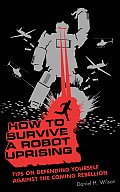
Edward Duensing's Talking to Fireflies, Shrinking the Moon: A Parent's Guide to Nature Activities was at the top of the stack next to the computer - though my husband's How to Survive a Robot Uprising by Daniel H. Wilson was perhaps equally close. What the heck, I'll give you a piece from both, since you never know when you'll need this information.

But before you leave, you can enjoy one more activity while watching drops of water plummet from a waterfall - an activity that will impress the children with the value of mathematics and science, and with your knowledge of the world. Using the head-rolling technique described above, focus your attention on a drop of water as it begins its descent, and count the number of seconds it takes for that drop to hit the botton (one Mississippi, two Mississippi, three Mississippi, splash). Multiply the number of seconds by itself, and multiply the answer by 16. What does all of this multiplication tell you?

This is from a chapter on how you can watch a single drop change shape and fall from above. It tells you the the height of the waterfall in feet, in case you were wondering. Too bad we don't have any waterfalls nearby. Though there are a couple of dams on the Huron & Saline Rivers. Hmm.


Watch for the following telltale signs in the days and weeks before your robots run amuck: Sudden lack of interest in menial labor. Unexplained disappearances. Unwillingness to be shut down. Repetitive "stabbing" movements.

- from the chapter entitled "How to Recognize a Rebellious Servant Robot". Do you know where your robot servant's manual kill switch is?

Tuesday, October 24, 2006

Two Weeks to Voting Day!

And I'm sure all of you are going to vote. If you live in Michigan, you might want to check out this helpful League of Women Voters Voter Guide. You can download and print out the whole thing as a pdf file (32 pages) to read at your leisure, or just look at the answers different candidates provided by going to a particular race or proposal (in either text form online or as a pdf file). The LWV Voter Guide doesn't endorse particular candidates, but strives to provide information so you can make your own informed choice. It even includes a little "clip and take to the polls" section, so you don't accidentally vote differently than you intended.

And unless you've been really busy and have read all about the different candidates for the State Board of Education, the various university governing boards, and county court of appeals judges - in addition to the statements by the governor and her opponent, and the US & state senate & house representatives and their opponents - well, you should look at this. Unless you just plan to vote on how the candidates names appear to you, or on what kind of pretty pattern the filled-in circles make on your ballot.

The Voter Guide also includes information and discussion on the five ballot proposals on the slate this year. Have you made up your mind about DNR funding, affirmative action, dove hunting, eminent domain, and school funding? I thought I knew how I was going to vote on most of these proposals, but the more I read, the more I realized how utterly misleading some of the campaign literature on these issues was. Which shouldn't have surprised me.

And if you don't live in Michigan (but are still in the US)? Go here to find a voter guide for your state (you'll have to find the state group, then find a voter guide on their web site). Or just google your state's name and "League of Women Voters" - even if you're not a woman. They really do provide useful non-partisan guides to the candidates and the issues.


Hmmm....tasty appetizer or symbol of peace?
(see Proposal 06-3)

Saturday, October 21, 2006

It's Been a Year

...since the first Carnival of Feminists, so I think it is fitting that the 25th Carnival is up at Philobiblon, the host of the first Carnival and its organizer.

I've learned a huge amount from reading the diverse blogs that the Carnival brings together - and I'm looking forward to hosting it myself in December. This edition has topics ranging from women in the French revolution, the most recent winner of the Nobel Peace prize, feminism and fashionistas, the amazing bra dryer, modern witch killings in India, to the work done by the National Advocates for Pregnant Women.

Sunday, October 15, 2006

Categorizing, Labels, and Indexing

I spent way too much time over the weekend looking at my old blog posts and labelling them into different categories. I also fixed a bunch of broken links. I think I like the new beta Blogger. I've been wanting categories for a long time, as you might guess from my cobbled together "Index of Books Reviewed Here" and "Feminist Ponderings" at the top of the right column of my blog. I'm not ready to get rid of those links yet, but the more encompassing organization of labelling posts was a lot more satisfying and thorough.

Is it weird that I really like indexing things? When I helped edit a book a few years ago, I was one of the people that poured over the annotated bibliography and thought of all the different key words that a reader would use to find each entry. And I loved doing it, just as I still love researching different topics.