Friday, June 02, 2006

The Bowl Is Already Broken: Book Review

I've been neglecting my blog lately. My part-time writing job takes some of my creative energy, though I do love the work, and have gotten to read fascinating things* in the course of it. The recent pattern of rain-heat-sun-and more rain in southeastern Michigan is doing its best to turn our yard into a weedy meadow, which we fight twice a week with our beautifully quiet and ecologically sound but not terribly efficient reel mower. This combined with energetic children is enough to cause us to spend what free time we do have in a stupor on the couch or on the back deck, swatting at mosquitoes, watching the wind blow twigs off the dead elm tree and making the green-turning yellow wheat field behind our house ripple.

However. An abrupt cancellation of one writing project on railroad expansion in Philadelphia in 1839, followed by a short bout with the stomach flu, gave me the opportunity to lie in bed and read for a day and a half. Luckily I had a wonderfully engrossing novel to distract myself from nausea and stomach cramps: The Bowl is Already Broken, by Mary Kay Zuravleff.

I had already read a couple of great reviews praising it (and describing the plot in some detail) by two bloggers whose work I admire, flea (note that her copy has a more elegant cover design - but since my library copy had the cover shown here, I felt I had to use it), and the mama from mamarant.

At the beginning, I was a bit suspicious of the novel and its characters, probably because I spent ten years on and off working in a museum, and another nearly ten years as a mother - and these are the two inextricably bound themes that wind through Zuravleff's book. The more I read, though, the more I enjoyed the characters' complexities, their devotion to their work, and Zuravleff's descriptions of the Asian art and poetry at the center of the story. My museum experiences were different from those at Zuravleff's "Institution" in many ways -- for one thing, most archaeological artifacts are not nearly as awe-inspiring as porcelain bowls and illuminated manuscripts. Much of the rest of it, though -- the group lunches (unfortunately not the gourmet meals described at her museum!), the politics, the dance between administration and research, the incredible range of research and experience, and the gossip and the sexual drama - oh, she got that, she really got it down, and so very well.

And I have to say that Zuravleff really captures the essence of family life -- the worries, the kids' quirks, the unending domestic work, the day to day chaos -- very well also. In fact, her entertaining descriptions remind me of Anne Lamott, who captures motherhood in a way few other writers do...except there's not much Jesus in The Bowl Is Already Broken. But there's plenty of Rumi (whom I keep running up against in books, I think most recently in The Bookseller of Kabul and The Kite Runner). One featured poem, written in Persian by the Afghan poet and mystic more than seven hundred years ago:

Little by little, wean yourself.
This is the gist of what I have to say.
From an embryo, whose nourishment comes in the blood,
move to an infant drinking milk,
to a searcher after wisdom,
to a hunter of more invisible game.

Think how it is to have a conversation with an embryo.
You might say, "The world outside is vast and intricate.
There are wheatfields and mountain passes,
and orchards in bloom.

At night there are millions of galaxies, and in sunlight
the beauty of friends dancing at a wedding."

You ask the embryo why he, or she, stays cooped up
in the dark with eyes closed.

Listen to the answer.


There is no "other world."
I only know what I've experienced.
You must be hallucinating.

So - go and read this book. It's the perfect summer read, engrossing yet light, but not so fluffy that you feel unfulfilled afterwards. My only quibble with it? The archaeological project that Zuravleff describes is a little sketchy...it doesn't really give you a good idea of how that kind of fieldwork feels or actually works, which is in marked contrast to the other parts of the book. But this is basically criticizing the background scenery from a couple passages. The descriptions of the other parts of the Middle Eastern landscape are wonderful, as are those of the different parts of the Washington DC setting. Just go and read it and enjoy it, really.

*Recent topics include Ida B. Wells and lynching, Frederick Douglass and Jim Crow railroad cars in 1840's Massachusetts (and you thought Jim Crow was just in the South after Reconstruction!), and the feminist protest at the 1968 Miss America pageant (no bras were ever burned, contrary to popular belief).

Saturday, May 20, 2006

The Keywords That Brought You Here...

...never fail to fascinate me. Along with the ever popular (and inexplicable) "tomato watch", some of my favorites include:

-ass ponder
-the difference between Republican housewives and the cult of domesticity
-what to do when your husband is being a jerk (I feel sorry for someone looking for advice from google on this)
-parsley round the pig
-mound of tush
-detroit ghetto hairstyles
-fat blogger housewives

Thursday, May 18, 2006

Carnival of Feminists XV


...is up at Self Portrait As. The posts on motherhood and reproductive rights were especially interesting to me this time - and a special nod to Cliopatria's "The War Against Mother's Day" post, as I love almost anything that cites The Way We Never Were: American Families and the Nostalgia Trap by Stephanie Coontz. For instance, imagine how different Caitlin Flanagan's (and Darla Shine's) ode to 1950's homemaking would be if they had read this book. And the posts on the Washington Post's story about the CDC and infant mortality and now consider yourself "Pre-Pregnant" are quite illuminating.

Sunday, May 07, 2006

Huck's Raft: Book Review

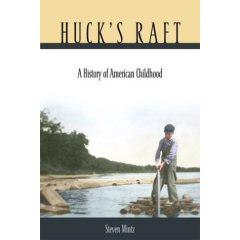
Huck's Raft: A History of American Childhood, by Steven Mintz was a book that took me a long time to read. Not because I didn't like it, or because it wasn't well written (I loved it, I learned a lot, and think it was very well-written), but because there was so much information in it. It was dense. Packed with things I thought were very interesting, and I kept turning back to the footnotes and marvelling and then thinking I should follow up on this other thing...it took me almost a week to read a chapter at that rate. And there were seventeen chapters, covering everything from the Puritans in "Children of the Covenant" to 2001 and "The Unfinished Century of the Child".

Anyway, I'm finding Huck's Raft a bit hard to review, too, because I've already read a wonderful review of it here, written by Judith Stadtman Tucker. She said everything I would have said if I sat down and thought logically about the book and its relevance to our society and parenting today. Since Tucker already did that, though, that leaves me free to go and pick my favorite bits and pieces and highlight them. These are the passages that stuck in my mind, not necessarily the most important or exciting parts, mind you.

The chapter entitled "Growing Up in Bondage" on children in slavery in the American south was just heartbreaking to read....the infant mortality, malnutrition, broken families, and sexual abuse was overwhelming, and much worse than I think most Americans can imagine. Reading the personal stories (a device that Mintz uses in all of the chapters, jumping from the individual to the general) is amazing and awful.

"The Revolt of Modern Youth", on the early part of the 20th century, seems so very modern:

...Cornelia A.P. Comer, a Harvard professor's wife, published "A Letter to the Rising Generation" in the Atlantic Monthly. The younger generation, she grumbled, couldn't spell, and its English was "slipshod." Today's youth were selfish, discourteous, lazy, and self-indulgent. Lacking respect for their elders or for common decency, the young were hedonistic, "shallow, amusement-seeking creatures,"....The boys were feeble, flippant, and "soft" intellectually, spiritually, and physically. Even worse were the girls, who were brash, loud, and promiscuous with young men.

Guess what year that was written?

That was written in 1911. Before most of our parents were born. Those selfish, shallow, promiscuous, loud rebels were our great-grandparents.

Since I've written about Bronislaw Malinowski here, and took "imponderabilia" from him, I thought it was very entertaining when I read the following story, set in the 1920's:

Middle-class family life grew more democratic, affectionate, and child-centered, and the school and the peer group became more signficant in young people's lives. Bronislaw Malinowski told a story that underscored the shift. He and his five-year-old daughter argued, but despite his best efforts, the Polish-born anthropologist was unable to sway her opinion. The girl brought the argument "to an abrupt conclusion by announcing: 'Daddy, what an ass you are.'" Malinowski "tried to imagine what would have happened had I thus addressed my father some forty years ago. I shuddered and sighed."

Huck's Raft
is worth reading even if you just read a few chapters (pick one - "Sons and Daughters of Liberty" on the American Revolution? "New to the Promised Land", on the children of immigrants? "In Pursuit of the Perfect Childhood", on the 1950's?) Whichever one you pick, whatever period of history you're interested in, you'll find some fascinating stuff in that chapter. And "Parental Panics and the Reshaping of Childhood" on the 80's and 90's - ah, I just wish this chapter was tacked onto the back of every newspaper or magazine article on parenting, as well as every parenting book out there, from Dr. Sears to the Pearls.

Wednesday, May 03, 2006

Carnival of Feminists, No. 14


Now playing at Women's Autonomy and Sexual Sovereignty Movements. Many very interesting posts from Africa, China, the Other London, and Dorking. There's a lot on language, bitches and bags, blogs, godbags, etc., the non-existant mommy wars (people are just discovering this? Isn't Miriam Peskowitz's book one of the top google results for mommy wars?), and MILFs. And don't miss the creepy piece on Purity Balls for preteen girls.

Sunday, April 30, 2006

On My Nightstand and Desk...

...there are books. Quite a few books, actually, since I was at book sales at two different libraries yesterday. Here's what I'm currently reading, just finished, or about to read, though, again stealing the idea for this post from Mental multivitamin: I'm going to take each book, go to page thirty, and write down the forth sentence, and then write something about why I have this book.

And what are you reading?


Huck's Raft: A History of American Childhood, by Steven Mintz

Nevertheless, the Great Awakening did reinforce a trend toward greater youthful autonomy.

Yes, I know that this book was on the list last time I did this about six weeks ago. I've checked it out of two different libraries, then finally bought my own copy. It's a wonderful book, though, one I'm happy to own, and I'm finally at the last chapter. I'm going to write a review of it here as soon as I have the time.
________________

An Irreverent and Almost Complete Social History of the Bathroom, by Frank Muir

It is no wonder that, apart from health cranks, hardly anybody at that time 'frequented the gelid cistern'.

I got this for a quarter at one of the book sales yesterday. Interestingly enough, I was googling to try and discover when "shower-baths" become common in American bathrooms just the other day. I didn't find anything online, though there were a bunch of book and journal references that I could search out if I need it. 1920's, I'm guessing? The index in Muir's book points to the origins of cold showers, which was earlier than I thought. I'll bet showers weren't very popular until hot water heaters were common.
________________

Nightbirds on Nantucket, by Joan Aiken

"Thee may have the use of my stateroom."

I loved Joan Aiken's books as a child, starting with The Wolves of Willoughby Chase. I think my son is almost old enough for them, and this was also a bargain for a quarter. I'm looking forward to re-reading the whole series.
________________

The Motherhood Manifesto: What America's Moms Want - and What to Do About It, by Joan Blades and Kristin Rowe-Finkbeiner

"She's kind of moody, but she's really good with kids and I might have to use her."

I've been looking forward to reading this ever since I read about it on MomsRising.Org. It doesn't have an index, though, which is a pet peeve of mine.
________________

W.E.B. Du Bois - Biography of a Race, 1868-1919, by David Levering Lewis

"We were companions," said he, pure and simple.

This book is for an article for my part-time writing gig. It's fascinating, though, and outrageous that I knew so little about Du Bois and his influence on American politics & civil rights. It doesn't say much for my high school history teachers or textbooks, that I knew so little about Booker T. Washington, W.E.B Du Bois, William White, and Monroe Trotter.
________________

The Kite Runner, by Khaled Hosseini

Hassan, of course, was oblivious to this.

My book club is reading this, and half the people I know (including my mother) have already read it and loved it. I'm liking it a lot so far, though I'm worried something tragic is going to happen soon.

Saturday, April 29, 2006

Some Recommended Reading for Mothers


...also highly recommended for Dads, especially if they do much care-giving:

Mothers & More 2006 "Mothers at Work" Reading List

Sadly, I have not read any of these books, although I have read quite a few on their general recommended reading list on Motherhood and Society. Also, I just bought a copy of The Motherhood Manifesto: What America's Moms Want and What to Do about It, by Joan Blades and Kristin Rowe-Finkbeiner, and The F Word: Feminism in Jeopardy, by Kristin Rowe-Finkbeiner. And as soon as I finish Huck's Raft (I'm up to the 60's finally), I'll get right on them.

Meanwhile, check out MUBAR's The Feminine Mistake, a very perceptive review of Darla Shine's Happy Housewives (which I ranted about here).

Monday, April 24, 2006

MomsRising.org


Since I can't figure out how to make this banner a clickable link, here's the link: MomsRising.org

And if you've ever used a breast pump, be sure and check out the "Office Lunch" story by Mary Ann Romans on this page of the 'hood (of motherhood).

Friday, April 21, 2006

Go Read at "I See Invisible People"...

...because the 13th Carnival of the Feminists is fascinating. My favorite link is Peyton Place in the Pleistocene (and why didn't I ever think of doing that kind of post?), but there's so much more. Enjoy.

Thursday, April 20, 2006

Answering Some Google Searches

Tomato watches? Who are you people, searching for tomato watches so often? I can't figure it out.

To whomever was looking for the "oldest domesticate": it's the dog. Unless you're talking about plants. Then it's the bottle gourd in the New World (brought over the Bering Straits, along with dogs), then squash, and I think it is lentils or some other legume in the Old World. Or maybe wheat. I suggest you google "paleoethnobotany" and "oldest plant domestication".


The appropiate age to read "Of Mice and Men" is around 16.

There, is that what you wanted?

You Say For-SY-thia, I Say For-SITH-ia


We're having a week or two of real spring, like one of those southern states where spring is a distinct season, and there's daffodils and early tulips and hyacinths and forsythia. Our forsythia (shown above) is one tough shrub. It was grown from a cutting from my in-law's old house, survived six years and a fire and subsequent construction at our Ann Arbor townhouse. When we moved to Saline four years ago, my husband dug it up (severing many of the roots), pulled it out of the half-frozen ground with our car, and then we left it sitting frozen by our front porch for several months. We had to unpack some of the stuff we needed and then get used to having a new baby. Still, William Forsyth's Chinese shrub flourished when we got around to sticking it in the ground the following spring.

One more tidbit that I remember from Warren Wagner's wonderful "systematics of botany" at class at the University of Michigan: forsythia is in the Oleaceae family, and thus closely related to olives. It doesn't seem particularly oleaginous as far as shrubs go.

Monday, April 17, 2006

Mothers at Work: Mothers & More 2006

I started blogging last year for Mothers & More's annual media campaign - so I'm excited to see the new bloggers online for this year's campaign.

They've also chosen some of the organization's themes as general blogging topics, which should prove interesting:

* All the work mothers do - whether paid or unpaid - has social and economic value.
* Mothers have the right to fulfill their caregiving responsibilities without incurring social and economic penalties.
* All women deserve recognition and support for their right to choose if and how to combine parenting and paid employment.

You wouldn't think that these simple ideas could be controversial. But both sides of the political spectrum (in the US, and to some extent, worldwide) have issues with mothers and their roles in different cultures or parts of our society. Just ask Linda Hirshman or Caitlin Flanagan.

Thursday, April 13, 2006

Lists of 100 Books

I've been bookmarking those "100 Greatest Books" or "100 Best Reads of the Century" lists for a while now, as I mentioned at my book club last night. Wow, that makes me sound really middle-aged and boring, doesn't it? My book club. But really, what could be better than a night out discussing books with some friends? OK, I can think of a few better things to do, but they all involve babysitters and elaborate plans and some money (at least for the babysitter). Participation in my book club just takes a library card and some reading (which I already do), and the ability to talk about a different book each month. Not a problem here. Especially when wine and chocolate and strawberries and blueberries are provided (thanks, Kim).

The New York Times prints a 100 Notable Books of the Year every December. Last year's picks weren't so exciting for me, although I did like some of the non-fiction a lot and a few of the fiction selections are still on my "to read" list.

The BBC did a general "best-loved novel" list in 2003. Five of their top ten are five of my favorites, and since I've read so many of the UK's "best loved" (48) I felt all smug...until I realized that most of these were children's books.

Book of the Day is working her way through an interesting bunch of lists: Great Books Lists. I love her blog selection of trashy books interspersed with literary stuff. It mirrors my own reading, though I don't blog about most of the trash. I'm pretty sure this is also where I found CounterPunch's Top 100 (and a few more) Non-Fiction Works of the 20th Century.

Time magazine did a story on the 100 Best English-language Novels from 1923-2005. It's a weird list...one that I guess reflects the idiosyncracies of the two editors that got to pick the books. Some of the books I agree are absolute classics, others...not so much. Then there's Random House's 100 Best Novels, both the board's list and their reader's list. Battlefield Earth? Give me a break.

If you're a snob about your reading, you can always check out The 100 Most Meaningful Books of All Time, selected by a hundred authors from 54 different countries.

Finally - I haven't forgotten about kids' books. Here the NEA's two lists: Teachers' Top 100 Books and Kids' Top 100 Books. And finally, the New York Public has the wonderful 100 Picture Books Everyone Should Know - which is especially nice because it includes pictures of the covers.

I'm sure I could go on and on...I could probably google up 100 Lists of Lists, but I think I'll stop here.

Sunday, April 09, 2006

Perfection Salad: Book Review

Perfection Salad: Women and Cooking at the Turn of the Century, by Laura Shapiro

This was a very entertaining book, although you would never guess it, given such a domestic subject and a really ho-hum subtitle. I read a recommendation on chowhound.com, though, so I requested it from our library. Since it was published twenty years ago, there wasn't a request list.*

Perfection Salad is well-written, funny, and very well-researched. Although the "current trends" summarized in the last chapter are now sadly out of date (but maybe they've been updated in the new edition, which I haven't seen), the rest of the book is still very relevant and occasionally very funny. It's a history of women's roles, feminity, the science of cooking, attitudes about food, the evolution of the food industry and American cuisine, and home economics.

A few images that stuck in my head: early in the 20th century, it was thought that women and children needed lighter (less masculine) food than men. One popular magazine recommended that children be given a delicious frosting sandwich for lunch.

On the other hand, it was a cause for great concern if boys only wanted more feminine desserts: from "How to Eat, Drink, and Sleep as a Christian Should":

Both parents know that Tom should be helped up to a sturdy boyhood; not having all his girlish fancies indulged. How can they make him love the rare, juicy tender roast beef, and the hot baked potato that he now turns from, holding in his hunger until the pudding gets on the table?�

It was commonly assumed that most of the men in prisons, workhouses, and mental hospitals in the early 1900's were there because they didn't have good women providing them with wholesome food at home. If they had the right foods, they wouldn't turn to drink! Pies, old-fashioned pies, they were a gateway drug. I had no idea. And apparently this whole "women cooking good food keeps a family wholesome" idea is coming back into serious vogue, according to Caitlin Flanagan, anyway. No, I'm not going to link to Flanagan's book, but here's that now famous interview in Elle.

And those immigrants with their foreign foods! What was wrong them, eating pasta and garlic and whatnot, when they could be eating molded jello salads, baked beans garnished with toasted marshmallows stuffed with raisins, and meats cleanly covered in a smooth white sauce?


*Amazon.com has a new edition, with an introduction by Michael Stern, published in 2001. And my apologies to any Sybermoms who have already read this review a while back. I thought the book deserved a wider audience, and I didn't feel particularly creative tonight.

Thursday, April 06, 2006

Finally, Some Reasonable Discussion...

...as an addition to Miriam Peskowitz's book on "the mommy wars".

Parent Bloggers Face Off, with Leslie Morgan Steiner and Brian Reid was much better than I anticipated. There was no finger-wagging judgmentalism, but thought-provoking, reasonable discussion. And Parent Blogger sounds so much more balanced than either Mom Blogger or Mommy Blogger. Enough of that argument.

And NOW is really getting on board with their Mothers Matter and Caregivers Count page and petition. Finally!

Sybermoms' Auction is Tonight!


Now is a good chance to get something cool -- a basket of cheese curds, an autographed book, some knitted goodies -- and all profits go directly to The Doug Flutie, Jr. Foundation for Austism.

You just have to register at www.Sybermoms.com, then bid on the auction item you want. The auction forums are open for browsing now (the 24-hr auction starts tonight at 7pm EST, live auction tomorrow).

Wednesday, April 05, 2006

Alien Superheroines, Strawfeminists and More...

...in the 12th Carnival of Feminists at Written World. The planet Zamaron provides an exciting launching point.

Weird Google Searching Again

I've named some of my posts weird things. A couple of titles were based on my daughter's mispronouncing or malappropriating words.

So I find it more than a little strange that someone out there is searching for "tomato watches" and "peanut butter and jelly fish". Do they want a watch shaped like a tomato? Do people really eat pb&j-fish somewhere?

And you don't have to stop. You can think about SCHLOPP. Schlopp. Schlopp. Beautiful schlopp with a cherry on top.*

*Courtesy Dr. Suess's Oh, The Thinks You Can Think!, which was just read here. Let's see what kind of people search for schlopp. Beeyoootiful schlopp.

The latest best post on Google perverts is at Suburban Turmoil, though. Love the advice.

Tuesday, April 04, 2006

The Driveway Diaries: Book Review

The Driveway Diaries: A Dirt Road Almanac, by Tim Brooke is a good spring read. If you like Michael Pollan's work (especially my favorite, his book on gardening - Second Nature) or Bill Bryson's books, there's a good chance you'll like this little volume of essays on how a professor from England buys a house out in the country in Vermont.

The book itself is interestingly shaped - more nearly square than most paperbacks (and not like the illustration here). It's the width of a trade paperback, but only as tall as a mass market paperback. This gives it a slight "picture book" or artsy feel - though there aren't any pictures, except for the graphic woodcut-like design on the cover.

Not every essay thrilled me, but most had me nodding my head, saying uh huh, that's so right, and comparing the differences in roads and driveways between Illinois (where I grew up) and Michigan and Vermont. I spent a bit of time thinking about the physical & environmental differences between rural, suburban, urban, and small town areas I've lived in, and thinking of "My Life in Driveways" (which would make an interesting blog meme: describe each driveway or lack thereof in your life), which was one of the essays that I most enjoyed.

His descriptions of different kinds of ice, shovelling, and problems with winter driveways made me appreciate the crocuses, daffodils and robins now (finally) here. And Brooke has a wonderfully anthropomorphic essay on the differences between tulips, daffodils, and irises that was one of the best parts of the book.

Now that I come to think of it, a driveway is the opposite of a porch. The porch was designed as a halfway habitation: on the porch, the homeowner was sheltered and at home, but was also visible and available to passers-by, able to wave, call out, chat. The drieway assumes that you don't want to talk to passers-by, and that there aren't any anyway, as they're all in their cars. It means that instead of the intervening distance between private and public being small and joined by words, it is large, and one passes through it enclosed in a car. -- Tim Brooke, in The Driveway Diaries: A Dirt Road Almanac, p. 79.

Monday, April 03, 2006

Children's Literature Carnival!

I don't have much time to blog, having just started a part-time job doing research and writing. It's fulfilling some of my creative needs, and it pays! Woo hoo! Now I have an excuse for ignoring housework.

I did want to link to a blog carnival I just discovered, though: The Third Carnival of Children's Literature. Let the wild rumpus start!

Wednesday, March 29, 2006

Love, Commitment & Advertising

Well, I didn't think that I had anything to add to the bloggage burgeoning through the Internet regarding MiM's False Advertising post. I thought pretty much everything that could be said had already been said, and probably more cogently than I could do it.

But then I read a couple of things yesterday that made such interesting and elegant counterpoints. Unfortunately, I didn't write either of them.

The first bit is a poem* that was quoted in a novel I finished last night: How Elizabeth Barrett Browning Saved My Life, by Mameve Medwed (a fun light read, if you like skewering academia and stories about antiques):

If thou must love me, let it be for nought
Except for love's sake only. Do not say
'I love her for her smile - her look - her way
Of speaking gently, - for a trick of thought
That falls in well with mine, and certes brought
A sense of pleasant ease on such a day' -
For these things in themselves, Beloved, may
Be changed, or change for thee, - and love, so wrought,
May be unwrought so. Neither love me for
Thine own dear pity's wiping my cheeks dry, -
A creature might forget to weep, who bore
Thy comfort long, and lose thy love thereby!
But love me for love's sake, that evermore
Thou may'st love, through love's eternity.
-- Elizabeth Barrett Browning, sonnet 14, From the Portuguese


The other piece of writing - nearly as poetic, but prose instead of a 19th century poem - was Redneck Mother's post, especially the part about her Great-Aunt and Uncle. Although I do also really love her mother's quote:

"Marriage is not the goal," she said, briskly. "It's the person that matters. I love your father. The institution of marriage itself is bullshit."

In its own way, that's just as romantic as the sappy romance-era poem. I love it. And I'm glad that the guy who used to have nerdy glasses, a beard, and play the guitar when we moved in together twenty-three years ago feels the same way.

*You did know that April is National Poetry Month, right?

Tuesday, March 28, 2006

Sybermoms' Auction for Autism


Just wanted to post a news release from a parenting forum that I frequent. You do have to register there to participate in the auction, but it's free (go to register in the menu at the top & follow directions - note that you do not need to be a "paid member" to participate in the auction). I donated an autographed copy of The Mommy Myth, by Susan Douglas & Meredith Michaels (autographed by Ann Arbor resident & UM professor Douglas) and a Kiss My Axe cd by HRT - it will be in the auction listed as "Women with Axes to Grind". :-)

Sybermoms Holding Two-Day Auction to Benefit Autism Research

March, 2005 -- Message board members will once again be participating in a two-day online auction at www.sybermoms.com, which is scheduled to begin the evening of April 6th, 2006 with a 24-hour auction and to close out Friday evening, April 7th with a live auction.

“The days leading up to the auction are always filled with tons of work and stress, and you find yourself thinking, ‘I can't wait for this to be over,’ said Megan Perkins, Sybermoms' Auction Co-Coordinator, mother of three and home business owner of The Fanciful Frog. “And then when you get an early count of how much has been raised, all of the hard work, the time and effort, the sleepless nights -- they all fade away. Because it's at that moment that you are reminded what you are working toward. How many lives you're going to touch. How amazing, truly amazing, it is for virtual strangers to come together to do something of this magnitude.”

This auction, to benefit The Doug Flutie Jr. Foundation for Autism, Inc., is the latest in a long history of philanthropy from Sybermoms.com. This is the sixth auction the board has hosted in three years

“The volunteers have done such a beautiful job,” said Kristi Mildon, a Sybermoms co-owner. “They have spent endless hours behind the scenes coordinating donations, displaying and describing them, and then making the whole thing run smoothly; they have done a fantastic job! It really makes me feel lucky to be a part of something so wonderful and to be able to help those who need it most.”

Michelle Waters, co-owner of the parenting message board and owner of Watersweb Solutions LLC, the Enid, Oklahoma company that hosts the site, said that there have been hundreds of items donated for the various auctions from people in countries around the world, including Japan, Great Britain and Australia.

“Sybermoms are amazing. Several women have been planning this auction, step by step, for many months. They are volunteers from across the United States and Canada who have never met – but have come together to raise money for a cause that has touched each of them deeply, particularly as parents,” Waters said.

The donated items typically include hand-made crafts/clothing, regional and specialty-themed gift baskets, collectibles and memberships at the site, among other things. Members go to great lengths to offer unique, unusual items they know will appeal to the bidders. Each member who donates an auction item also agrees to be responsible for shipping that item to the winning bidder. Additionally, several businesses are solicited for further donations of items to be auctioned off.

Sybermoms have historically shown generosity and goodwill in their auction donations and purchases. Members formed a team to walk the Susan G. Komen Foundation's Breast Cancer 3-Day in the United States and the Weekend to End Breast Cancer in Canada, raising nearly $60,000 in 2004 and over $60,000 in 2005 for breast cancer research. That tally was raised almost exclusively through Sybermoms, both through donations and online auctions in December 2003 and the spring of 2004 and 2005. The auctions alone raised more than $40,000.

In addition, Sybermoms held an auction in December of 2004 to benefit St. Jude Children's Research Hospital, raising $7,169, and pledged a combined $21,343 in bids during a similar, collaborative two-day auction in February 2005 that was donated to the American Friends Service Committee, who in turn donated 100 percent of the funds to tsunami relief efforts in the affected countries.

Sybermoms.com, Inc. is a California company owned by several women from across the United States and Canada. The site started as a parenting community for mothers in May 2002. Waters said the site’s philosophy is to provide a place where parents can speak their minds – and support one another in their efforts to raise and protect their children.

Saturday, March 25, 2006

Empowering Women

Once in a while, The Onion really does hit the nail square on the head (and how did I miss this before?): Women Now Empowered By Everything A Woman Does and the more recent Constructionist Supreme Court To Revisit Women's Suffrage.

Thursday, March 23, 2006

Some Classic Children's Books

Ypsi~dixit linked to a great Flickr entry yesterday: a comparison of Richard Scarry's Best Word Book Ever in 1963 and 1991, highlighting the publisher's subtle editorial changes in both artwork and language over the years from my childhood through early adulthood. Scarry was an interesting guy, as I read in an entertaining (and well illustrated) online "rotten" biography, which also touches on some of the ethnic and sexual stereotypes in Scarry's work.

It got me thinking about all of our classic children's books. My parents (and my in-laws) saved quite a few of my favorites (and my husband's), which our kids now enjoy. Re-discovering these stories thirty years or so later has been an unexpected parenting bonus. Some of the books are undeniably dated, but interestingly so. I love the fiercely mustached firemen (not "firefighters"!) and policemen in A Fish Out of Water, which my daughter demanded several times a day the summer before last. The telephones and bathtubs and even the toothpaste tubes are notably antique, and since I had the words pretty much memorized after the twentieth reading, I had plenty of time to analyze the pictures.


"A boy has fed his fish too much? We will come at once!"

It amazes me how well some of these books hold up today. There were a few (Disney ones, actually) with such crude stereotypes that I had to hide them up on the top shelf of an adult bookcase, but most of the picture books are just as enjoyable for my kids as they were for me. Some of our favorites include: P.D. Eastman's Big Dog, Little Dog, Are You My Mother?, Go, Dog, Go, and Sam and the Firefly.

Then there's Ole Risom's wonderful portrayal of the seasons in I Am a Bunny (illustrated by Richard Scarry), The Bunny Book, by Patricia Scarry (again illustrated by Richard Scarry), The Golden Egg Book, by Margaret Wise Brown, the ecologically prescient The Little House and Mike Mulligan and His Steam Shovel, by Virginia Lee Burton, The King, the Mice, and the Cheese, by Nancy and Eric Gurney, and Harry the Dirty Dog, by Gene Zion (illustrated by Margaret Bloy Graham).

I haven't even mentioned Dr. Suess, or his alter ego Theo Le Sieg. Sure, you know A Cat in the Hat and Fox in Socks and maybe even The Lorax, but have you checked out Come Over to My House, In a People House, or Hooper Humperdink? - Not Him! ?

One of my favorite authors and illustrators, however, is Wesley Dennis. His Flip books are out of print, but fortunately not too expensive in online stores specializing in used books. (Hurray for the internet! Would I have been able to get these so easily even 15 years ago?).


If the illustrations look familiar, it may be because Wesley Dennis also illustrated Marguerite Henry's popular horse books, like Misty of Chincoteague. I'll bet there's more than a few female readers that devoured Misty, Stormy, Brighty of the Grand Canyon, King of the Wind, and more (all beautifully illustrated by Wesley Dennis) in their horse-frenzied preteen years.


Anyway, I love the Flip books because Dennis' horses and other animals are so realistic. They convey an amazing range of expressions without becoming overly humanized like Scarry's endearing but sometimes irritating animals-standing-in-for-people. The stories are simple but timeless: Flip dreams of having wings and soaring over the farm and being big enough to jump the creek like his mother; Flip overcomes his fear of cows; Flip wakes up before everyone else and annoys them.

I hope these books are still in our family in another thirty years. If my kids ever have kids, it would make me a happy grandmother.

Wednesday, March 22, 2006

11th Carnival of Feminists...


...now at angry for a reason. It has several moving posts from 'Blog Against Sexism' day, a couple fascinating ones from India, thought-provoking posts on porn, male feminists, blog commenting on conservative women, reviews of recent news stories on traditional wives and happiness, ancient Roman women (heavy on the sex, scandal and bloodshed), and feminist dogma. Go and browse and read, you're guaranteed to learn something.

Thursday, March 16, 2006

Freecycle in Saline & Pittsfield Twp.


Having just finished Garbage Land, I was excited to hear that there's a new Freecycle group for my small town and the surrounding area. The Ann Arbor group is great, but so big and busy it's hard to keep up with. So it's nice to have a smaller group a bit closer to home -- all the better to save fossil fuel and shrink my environmental footprint, if you want to use the appropriate jargon.

Tuesday, March 14, 2006

March

The stormy March is come at last,
With wind, and clouds, and changing skies;
I hear the rushing of the blast,
That through the snowy valleys flies.
(- from William Cullen Bryant, in my great-grandmother's quotation book from 1907)

The other quote was a little more optimistic:


Ah, March! we know thou art
Kind-hearted, spite of ugly looks and threats,
And, out of sight, art nursing April's violets!
(- from Helen Hunt, same book)

Monday, March 13, 2006

Garbage Land: Book Review

Garbage Land: On the Secret Trail of Trash, by Elizabeth Royte, was engaging non-fiction in the best "huh I didn't have a clue about that" kind of way. I thought I knew more about trash than the average person, having excavated or analyzed prehistoric garbage for about fifteen years. We have a composter and a garden, I've done some vermiculture and I have a well-thumbed copy of Worms Eat My Garbage. I've even read articles by William Rathje, the archaeologist that started "The Garbage Project" in Tucson in 1973, which compared the material evidence of people's consumption to what they thought they consumed (or said they used) in surveys.*

But Royte showed me that I really didn't know much about landfills, san men, mongo, putrescibles, e-waste, recycling, or the sewage sludge industry. And she did this in a very easy to read first person account, describing her own attempts to quantify her kitchen garbage (weighing everything spread out on her daughter's plastic sled), and then following the different waste streams from her apartment in New York to their "final" resting places or re-uses.

Although the garbage itself is fascinating, it's the different people in this book that really make it work. They're helpful, they're patient, they stonewall, they're greedy, they're bitter, they make humanure in their backyards. Near the end of the book, Royte sums it all up:

Walking down the street now, I'd hear the distinctive knock of a packer truck's diesel engine and turn to see if it belonged to the Brooklyn 6. Perhaps one of the most important things I'd learned in the past year was the names of the people who took away my trash.

Garbage Land
is fun to read, it makes you think before you buy something new (both about the item and the packaging), and it makes you think even harder about what you discard. Go read it.

*people lie about they eat & drink, or delude themselves that they eat more vegetables and drink less alcohol - check out Rubbish: The Archaeology of Garbage, by William L. Rathje and Cullen Murphy.

Friday, March 10, 2006

Peanut Butter and Jellyfish Sandwiches

Unlike a lot of mommy bloggers, I'm not really comfortable sharing too much about my husband or children here.

But...some things beg to be told. Today when I picked my 4 year old daughter up at preschool, she proudly showed me the big cardboard bee with cellophane wings that she'd made. All of the bees were stuck on a big paper sandwich on the door.

"Look!" she said. "It's on a peanut butter and jellyfish sandwich!"

Her older brother talks about jellyfish and horseshoe crabs and Triops like an invertebrate biologist, and we just saw jellyfish at the Toledo Zoo last weekend. Both kids view pbj's with disdain, and we've stopped offering them, so I can see how jelly automatically became jellyfish. Still, the idea of a bunch of slimy jellyfish smooshed into peanut butter on bread, trailing dripping stinging tentacles, is one that had me smiling all the way out of the school.

Thursday, March 09, 2006

On My Nightstand....


...or the computer desk, on the top of the bookcase by the door, the kitchen table, and the windowsill in the bathroom are books I'm reading or have just finished reading or thinking about reading or need for some other reason.

I stole this idea whole hog from Mental Multivitamin, who explains her monthly (more or less) "On My Nightstand" posts like this:

I will discuss only what is on my nightstand, under my pillow, in my knapsack, on my desk, under the car seat, etc. right now, today. As before, then, it's not the month in review, just a snapshot of one day's worth of books in various angles of repose -- being read, waiting to be read, being evaluated, being rejected. And again, I'll turn to page seventeen of each of the books, locate the fifth complete sentence on that page, and include it (or its reasonable approximation) with the title, author, and brief note on how it ended up on the stack.

I love peeking at what other people are reading, and thought I'd reciprocate and see what insights pop up from the fifth sentence of the seventeenth pages of:

Huck's Raft: A History of American Childhood, by Steven Mintz:

Children suffered burns from candles or open hearths, fell into rivers and wells, ingested poisons, broke bones, swallowed pins, and stuffed nutshells up their noses.

This book was mentioned on a Mothers & More e-mail loop that I'm on - I saw this review, read some articles on the history of private life by Steven Mintz, and was hooked. I must have my own copy of this book. Go read it, it's amazing.

________________

From Ordinary Wolves, by Seth Kantner:

He was all that, and had black hair - things that I thought should come to him with smiles.

I ran across this by accident on my library's online catalogue. Now I can't even remember what I went looking for. Just finished it, loved it, another one I must buy.

________________

From The Mommy Myth: The Idealization of Motherhood and How It Has Undermined Women, by Susan J. Douglas and Meredith W. Michaels:

The following summer, under the headline "PREGNANT AT LAST!" we had the pleasure of reading about the sperm motility rate of Celine Dion's husband, information that some of us, at least, could have lived without.

I'm supposed to lead a discussion of this book after we watch a video of the author at an upcoming meeting of my local Mothers & More group. Guess I'd better re-read it. I recommend it, but not without a few reservations. I should do a blog review. Maybe after the meeting.

________________

From Middlesex, by Jeffrey Eugenides:

For the first minute, the spoon didn't move at all.

Everyone keeps telling me to read this, and I have a copy that I got for 75 cents. I'm going to read it soon. Really.

________________

From Garbage Land: On The Secret Trail of Trash, by Elizabeth Royte:

I tried to write on both sides, then recycled the larger pieces.

I pulled this off the new release shelf at my library. Looks interesting.

________________

From 1491: New Revelations of the Americas Before Columbus, by Charles C. Mann:

Deloria is the author of many books, including Red Earth, White Lies, a critique of mainstream archaeology.

I read most of this last fall, and just need to finish the last few chapters. Since Mann popularizes a lot of the ideas and work that I studied or did myself as an archaeologist, I read it very critically (checking all the endnotes), and I'm pretty impressed with how well he presents the material. I'm a little dismayed at how many reviewers are just blown away by this book, though. Obviously archaeologists themselves are doing a piss poor job of making their work accessible to the public.

________________

From Dark Road Home, by Karen Harper:

As the tape went on to the next dance, the four young people frowned as they concentrated on the more complicated Tush Push steps.

I enjoy a lot of popular books, like mysteries and romances, for relaxing reading, and got this one for free (minus postage) on Paperbackswap. I've never read anything by Harper, but this mystery set in the Amish country in Ohio looks promising. The writing isn't terribly impressive, but after reading Ordinary Wolves, my standards are much higher than usual.

10th Carnival of Feminists...

...posted at indianwriting. There's an incredible selection of posts, with a geographic spread you won't find elsewhere: India, Great Britain, Finland, Rwanda. And I've only read a handful of the posts - but am looking forward to the rest tonight.

Ladies and Housewives

Well, I hope whomever googled "ladies were meant to be housewives" from Austin, TX found what they were looking for here.

I suggest you go read about the mommy wars at Miriam Peskowitz's site. Or you could check out the new letter on "Mommy Wars" Incited by Irresponsible Media" by Kim Gandy, the president of NOW.

Here's a compelling topic for a future feature: How can our society better support mothers and caregivers so that they can choose to work either outside or inside the home—whether it's full-time or part-time—without additional guilt, financial strife or other barriers? How can workplaces, educational institutions, the public service sector and our government make caregiving a more respected and less stressful endeavor? Paid family leave, recognition of the work of caregivers by providing disability and unemployment insurance, Social Security credits, group health insurance, respite care services, public transportation and early childhood education in every community come to mind, but there are many others.

It is also crucial to talk about men's role and responsibility in parenting. Women need to know that they don't have to do it all. For example, men who choose to stay at home with their children are often ridiculed or overlooked, rather than supported.

See? Most feminists do care about sah moms. And they're doing a lot more to actually help them than the people who tell housewives to just appreciate what they've got, or those that tell them they've made a bad choice, you patriarchal tools, and now you're stuck in your not "particularly interesting or fulfilling for a complicated person, for a complicated, educated person"* rut. Damn extremists.

*quote from Linda Hirshman's Good Morning America segment. I'm not going to link, you'll have to find it yourself on ABC's American Family section.

Wednesday, March 08, 2006

Ordinary Wolves: Book Review

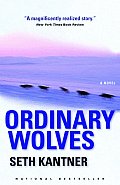
Ordinary Wolves, by Seth Kantner, is quite simply the best piece of fiction I've read for a long time. It combines many of the things that I like in a book: a coming of age story, insights across a cultural chasm of very different values and perceptions, elegant descriptions of landscape and animals and how people use them, a personal quest for meaning, and a historical perspective. And the writing! It's graphic, it's beautiful, it seems to be very accurate (though I've never been to Alaska, more knowledgeable reviewers attest to this), and sometimes it's brutal.

Ordinary Wolves is the story of Cutuk, who grows up with his brother, sister, and father in a sod igloo far in the north of Alaska. Cutuk is white, and longs to look like the Iñupiat (Eskimo) villagers in the nearby village, with their beautiful nylon jackets, skill at basketball, and dark frostbitten marks. Kantner writes inflinchingly about how it feels to be an outsider, about being someone who looks different from the other kids, who gets pounded on sometimes. I can't help wondering how much of this is autobiographical, as I'm sure many readers do, since Kantner's biography says he grew up in Kotzebue, Alaska. At any rate, it's a good look at everyday prejudice and racism.

Since it is hard to describe this book without sounding trite (and the lack of hand-me-down cliches was something I really enjoyed in it), let me just provide a few passages to encourage you to read it for yourself:

On the seasons changing:

Melting-out frogs rattled the ponds and awakening mosquitoes hummed at our ears. Sweet spring was dead and the hot boring summer here, an eternity trapped along the river under clouds of mosquitoes like a writhing skin, black and stinging. Me, painting rancid yellow seal oil on the dogs' faces and Figment's testicles, trying in vain to keep the mosquitoes from taking away their skin. Tall green grass and leafy trees. Fishing for dog food. Cutting fish, drying fish, cooking fish. Weeks and weeks of eating fish. The grebe could laugh in his read throat; he loved fish and had long forgotten if he'd ever watched a sister fly away. (p. 93...Figment is a sled dog whose balls were frozen the previous winter).

On life in a one room house:

In the kitchen we heard tiny frantic hopping. The mouse that had been doing nightly turd dances on our bread had plopped into a mason jar. We grinned, thankful for the interruption. We peered down opposite sides into the glass at the furry face. (p. 128-9. Since we've had some problems with deer mice in our basement pantry this winter, I particularly loved the descriptive "nightly turd dances on our bread").

On city life and some cultural differences:

I sat and finished the pizza. Pizza Hut. I'd seen it advertised on the Wolfgloves' TV. Eating made me happy and I thought of Janet. When Janet fed me tiktaaliq livers she said she was proud of me. Abe hadn't taught pride. Pride had to do with country music, sports, joining the military and getting dead for some devious president. Pride was cousin to bragging, and required a support group. Nothing we needed or had. Nothing for something.

Iris would have something to say, something like "Absence makes the heart swallow your marbles." (p. 157: tiktaaliq = mudshark, according to the glossary in the front of the book, which you need to consult frequently).


Iris's mixed metaphors add a nice bit of relief to an occasionally dark story, which mixes culture shock, drinking Lysol, violence, and suicide with its accounts of the behavior of wolves, porcupines, Natives, Outsiders, big game hunting dentists, "Unwasters" and "Everything Wanters" and "Native Worshippers".

Note Amazon's "statistically improbable phrases" (which I'm becoming curiously addicted to) for this book: bearskin couch, baby porcupine, cannibal pot, snow hook, caribou trails, caribou hairs, tat time, pilot crackers, ice pans, gut pile, tat one, barrel stove, dead wolves, caribou skin, ski plane, mouse turds, dog yard, caribou hide, fish racks, wolf tracks.

When reading about this book (hoping for more by Kantner), I found his photography website, which adds a nice photo finish to the book: Kapvik Photography.

I checked Ordinary Wolves out of the library, but I'm going to give it my highest praise, which is buying it (in hardcover, no less) as a gift for a family member. Now I just need to decide who the lucky recipient will be. I might even have to buy a couple copies and keep one for myself.

Tuesday, March 07, 2006

And once more for good measure....

....mommy wars. Read the link:

The media, from Dr. Phil to the New York Times Magazine, is adamant that there is no love lost between working parents and those who stay home with their children. But what if that's just spin? In reality, as Miriam Peskowitz powerfully discloses, parents don't want to fight one another at all; they simply want more options and less judgment. Moreover, the very sides in this debate don't exist: one third of all mothers work part-time, falling in the vast abyss between full-time career mother and at-home mom.

Googling "Mommy Wars"

Well, I have four different blog posts started, but haven't had time to finish any of them. Instead, I've been working at the grade school book fair, making wheat-free muffins for preschool, and vacuuming my curtains. Even feminazis sometimes like to do a bit of spring cleaning. Especially when their preschooler's playgroup is scheduled at their house in a couple days.

I did want to point everyone towards Rebeldad's post on "The Mommy Wars Solution". Because what I got when I googled "mommy wars"? Almost as disappointing as "Good Morning America's" take on it. Though I did enjoy reading some of the posts in the Mormon Mommy Wars blog (at least until I read the descriptive five year old puking in the bathtub story).

So - if you want to learn something about the mommy wars, read The Truth Behind the Mommy Wars, by Miriam Peskowitz. She has a nice reading group guide and some excerpts here. She uses research and logic! Really. Amazing.

How many blog posts does it take to googlebomb something, anyway? I'll do another for good measure.

Sunday, February 26, 2006

Drinking the Rain: Book Review

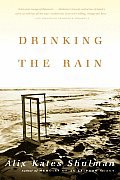
One of the things I love about used book sales is the chance of finding something wonderful for a dollar or two. Books that would otherwise remain hidden on library shelves or buried behind the newer offerings at bookstores can be picked out of a stack of chick lit* as easily as picking a fossil out of a gravel driveway. And that's how I found Drinking the Rain, a memoir by Alix Kates Shulman.

Once again (and only after having read the book), I found that Amazon's "statistically improbable phrases" provided some good insight into content: strawberry goosefoot, dock seeds, sea rocket, lobster buoys. How could I not enjoy a book about a feminist author who spends the summer in a shack on a "nubble" of land on an island off the coast of Maine and teaches herself to forage for food? And why the heck is the word nubble not amongst the statistically improbable? I guess it wasn't paired with any other word regularly enough.

But there is a lot more to like about this short book. The language is clean and powerful and sensuous, and the story is engaging. It expands from an examination of solitude, fear, laziness and the pleasures of getting to know a place intimately, to a wider look at philosophy, New Age beliefs, activism, environmentalism and ecology, family, and female friendships.

Take Shulman's musings about her privy, for example:

Except on the rare still summer day, the single hole, freshened by ocean breezes, collects few foul smells, no flies....Whereas in the city, despite the most lavish bourgeois bathrooms, using the toilet is considered at best indecorous, using this privy is one of the day's most satisfying interludes....From this perfect bird blind of a privy, built on a platform with a protective roof and open front facing the sea, I can watch the swallows feeding their young in the rafters, or follow a marsh hawk glide in low easy loops around the nubble as it hunts field mice. From this pew I have marked the progress of the seasons in the flower-crammed brush: fiddleheads and berry blossoms in early spring, wild roses, nightshade, and touch-me-nots in summer, goldenrod and pale purple asters now, in fall. (p. 72).

You can't get much more down to earth than enjoying (and describing) your outhouse. And people who enjoy reading about food will like Shulman's passionate descriptions of collecting, cooking, and tasting all sorts of new foods - not just the wild greens and shellfish of her island. Her description of the farmer's market in Budapest, with its wild game, piles of multicolored and frilled mushrooms, desserts and terrines and tripe and goose livers - well, it's better than salivating over the food porn in magazines like Bon Appetit.

Shulman's approach to philosophy was similarly refreshing. At one point, she describes how she picked up an abandoned college textbook containing James Baldwin's "Notes of a Native Son" while waiting for her serviceberry pie to bake. This led her to consider her life in terms of "acceptance and resistance, contemplation and struggle....How can one live without rancor in a world steeped in suffering and injustice - or live without contentment in a world bathed in birdsong at sundown?" (p. 60).

I thought this passage was worth pointing out, since this issue comes up repeatedly while discussing motherhood (see for example this blog post from last year's Mothers & More Mother's Day campaign and the comments). "Can't you just enjoy being a mother?...Your children are little for such a short time," many women say. Or as Darla Shine might say, "Just stop whining". "Why dwell on the problems? Enjoy what you have."

Shulman eloquently points out how both philosophies can be encompassed in one world view, and in an individual:

...my acceptance and love of this life making passivity impossible. The more I love it the more I care about its fate, our fate, want to protect the suffering seas, the weeds, the air, the spawn, and each neglected old woman. But equally for me, the second is the cause of the first. For, from my first embrace of our soul-stirring movement at the dawn of my adulthood, fighting injustice was my main path into the world, my connection with each living soul, the way I came to write, to know myself, and to love the world." (p. 240-241).

And then Shulman ends her book, somewhat as she began, "in medias res, somewhere in the middle" - contemplating her outhouse and the world.

I'll be giving this serendipitous find a permanent place on my bookshelves. I'm just not sure whether to shelve it next to James Duke's Handbook of Edible Weeds or Zen and the Art of Motorcycle Maintenance.

*Not that I mind dipping into the pink stuff, but chick lit is pretty common and easy to find, unlike books like this one.

Saturday, February 25, 2006

See "Mamas in Blogland"....

...for some fascinating reading on "maternal narrative, momoirs, and the rise of the blog", "blogging mom cliques" and much more over at The Mothers Movement Online. How come no one at Good Morning America solicited someone from that site for their show on "The Mommy Wars"? Could it be that sound bites and conflict are more entertaining than a real look at the social issues that undermine mothers and families as a whole in our society?

Also, read Are We Having Fun Yet? on MMO for a more in-depth look at parenting and depression (like much of the mainstream media, I did a cursory blurb on a study that is considerably more complicated than it seemed). Since this kind of facile misinterpretation of scientific studies is one of my pet peeves, and I was just complaining about sound bites a minute ago, I thought I had really better post the link.

Thursday, February 23, 2006

9th Carnival of Feminists...


...coming to you from Wales at Mind The Gap!

Thought-provoking posts on violence, prostitution, motherhood, marriage, politics, religion, with a special focus on the female body and body image.

Monday, February 20, 2006

Ada Blackjack: A Book Review

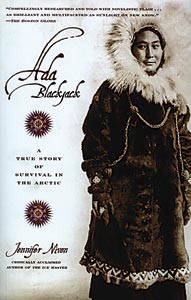
Ada Blackjack: A True Story of Survival in the Arctic, by Jennifer Niven is the second really excellent historical book set in the 1920's that I've read this winter. Like Kevin Boyle (though perhaps without his historian's perspective), Niven has researched the scraps of documentary evidence and written a totally gripping story. It's all too easy to imagine being on that bleak island above the Arctic Circle north of Siberia. Niven's story - or rather her telling of Ada's story - sucks you in and makes what happened even more shocking and appalling.

Basically, an ill-fitted arctic exploration was put together by entertainer/explorer Vilhjalmur Stefansson in the early 1920's. He persuaded four young men (Allan Crawford, Fred Mauer, E. Lorne Knight & Milton Galle) to go claim this desolate island for Canada and write about it for science, for glory, to show that men could conquer the Arctic. Two of them had some experience in the Arctic; Mauer had in fact almost died several years earlier when marooned on Wrangel Island.

A series of accidents happened on the way to Wrangel Island - the umiak (skin boat that was a must for seal & walrus hunting) blew off the ship taking them there, the Eskimo families they hired all backed out at the last minute (except for the main character, Ada, who was too desperate to earn money sewing winter clothes for the explorers so she could help her sick toddler), and the relief boat that was supposed to come the following summer couldn't make it because of the weather.

It got progressively worse. Finally, seeing that they were running out of food and they wouldn't be able to hunt enough on the island to survive the second winter, three of men took the remaining dogs & sled and set off for help. Ada was left with Knight, who was too ill from scurvy to handle the trip.

Ada ended up teaching herself to hunt and trap to keep herself and Lorne Knight alive. Unfortunately, Knight's scurvy progressed, and he died in the middle of the second summer there. Ada spent a couple of months by herself, terrified of the polar bears, reading Knight's bible, and thinking of her son in Nome. Harrowing doesn't begin to describe it.

I didn't really expect a happy ending, since the three men that went for help were never heard from again, but the aftermath - the reporters hounding Ada, the finger pointing and blame, the racism, the attempts of the four families to come to terms with the loss of their sons, and Ada's continued hardships - were all fascinating, as were the different backgrounds and personalities of the five people on the island from 1921-1923.

The pictures and the diaries that the men and Ada kept were haunting. There were so many "ifs" - "if only they'd had an umiak", "if only Knight had recognized the symptoms of scurvy earlier", "if only they'd stored more meat earlier in the year", "if only the weather hadn't been so bad"....

Anyway, this book is highly recommended if you like history, the Arctic, or stories of endurance. For some more background on Ada & the expedition, check out this Alaska LitSite on The Heroine of Wrangel Island.

Friday, February 17, 2006

Way to Go, Ypsi: Bus Service Cuts Proposed

Ever use the AATA? Know anyone who does? If you give a damn about public transportation between Ann Arbor and Ypsilanti (and you should if you live in this area), go to ypsi~dixit and sign a petition. There's also a good post explaining the importance of these bus routes on MapRoom Systems.

Wednesday, February 15, 2006

Now Which Day of the Year Would This Be?

Because I really, really love this idea (shamelessly stolen from BookLust):

Actually, there should be a new holiday, where we celebrate books and reading, and we buy each other and ourselves nothing but books and book paraphernalia! Instead of hearts and flowers filling our heads, the whole day should be focused on everything biblio. We could call it Bibliotine's Day! Send yourself or your loved one a bibliotine!

I think that late February or March would be perfect for this. The weather usually sucks in the midwest then, which makes me more likely to read than to do many other things, like go out in the yard and pick up thawing dog poop.

Monday, February 13, 2006

Goodbye A Common Reader, I'll Miss You

Sometime in January, I decided I needed something rural and relaxing to read...so I clicked on the link for the online catalog of
A Common Reader, with their wonderfully descriptive offerings in strange but satisfying categories like "Domestic Pleasures" and "Rural Retreats". I was annoyed when all I got was a blank page saying "Season's Greetings" but figured it was a temporary problem.

When I realized the link still wasn't working almost a month later, I did some googling and found this sad Wikipedia entry:

A Common Reader
is an American mail-order book catalogue established in 1986 by James Mustich, Jr. It is notable among general-interest book catalogues for its eclecticism, with large sections of each issue given over to obscure literary classics. The catalogue also has a reputation among its readers for the quality of its writing. The blurbs that accompany each book entry are often highly erudite and evocative, and many of these are penned by Mustich himself.

A Common Reader appears several times a year.

As of January 27, 2006, the organization appears to be out of business - there is no answer at their 800 number, and their web site yields only an empty page.

They have gone into bankruptcy - there is to be an auction of their stock and equipment on February 22, 2006 in Pleasantville, NY.


I wish I'd saved all the back issues of their catalog. It was better reading than a lot of books. It never occurred to me that they might suddenly disappear. Due to my fairly limited budget for buying new books, I used the catalogs primarily as a starting point for searching used bookstores or requests from inter-library loan. I'm afraid I'm part of the reason that the company isn't here anymore.

Just a few of the authors they introduced me to include: Gervaise Phinn, Rose Macauly, Patrick O'Brian, Charles Elliot, Stephen Leacock, Elisabeth Luard, Mark Kurlansky, Louise Dickinson Rich, Betty MacDonald, and Lillian Beckwith. Many of these authors were popular a generation or two ago or are well known in the UK but not in the US. They're still well worth reading, but I wouldn't have ever picked them up if I hadn't read those evocative blurbs in A Common Reader, and my life would be immeasurably smaller. So thanks for what you did, A Common Reader folks, wherever you are. I'll miss you.

Sunday, February 12, 2006

Birthdays

Cobblestone Farm, Ann Arbor

Happy 197th birthday to Abraham Lincoln and Charles Darwin. With 43 years behind me (as of this morning), I'm still a spring chicken. Whatever that means.

Saturday, February 11, 2006

The More Things Change....


...the more they stay the same.

I myself have never been able to find out precisely what feminism is: I only know that people call me a feminist whenever I express sentiments that differentiate me from a door mat or a prostitute.
- Rebecca West, in 'Mr. Chesterton in Hysterics: A Study in Prejudice', first published in The Clarion, November 14, 1913


1913
? Did you see that date? Is this not still true almost a hundred years later?

If you had any doubts about about it after my post on Hypocrites and Feminazis, check out a couple of hysterically funny posts called Chucking Oprah and Only Women Are Allowed to Read this Post about an article published in O: The Oprah Magazine* just last summer. Hmmm, hysterically funny is rather good here, given the origins of the word hysterical.

How can anyone say feminists lack a wicked good sense of humor? Given all of the recent CRAP (Committee for Retrograde Antifeminist Propaganda)** I've read, I'm going to go re-read 'The New Momism' and 'Revolt against the MRS' in The Mommy Myth, by Susan Douglas and Meredith Michaels. When I read it in 2004 I thought it was perhaps a little overstated and over the top; now it looks downright prescient.

*perhaps this is why it is listed as one of "Darla's Favorite Resources" in Happy Housewives, by Darla Shine

**see pages 30-33 of The Mommy Myth: The Idealization of Motherhood and How It Has Undermined Women

Wednesday, February 08, 2006

8th Carnival of Feminists


Now playing at Gendergeek. Read all about academia & sexism, vacuums & housework expectations and the domestic glass ceiling, chick lit book covers, Commander in Chief, obesity, spike heels, Linux, fanfiction, sex positiveness and porn, and some farewells to famous women. And much more that I haven't had a chance to read yet.

Tuesday, February 07, 2006

Parenting is Stressful

And if you don't believe it, check out this Science Blog story:

A study by Florida State University professor Robin Simon and Vanderbilt University's Ranae Evenson found that parents have significantly higher levels of depression than adults who do not have children. Even more surprising, the symptoms of depression do not go away when the kids grow up and move out of the house.

Their conclusions?

"It's how we do parenting in this society," Simon said. "We do it in a very isolated way and the onus is on us as individuals to get it right. Our successes are our own, but so are our failures. It's emotionally draining."

The value of a study like this is that it presents a realistic view of the difficulties associated with parenthood and encourages parents to seek greater social support, Simon said.

"Parents should know they are not alone; other people are feeling this way, too," she said. "This is a really difficult role, but we romanticize it in American culture. Parenthood is not the way it is in TV commercials."

It would be interesting to see if this pattern of depression holds true cross-culturally.

Monday, February 06, 2006

Hypocrites and Feminazis

"“So if you want to be a happy housewife, stop gossiping about your girls, open yourself up to new friendships, be nice, make new girlfriends, keep them in your life, and please don'’t be a bitch....I wish we could all stop the whining, the complaining, the cliques, the bitterness. I wish we could be great girlfriends. I wish we could all realize how lucky each one of us is and that we all have much to bring to the table. We'’re all the same. We'’re moms. We want the best for our children. We all want a safe, clean world for them to grow up in."” (Darla Shine, p. 32, Happy Housewives).


Compare this to the new homepage on www.darlashine.com:

Become a Member!
You need to be a SAHM
If you are one, you know what that means
Click Darla's apron to login or register
Is this exclusionary? YOU BETCHA!
This site is for Happy Housewives
All Feminazi's Stay Out!


Betty Friedan would have had something pithy and succinct to say about this. Maybe something about those that don't know their history are doomed to repeat it? And are all feminists automatically feminazis, or do I have to do something special and um....exclusionary to become one?

In case you want to read some of my earlier posts on gender roles and feminism: Matters of Style and Presentation, On "The Stay-At-Home Mystique", Happy Housewives and the Cult of Domesticity in the 21st Century, Petticoat Philosophy and Government and Mothers and Fathers in America are the most relevant ones. Take a peek at the comments, some of them are quite enlightening.

Wednesday, February 01, 2006

Google Searches, Malinowski, and Argonauts

I've read a couple interesting posts lately on what bizarre strings of words people searched to get to your blog. There are some funny mom-oriented ones at Real Talk about Motherhood (matronly breasts? crisco then and now?), and some really strange ones at Bootstrap Analysis ("Walt Whitman and the Pointer Sisters"? "What are the sharpest parts of a cat"? "farting treetop sounds"???).

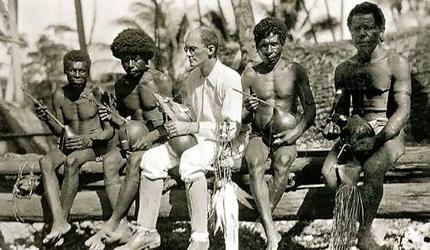
I've had a couple pretty strange ones myself (notably "petticoated bad boy husband", I just knew mentioning petticoats would bring a hit from one of those....um, interesting people with alternative fetishes), but I consistently get hits from people (anthropology students?) looking for information on Argonauts of the Western Pacific or Bronislaw Malinowski. The quote that named this blog came from this 1922 "classic monograph" of cultural and economic anthropology. No, I'm not going to do a book review of Argonauts, and I don't have that much desire to re-read the whole book again, though I did like the introduction and a few parts of the other endless chapters on the kula, canoes, yams, pigs, and conch shells. Obviously I liked the word "imponderabilia" enough to remember it for fifteen years after reading Argonauts, and I love the whole idea of participant observation. After all,

"certain subtle peculiarities, which make an impression as long as they are novel, cease to be noticed as soon as they become familiar. Others again can only be perceived with a better knowledge of the local conditions. An ethnographic diary, carried on systematically throughout the course of one's work in a district would be the ideal instrument for this sort of study. (p. 21, Argonauts).

Obviously my blog isn't particularly systematic, but then again I'm not getting funded by Wenner-Gren or the NSF. This blog is more like Malinowski's personal diary, which was written between 1914 and 1918, packed away in boxes after his death in 1942, and finally published in 1968: A Diary in the Strict Sense of the Term. Since I actually wrote a short book review on this for Sybermoms.com after reading it last year, I thought I'd cut & paste a bit and put it here in my blog so that all those poor Malinowski google searchers get something for their efforts.


First, however, note that Amazon's "statistically improbable phrases" describe Malinowski's diary pretty well: lecherous thoughts, retrospective diary, walked around the village, felt rotten, gorged myself, resident magistrate, wrote diary. Lecherous thoughts! Just what every new anthropology student wants to know about how one of the "old white men" of anthropology really felt. Wow, it occurs 13 times in Malinowski's Diary. How interesting.

Anyway, here's my short review: It reads like a blog, and is surprisingly modern in most parts. Either Malinowski was a hypochrondriac, or he really suffered in the tropics....maybe both. He talks about injecting himself with arsenic fairly often.

He had lewd thoughts about many of the women (both native & colonial) he met during his fieldwork, but except for some "pawing" his lust remained unconsummated. He had some very snarky things to say about various people he encountered (one guy gave him "mental congestion"), and he went on endlessly about his true love, E.R.M., and his pure feelings for her, and how he really needed to make a clean break with N.

There are lots of descriptions of tropical sunsets, and of the famous anthropologist occasionally taking a shit in the mangroves and rowing his dinghy around the lagoon. Besides going on and on about his health, his depression about how much he was accomplishing, and his use of trashy novels to escape all of this, he also complains about his informants and how sick to death of all them he is....which is a pretty interesting contrast with the professional work (especially Argonauts of the Western Pacific).

One of the things Malinowski is best known for is being the first anthropologist to actually live in native villages, learn the language, and engage in everyday activities - now known as participant observation. It is rather fascinating to see how he actually felt about it at the time, and the old-style prose adds to your reading enjoyment. I think they should update the diary with lots of pictures of all the relevant people. Malinowski didn't go on to marry E.R.M. after all! I wonder if she dumped him or he found someone else.